Metro had the highest ridership numbers in more than seven years last Sunday as hundreds of thousands of cherry blossom enthusiasts crowded the system.



Washington, D.C.’s Metro rail system saw its busiest Sunday since 2015 last weekend as visitors swarmed to see the District’s famous cherry trees in bloom and attend the Blossom Kite Festival, reports Justin George for The Washington Post. “The rail system serviced more than 340,000 trips on Sunday, said transit agency spokeswoman Sherri Ly. That’s only 20,000 fewer than Wednesday, when Metro reported a pandemic-era high of 360,000 paid trips.”
As George explains, “Passenger counts meant long waits for some riders, but they were an encouraging development for a rail system that has lost about half its ridership since the pandemic began.”
The agency says it deployed extra trains and personnel to handle the crowds, which overwhelmed some popular stations. “Metro’s Blue, Orange and Silver lines experienced repeated delays, while the crush of crowds forced the rail system to close entrances to the Smithsonian station and make it exit-only for hours while transit officials urged riders to walk to nearby stations.”
As for those choosing to drive, conditions weren’t much better, George writes: “interstate tunnels and bridges were bumper-to-bumper while Hains Point and other Tidal Basin access points were transformed into virtual parking lots for hours.”
Read the full story: Metro records busiest Sunday since 2015 as crowds swarmed cherry blossoms

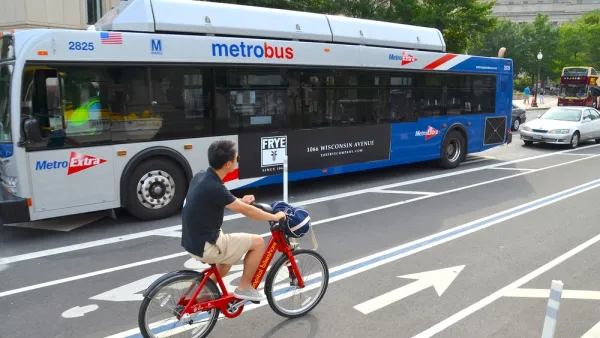
Opinion: How to Save D.C. Transit
Ridership data shows that many D.C. transit users depend on the service, despite a drop in ridership. The system needs changes—and funding—to have a future.
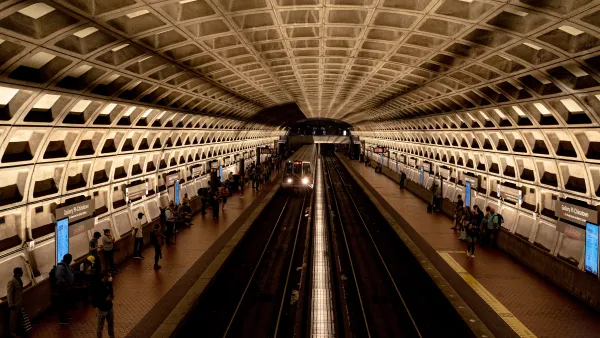
D.C. Leads the Nation for Transit Recovery
Ridership on the region’s rail systems is rebounding faster than other major transit systems.
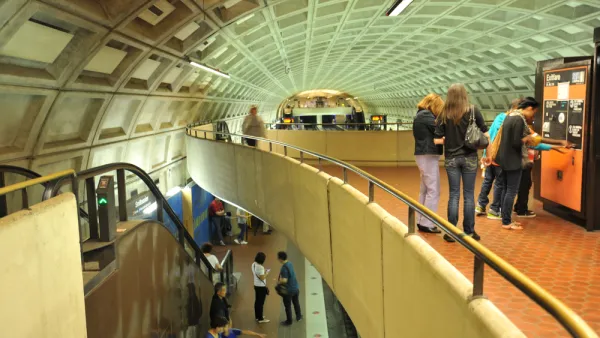
D.C. Metro Announces Service Improvements
The Red, Blue, and Silver lines will see faster headways as the agency reintroduces its 7000-series rail cars to the fleet.

Planetizen Federal Action Tracker
A weekly monitor of how Trump’s orders and actions are impacting planners and planning in America.

The state-sanctioned urbicide of Austin
People don’t kill cities. Freeways do.

US to reduce Colorado River water deliveries to Mexico
A new Colorado Treaty amendment reduces Mexico’s Colorado River water allocation by 250,000 acre feet.

Nation's most wind-powered state turns to coal as data centers increase energy demand
For the first time in decades, Iowa has increased its generation of coal power.

NYC cools commuters with city's first rain garden above a bus stop
New York City officials say the plants in the rain garden can absorb 16 gallons of rainwater during heavy storms.

Brightline West’s future may rely on $6 billion federal loan
The company has until Nov. 2 to make a $400 million equity investment into its proposed high-speed rail line.

FREE Course: Walkable City 1: Why Walkability?
After describing his path towards focusing on walkability as the essence of good planning, Jeff Speck marches through his five principal reasons for making more walkable places.
Reinventing Malls: Planning Alchemy—Turning Gray Fields Into Gold
The course focuses on the opportunities and imperatives that shape reinvention of mall sites.

Greater Baltimore Committee
Eagle County Government
Harvard University Graduate School of Design
The Architects Foundation
University of Cincinnati Online
The Pocatello Development Authority
The Urban Renewal Agency of the City of Pocatello
Journal of the American Planning Association