A new study assesses which cities have the broadest access to walkable neighborhoods.



Urban planners frequently tout the benefits of walkability. But as Kea Wilson explains in Streetsblog USA, for many households, walkable neighborhoods just aren’t affordable. A new study sheds light on how walkability interacts with affordability. “Perhaps unsurprisingly, the researchers found that Americans on the whole will pay significantly more for the privilege of living in a place where they can get around on their own power: specifically, 35 percent more for home buyers, 41 percent more for apartment renters, and 44 percent more for office properties.”
According to an analysis from Smart Growth America, the city with the most equitable walkability in the United States is Cleveland, Ohio. According to Michael Rodriguez, visiting director of research at SGA, “Cleveland was at one point the fourth largest city in the U.S., and if you look at old images and videos of it, it was [as] vibrant as midtown Manhattan. These were proper cities, and we chose to enact policies that decimated that — but whatever we have left still provides a core of walkability today.”
“Perhaps shockingly, notoriously expensive New York City actually ranked second on the Social Equity Index, which he attributes to its proportionally high median incomes, astounding diversity, and the sheer preponderance of transit and people-oriented places that make car-free living possible for virtually everyone; residents of Manhattan, after all, spend an average of 37 percent of their income on housing and transportation combined, while residents of car-oriented Indianapolis spend 42, according to the Housing and Transportation Index.”
Wilson admits that New York City is an outlier, a megacity with many wealthy residents, but argues that equitable access to walkable communities shouldn’t be an anomaly. It could be part of every city if more effort was made to “implement zoning reforms, foster non-automotive travel, and invest in affordable housing for all.”
Read the full story: America’s Most Equitably Walkable City is … Cleveland?


Research: Sprawl Linked to Poverty
Low-income families living in high-sprawl neighborhoods are limited in their access to education, jobs, and other amenities, often trapping them in a cycle of poverty.
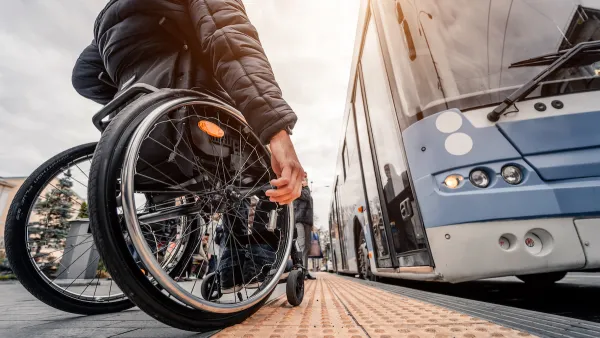
Commentary: Avoiding Ableism in 15-Minute Cities
One author calls on planners to challenge assumptions that exclude people with mobility challenges and other disabilities.
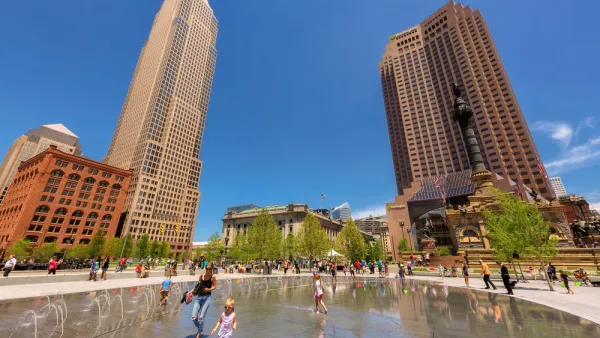
Cleveland Mayor Wants a 15-Minute City
The mayor of Cleveland expressed the goal to become the first “15-minute city” in America at his State of the City speech. Experts say it’s possible.

Planetizen Federal Action Tracker
A weekly monitor of how Trump’s orders and actions are impacting planners and planning in America.

Amtrak, CN end decades-long dispute with eight-year agreement
The new operating agreement establishes an updated framework for the companies to work together, including processes to resolve disputes.

Colorado’s Largest Data Center Could Rise Next to Homes — Without a Public Hearing
The proposed campus would consume 11 times the power of Denver International Airport; as it has across the country, opposition mounts.

'This is going to be painful:’ Virginia stares down $1.7 billion funding gap for highway maintenance
The state may address the deficit by shifting $290 million from its construction budget to maintenance projects.

Judges permit Denver to divert 77,000 acre feet from the Colorado River for reservoir expansion
Overuse and climate change have caused the Colorado River’s water levels to plummet.

Amtrak, CN end decades-long dispute with eight-year agreement
The new operating agreement establishes an updated framework for the companies to work together, including processes to resolve disputes.

FREE Course: Walkable City 1: Why Walkability?
After describing his path towards focusing on walkability as the essence of good planning, Jeff Speck marches through his five principal reasons for making more walkable places.
Reinventing Malls: Planning Alchemy—Turning Gray Fields Into Gold
The course focuses on the opportunities and imperatives that shape reinvention of mall sites.

KFH Group Inc.
Greater Baltimore Committee
Eagle County Government
The Architects Foundation
University of Cincinnati Online
The Pocatello Development Authority
The Urban Renewal Agency of the City of Pocatello