The California city is the largest in the country to abolish parking requirements, joining a bevy of other localities that are shifting to less car-oriented development.


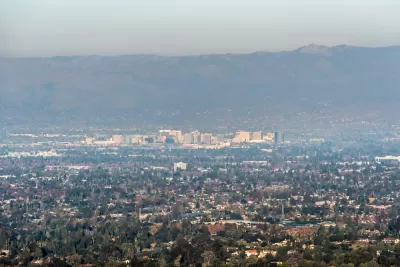
San Jose, California is the newest and largest U.S. city to abolish minimum parking requirements for new developments, easing the way for new housing construction and lowering the cost of building in the formerly car-oriented city. Reporting for the Mercury News, Eliyahu Kamisher explains that the city’s parking requirements, mostly unchanged since 1965, have been blamed for driving up housing costs, with parking spots costing upwards of $50,000 apiece to build.
Similar to other cities, “The new policy does not prevent developers from building parking lots but will allow them to ‘rightsize’ parking for new developments as they see fit. It also does not remove any current parking.”
With a population of 1 million people, San Jose is the largest U.S. city to remove parking minimums. “It is an especially big turnaround for a largely suburban community that has historically required businesses and developers to provide more on-site parking than any other major city in the state, according to a Bay Area News Group survey.” Now, new rules will require developers to include bicycle parking—“including one bike for every two lanes at bowling alleys and at least one bicycle spot for every 800 square feet at restaurants.”
Read the full story: Bye-bye parking requirements: San Jose becomes largest city in U.S. to abolish minimum parking
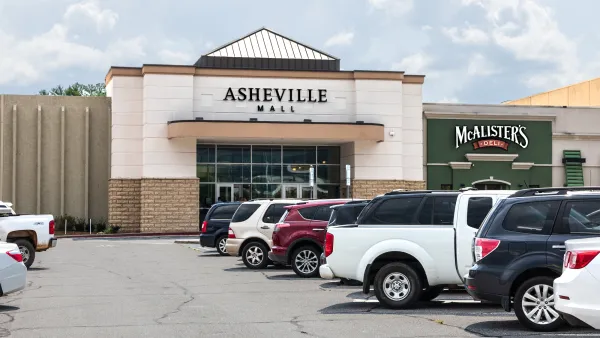
Asheville reconsiders parking minimums as surface parking eats up over a third of downtown real estate
Housing advocates say parking requirements are unnecessary and induce sprawl.
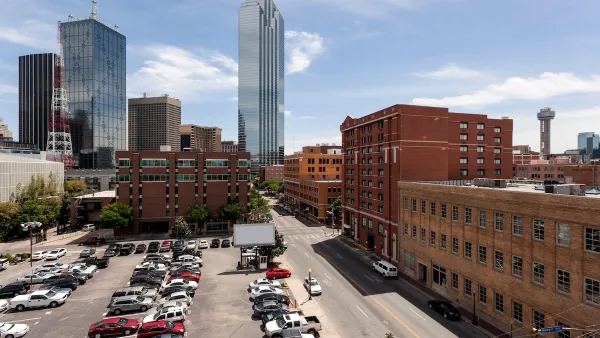
Dallas Ditches Parking Minimums in 14-1 Vote
The sweeping city council decision removes set parking requirements from developments downtown, near transit, small businesses and more.
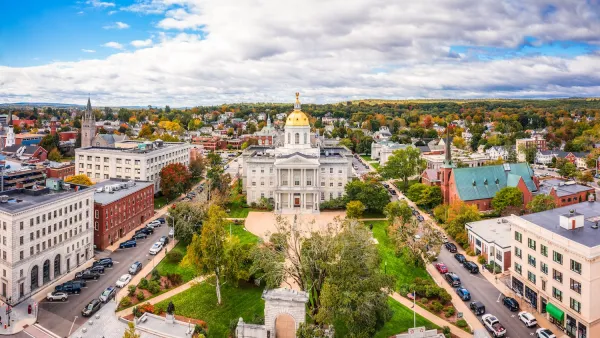
New Hampshire House Passes Parking Reform Bill
The revised bill, which caps parking requirements at one spot per residential unit and eliminates exemptions, will go back to the Senate for a new vote.

Planetizen Federal Action Tracker
A weekly monitor of how Trump’s orders and actions are impacting planners and planning in America.

Washington state to charge fee to drivers with fuel-efficient cars
Revenue from the fee will go towards supporting the state’s highways.

Illinois considers spending $1 billion in taxpayer money on data center
A quantum computing campus and data center are currently under construction in Chicago.

Mamdani to replace Rikers Island with four borough-based jails
The four new jails are set to open between 2029 and 2032.

NYC may allow residents to ‘adopt’ storm drains
A new proposal would establish a volunteer program where residents could help clean debris from storm drains.

‘A price cannot be put on democracy:’ Local leaders protest UMich data center
The 1.25 billion-dollar project would take up 144 acres of land in Ypsilanti Township.

FREE Course: Walkable City 1: Why Walkability?
After describing his path towards focusing on walkability as the essence of good planning, Jeff Speck marches through his five principal reasons for making more walkable places.
Reinventing Malls: Planning Alchemy—Turning Gray Fields Into Gold
The course focuses on the opportunities and imperatives that shape reinvention of mall sites.

City of Charlotte
City of Rosemead
Rutgers University, Edward J. Bloustein School of Planning and Public Policy
University of Michigan School for Environment and Sustainability (SEAS)
Hunter College, City University of New York (CUNY)
The Architects Foundation
University District Partnership