Parks are not just for fun and games. They are also centers of community, offering shelter, food, and employment for the most vulnerable.



Parks are sometimes dismissed as “nice to haves” or as being just about “fun and games.” This perception is inaccurate because it essentially disregards the growing body of research that shows the importance of parks and the wide range of benefits they offer, especially during the pandemic.
In this story, writer Nate Berg profiles Norma Edith García-Gonzales, director of the Los Angeles County Department of Parks and Recreation (DPR), who has transformed county parks into “vehicles for equity.” During the pandemic, county parks have hosted coronavirus testing sites and later vaccination centers, and provided food and shelter to vulnerable populations.
Under García-Gonzales's leadership, the department has also prioritized high-need youth, extending service hours and eliminating fees for after-school recreation leagues while training staff to address substance abuse, suicide risk, and gang activity. DPR has even created jobs for many teens, with 700 youths hired for positions in recreation programs.
Read the full story: Meet the woman turning Los Angeles County parks into vehicles for equity


A Historic Investment in LA County’s Parks and Open Spaces
Los Angeles County has launched its largest-ever competitive grant program, investing $58 million to expand park access, enhance climate resilience, and support community-driven projects in the areas that need them most.
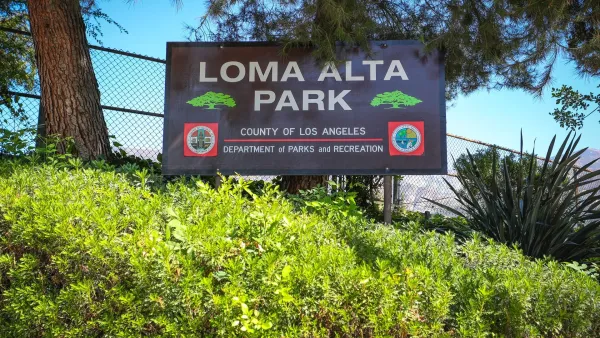
A Park Reborn: Resilience and Renewal in Fire-Stricken Altadena
Rebuilt in just two months after the devastating Eaton Fire, Loma Alta Park now stands as a symbol of community resilience and renewal, even as some residents hope recovery efforts will continue to support housing stability and long-term equity.

A Greener LA County: 623 Acres of New Parkland for Communities
Los Angeles County is investing $17 million to create 623 acres of new parks and open spaces, expanding access to nature, advancing equity, and enhancing community health and well-being.

Planetizen Federal Action Tracker
A weekly monitor of how Trump’s orders and actions are impacting planners and planning in America.

The state-sanctioned urbicide of Austin
People don’t kill cities. Freeways do.

Colorado’s Largest Data Center Could Rise Next to Homes — Without a Public Hearing
The proposed campus would consume 11 times the power of Denver International Airport; as it has across the country, opposition mounts.

Nation's most wind-powered state turns to coal as data centers increase energy demand
For the first time in decades, Iowa has increased its generation of coal power.

NYC cools commuters with city's first rain garden above a bus stop
New York City officials say the plants in the rain garden can absorb 16 gallons of rainwater during heavy storms.

Brightline West’s future may rely on $6 billion federal loan
The company has until Nov. 2 to make a $400 million equity investment into its proposed high-speed rail line.

FREE Course: Walkable City 1: Why Walkability?
After describing his path towards focusing on walkability as the essence of good planning, Jeff Speck marches through his five principal reasons for making more walkable places.
Reinventing Malls: Planning Alchemy—Turning Gray Fields Into Gold
The course focuses on the opportunities and imperatives that shape reinvention of mall sites.

Greater Baltimore Committee
Eagle County Government
Harvard University Graduate School of Design
The Architects Foundation
University of Cincinnati Online
The Pocatello Development Authority
The Urban Renewal Agency of the City of Pocatello
Journal of the American Planning Association