A proposed state bill would permit New York City’s transportation department to install up to 50 cameras that would monitor bike lane violations, with drivers that block bike lanes facing a $50 fine.


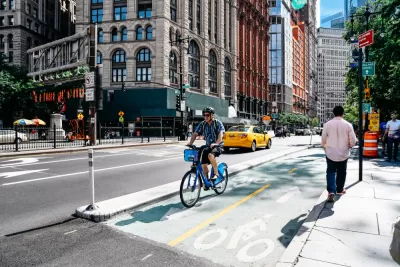
“Drivers entering bike lanes are breaking the law, even if they have their blinkers on while dashing into a store to drop off a package or grab a coffee. But they’re unlikely to be cited by police, both because the infraction is usually brief and because officers seldom prioritize bike lane enforcement.” Even worse, police cars can often be seen blocking bike lanes themselves.
Reporting for Bloomberg CityLab, David Zipper describes a New York state bill that seeks to address this issue by deploying cameras that record bike lane violations. “The bill would give the city’s transportation department the green light to install up to 50 such bike lane cameras, with violators mailed $50 fines.”
Unlike a similar law passed in June that allows English towns to use bike lane cameras (London has announced it will install camera-based bike lane enforcement), the New York bill doesn’t apply to painted bike lanes that are not already semi-protected by flexible delineators or other physical infrastructure.
Of course, this effort still falls short of fully protecting people on bikes. “The obvious way to protect bike lanes is, literally, to protect them — with hard infrastructure that physically prevents motor vehicles from invading cyclists’ space.” As Zipper notes, “Research shows that protected lanes offer a powerful way to boost street safety — and that fear of a collision (especially among women) may be the single greatest obstacle preventing more people from using a uniquely healthy, climate-friendly, and space-efficient means of transport.”
Read the full story: A New Tool in the Battle to Keep the Bike Lane Clear

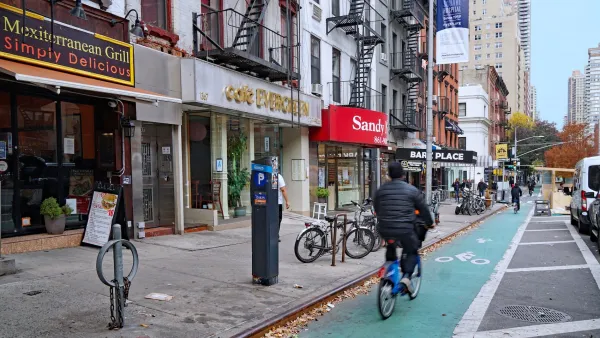
Study: Protected bike lanes increase Citi Bike rides by nearly 400 rides a month
An analysis of millions of NYC bike share rides reveals that only protected bike lanes have a 'statistically significant' increase in ridership.
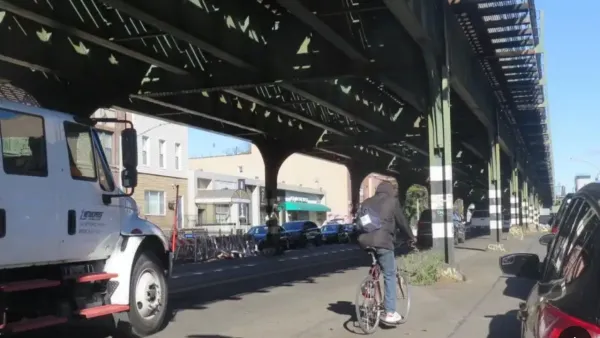
Judge Orders Removal of Queens Bike Lane on One of NYC’s Most Dangerous Corridors
A group of local businesses and a school sued the city, arguing that NYCDOT didn’t follow appropriate procedures and failed to address safety concerns before going ahead with the project.
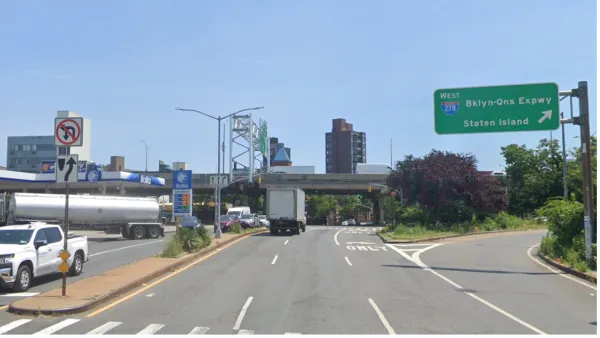
New York Bike Lane Generates Confusion
A compromise road diet with “flex lanes” falls short of its promise.

Planetizen Federal Action Tracker
A weekly monitor of how Trump’s orders and actions are impacting planners and planning in America.

The state-sanctioned urbicide of Austin
People don’t kill cities. Freeways do.

Colorado’s Largest Data Center Could Rise Next to Homes — Without a Public Hearing
The proposed campus would consume 11 times the power of Denver International Airport; as it has across the country, opposition mounts.

Data centers are consuming nearly 25% of Oregon’s power
The state has 111 data centers, with 32 more either planned or under construction.

A third of Texas cities must update their zoning codes to comply with new housing law
Texas municipalities are now required to allow manufactured housing in at least one residential zoning district.

Nation's most wind-powered state turns to coal as data centers increase energy demand
For the first time in decades, Iowa has increased its generation of coal power.

FREE Course: Walkable City 1: Why Walkability?
After describing his path towards focusing on walkability as the essence of good planning, Jeff Speck marches through his five principal reasons for making more walkable places.
Reinventing Malls: Planning Alchemy—Turning Gray Fields Into Gold
The course focuses on the opportunities and imperatives that shape reinvention of mall sites.

Greater Baltimore Committee
Eagle County Government
Harvard University Graduate School of Design
The Architects Foundation
University of Cincinnati Online
The Pocatello Development Authority
The Urban Renewal Agency of the City of Pocatello
Journal of the American Planning Association