The agency is pressing ahead with the redesign of its bus system, which has led to a 15 percent increase in ridership since its launch, but ridership remains well below pre-pandemic levels.


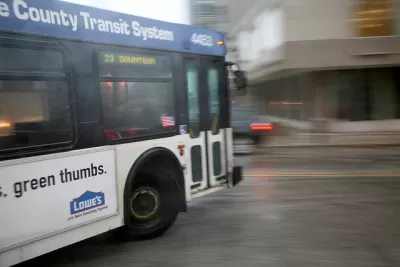
Madeline Fox of Wisconsin Public Radio reports on the state of Wisconsin’s transit agencies, which, like others around the country, continue to struggle to adapt to the dramatic changes in ridership and travel patterns that occured over the last two years.
Despite budget deficits—“The Milwaukee County Transit System is expecting a $32.8 million budget deficit by 2025”—the agency is moving forward with its redesign plans. “The county transit system is nearly a year into its MCTS Next redesign, which includes making 60 percent of buses arrive at least every 15 minutes during service hours, up from 40 percent. The system removed some stops that were close together, shortening some routes while extending others.”
Today, the agency is seeing roughly 60 percent of pre-pandemic ridership. “Winter said Milwaukee is continuing to tweak its routes in response to rider and driver feedback — it's made sure all the bus drivers' routes have bathrooms they can access, for example.”
Read the full story: Wisconsin transportation agencies make their case for public transit as pandemic, budget woes loom
Postponed Milwaukee BRT Project at Least a Decade Away
The county’s transit system won’t pursue a second rapid bus line due to financial constraints.
Milwaukee BRT Proves Popular With Riders
The newly opened line is already reaching pre-pandemic ridership levels.
Digging Into SEPTA’s Problems
Philadelphia’s transit agency faces some structural challenges as it struggles to reorganize its services and bring back ridership.

Desperate measures: Advocates weigh draining Lake Powell to fill Colorado River
Draining the reservoir could reduce evaporation losses by a couple hundred thousand acre-feet.

Eastern Nebraska is running out of electricity
Data centers and electrification are straining eastern Nebraska’s grid, throttling economic development.

Move over, LA: St. Louis gears up for Olympics, invests millions in downtown redevelopment
The Missouri city will host the 2028 Olympic soccer group stage and knockout matches.

Mass. votes against statewide minimum lot size for single-family homes
Over 2 million residents voted on Question 7; it was decided by just over 30,000 votes.

Maryland’s $15 billion bridge project gains key approval
The Maryland Transit Authority said the project will create over 60,000 jobs and add $23 billion to the local economy.

‘No clear next steps’ for Chicago's permanent festival grounds
Eleventh Ward Ald. Nicole Lee has suggested Soldier Field as a possible location for the permanent event space.

FREE Course: Walkable City 1: Why Walkability?
After describing his path towards focusing on walkability as the essence of good planning, Jeff Speck marches through his five principal reasons for making more walkable places.
Reinventing Malls: Planning Alchemy—Turning Gray Fields Into Gold
The course focuses on the opportunities and imperatives that shape reinvention of mall sites.

City of Rosemead
Rutgers University, Edward J. Bloustein School of Planning and Public Policy
One Hundred Miles
University of Michigan School for Environment and Sustainability (SEAS)
Hunter College, City University of New York (CUNY)
The Architects Foundation
City of Cambridge
Montrose County
The Pocatello Development Authority