The state of Connecticut is looking to take a more aggressive role in allocating affordable housing development requirements around the state.



Ginny Monk shares news of the proposed "Fair Share" law under consideration in the Connecticut General Assembly.
"Under the proposed 'Fair Share' law, the state Office of Policy and Management would assess the need for affordable housing in different parts of Connecticut," reports Monk. "Then, towns would share the responsibility to meet that need."
According to Monk, "a town’s share would be based on its wealth, median income compared to other towns in the region, percentage of housing stock that’s multifamily housing, and the poverty rate."
The bill would require local governments to craft new plans for building affordable housing every ten years—the state of California's Regional Housing Needs Assessment (RHNA) process works similarly, but on eight-year cycles. The RHNA process has been subjected to repeated reform to add teeth to the law in recent years.
As noted by Monk, Connecticut's "Fair Share" bill is part of a larger package of zoning reform bills known as Growing Together Connecticut, spearheaded by 30 partnering organizations including the Open Communities Alliance. The Connecticut General Assembly passed a landmark zoning reform bill, HB 6107, in June 2021.


L.A. Planning Department Adjusts to State Housing Laws
Los Angeles Director of Planning Vince Bertoni was recently interviewed the effects of new state planning and housing laws in the state’s most populous city.

L.A.'s Housing Element, Considered Among California's Most Ambitious, Rejected by State Regulators
The California Housing Department gave credit to Los Angeles for targeting so much growth before telling the city it needed to do more.
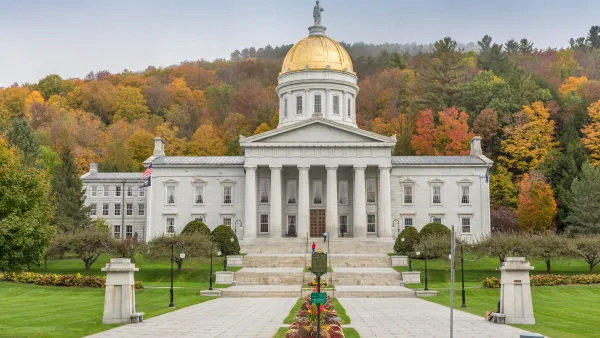
Vermont Next State in Line to End Single-Family Zoning, Ease Parking Requirements
Both houses in the Vermont Legislature have approved legislation to preempt local land use regulations by rescinding single-family zoning and easing parking requirements throughout the state.

The state-sanctioned urbicide of Austin
People don’t kill cities. Freeways do.

US to reduce Colorado River water deliveries to Mexico
A new Colorado Treaty amendment reduces Mexico’s Colorado River water allocation by 250,000 acre feet.

New Jersey’s second-largest city bans standalone data centers
Jersey City will continue to allow co-location facilities, such as those meant for research institutions that store their own data.

Amtrak not solely to blame for New Jersey commuter rail's unreliability, report finds
A new study from the Garden State Initiative found that NJ Transit’s budget grew 20% across a 4 year period, but reliability declined significantly over the same period.

EPA erases limits on planet-warming pollution from power plants
Under Monday’s plan, power plants would still have some limits on how much mercury, arsenic and other contaminants they can emit.

Phoenix announces new on-demand transit service, more frequent RAPID buses
Both new services will launch in October, and are part of Phoenix's Project Effective Access Solutions for Easing Congestion.

FREE Course: Walkable City 1: Why Walkability?
After describing his path towards focusing on walkability as the essence of good planning, Jeff Speck marches through his five principal reasons for making more walkable places.
Reinventing Malls: Planning Alchemy—Turning Gray Fields Into Gold
The course focuses on the opportunities and imperatives that shape reinvention of mall sites.

Eagle County Government
Harvard University Graduate School of Design
Nashville Planning Department
The Architects Foundation
University of Cincinnati Online
The Pocatello Development Authority
The Urban Renewal Agency of the City of Pocatello
Journal of the American Planning Association