A new study shows a disparity between the frequency of crosswalks in San Francisco's northern and southern neighborhoods.


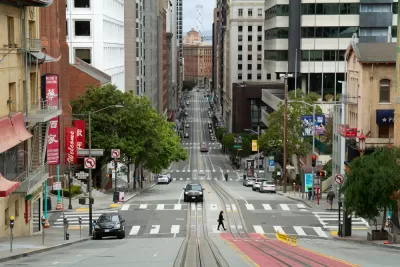
Heather Knight reports on a new study from Marcel Maron, who analyzed all of San Francisco's 6,399 intersections and mapped the existence or lack of crosswalks at each one. Maron's results showed a stark disparity between neighborhoods. "Crosswalk hot spots with clusters of intersections sporting the painted passages are almost entirely located in the northern half of the city, particularly in richer neighborhoods including Pacific Heights, Presidio Heights, Laurel Heights, Alamo Square, Nob Hill, the Financial District and South Beach." Meanwhile, "Crosswalk cold spots, where pedestrians can walk blocks without encountering a crosswalk, are almost entirely in the southern half of the city."
Overall, 58% of San Francisco’s intersections have crosswalks, but their distribution varies widely. In Pacific Heights, 83% of intersections have them, while in Bayview-Hunters Point, 51% do. In the Mission, which has far more traffic and pedestrians than Pacific Heights, 63% of intersections have crosswalks.
Another study Moran conducted in 2020 analyzed the city's nearly 3,000 bus stops and found a similar disparity in amenities like seating, shelters, and signage between the northern and southern halves of the city. "Also, routes with the longest intervals between buses were the least likely to have seats and shelters — making passengers who have to wait the longest do so in the least comfortable way. This, again, despite San Francisco’s claim to be a transit-first city," notes Knight.
Moran argues that these disparities create a vicious cycle, discouraging people from walking or using transit due to safety and comfort concerns. "And then the city can say better bus stops and crosswalks aren’t necessary because people aren’t using those spaces."
Read the full story: He mapped every crosswalk in S.F. The results show a startling safety gap for some neighborhoods
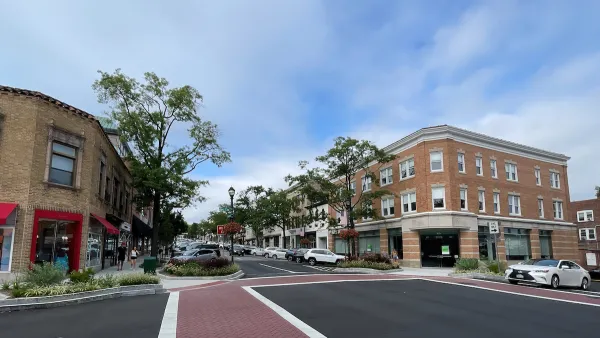
Connecticut Launches Complete Streets Standards
The new policy calls for sidewalks, bike lanes, and crosswalks on state roads and state-funded road projects.
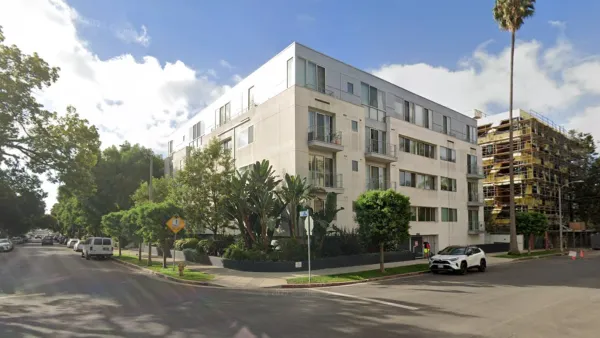
LA Cites Guerilla Crosswalk Painter With Vandalism
The LA Police Department stopped a group of volunteers who was painting missing crosswalks in a Westwood intersection.
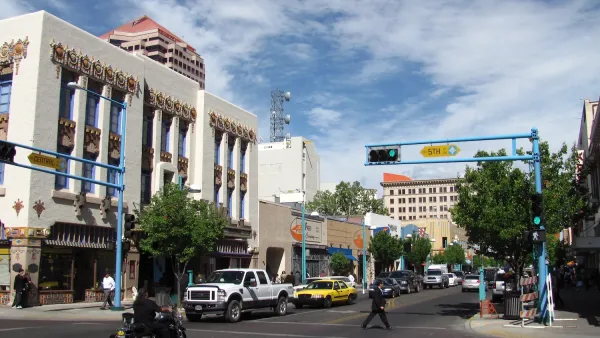
In the Nation’s Deadliest State for Pedestrians, Albuquerque Drivers Must Now Stop at Crosswalks for all Pedestrians
The city updated its traffic code for the first time in 50 years.

Planetizen Federal Action Tracker
A weekly monitor of how Trump’s orders and actions are impacting planners and planning in America.

California plans to bury El Niño’s downpour
If the state plays its cards right, it may be able to store a billion acre-feet of El Niño’s water in aquifers.

Desperate measures: Advocates weigh draining Lake Powell to fill Colorado River
Draining the reservoir could reduce evaporation losses by a couple hundred thousand acre-feet.

US buildings threatened, destroyed by fires set to triple by 2060
Researchers found a high fire risk for socioeconomically vulnerable neighborhoods in the American West.

LA residents may be allowed to paint their own crosswalks
Councilwoman Katy Yaroslavsky put out a motion instructing the Los Angeles Department of Public Transportation to study the feasibility of allowing volunteers to paint crosswalks.

Dallas moves to overhaul its zoning code
The city's zoning reform will allow more multi-family and mixed-use developments.

FREE Course: Walkable City 1: Why Walkability?
After describing his path towards focusing on walkability as the essence of good planning, Jeff Speck marches through his five principal reasons for making more walkable places.
Reinventing Malls: Planning Alchemy—Turning Gray Fields Into Gold
The course focuses on the opportunities and imperatives that shape reinvention of mall sites.

City of Rosemead
Rutgers University, Edward J. Bloustein School of Planning and Public Policy
One Hundred Miles
Hunter College, City University of New York (CUNY)
The Architects Foundation
University of Cincinnati Online
City of Cambridge
Montrose County
The Pocatello Development Authority