The Biden administration recently announced a new $27 billion program for bridge repair. The funding has been allocated to states based on a unique funding arrangement.


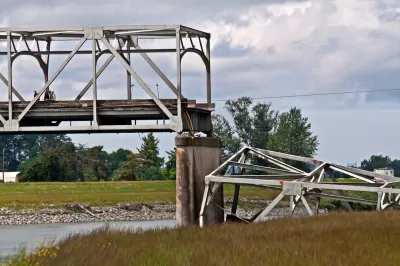
The Biden administration on Friday announced $27.5 billion in funding to repair bridges around the country as part of the $1.2 trillion Infrastructure Investment and Jobs Act (IIJA) approved in 2021.
The spending for the Bridge Replacement, Rehabilitation, Preservation, Protection, and Construction Program (also known as the Bridge Formula Program) was announced in a Federal Highway Administration press release on Friday, January 14.
"The bridge program is one of the largest new sources of federal spending in the package and one that encapsulates its bipartisan appeal," according to an article in The Washington Post by Ian Duncan. The IIJA includes $550 million in new spending as a portion of its $1 trillion total.
Bridge Formula Program funding has been allocated to states based on the number of bridges in poor condition rather than by the size of the state—the latter is more typical of most federal transportation spending. So, as reported by Sarah Cassi for LeHigh Valley Live, Pennsylvania, with 3,000 bridges in poor condition, will receive $1.6 billion.
Duncan reports that Louisiana is in line to $1 billion to help repair 1,600 bridges in poor condition around the state, California will receive $4.6 billion, and 25 states will receive the minimum of $225 million over five years.
In another funding arrangement unique to the Bridge Formula Program, states won't be required to match federal funding with 20% in state or local funding. States will be allowed to use federal funds for 100% of the cost of repairing or rehabilitating bridges. More details on the bridge program can be found in a separate article by the Associated Press.
FULL STORY: DOT Announces Historic Bridge Investment Under Bipartisan Infrastructure Law

Making Natural Gas Power Plants Cleaner
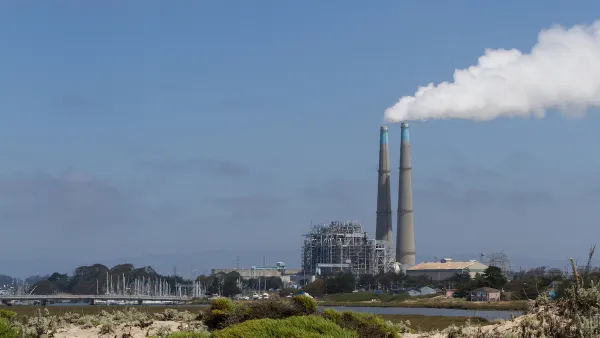
Carbon capture and storage has long been associated with coal-burning power plants. Calpine Corp. hopes to apply the controversial technology to existing natural gas power plants, beginning with a pilot project to start this month in the Bay Area.
Coastal Climate Resilience to Receive $2.6 Billion Federal Investment
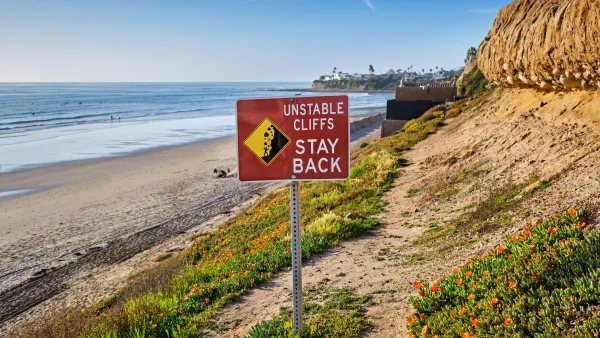
The Biden Administration announced the second massive investment of federal funds for coastal resilience on June 6. The Inflation Reduction Act allocated $3.3 billion to NOAA. In March, the Infrastructure Investment & Jobs Act added $562 billion.
$1.6 Billion for Ohio River Bridge Included in Latest Federal Grant Announcements
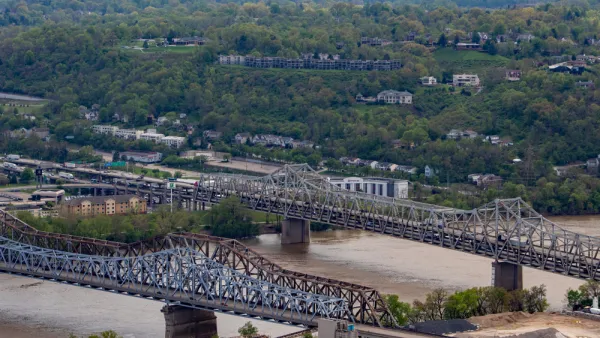
The Biden administration this week spanned the country to announce over $2 billion in grant funding for bridge projects.

The state-sanctioned urbicide of Austin
People don’t kill cities. Freeways do.

US to reduce Colorado River water deliveries to Mexico
A new Colorado Treaty amendment reduces Mexico’s Colorado River water allocation by 250,000 acre feet.

New Jersey’s second-largest city bans standalone data centers
Jersey City will continue to allow co-location facilities, such as those meant for research institutions that store their own data.

Amtrak not solely to blame for New Jersey commuter rail's unreliability, report finds
A new study from the Garden State Initiative found that NJ Transit’s budget grew 20% across a 4 year period, but reliability declined significantly over the same period.

EPA erases limits on planet-warming pollution from power plants
Under Monday’s plan, power plants would still have some limits on how much mercury, arsenic and other contaminants they can emit.

Phoenix announces new on-demand transit service, more frequent RAPID buses
Both new services will launch in October, and are part of Phoenix's Project Effective Access Solutions for Easing Congestion.

FREE Course: Walkable City 1: Why Walkability?
After describing his path towards focusing on walkability as the essence of good planning, Jeff Speck marches through his five principal reasons for making more walkable places.
Reinventing Malls: Planning Alchemy—Turning Gray Fields Into Gold
The course focuses on the opportunities and imperatives that shape reinvention of mall sites.

Eagle County Government
Harvard University Graduate School of Design
Nashville Planning Department
The Architects Foundation
University of Cincinnati Online
The Pocatello Development Authority
The Urban Renewal Agency of the City of Pocatello
Journal of the American Planning Association