A Houston couple is asking for help installing 'ghost bike' memorials, a stark reminder of the dangers of unsafe roads to cyclists.


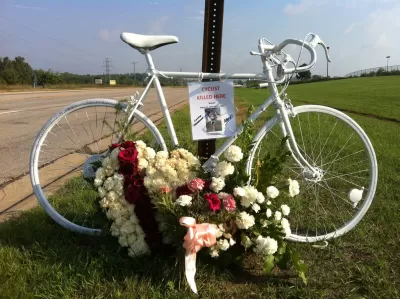
Ghost bikes—the stripped-down white bicycles memorializing cyclists killed on the road—are disappearing in Houston, writes Jay R. Jordan for the Houston Chronicle. The bikes, installed primarily by Steve and Melissa Sims, are sometimes stolen for parts, defaced, or removed by neighbors.
Thanks to the Houston Ghost Bike Facebook group, the Sims have accrued a sizable collection of replacement bikes. But the work of preparing and installing them is time-consuming, and the couple is calling on other Houstonians to volunteer their time and help them install the ghost bikes. "Their work is often thankless, but the memorials they place serve as solemn reminders for drivers and riders about the dangers of Houston's roadways."
Usually placed, informally, by volunteer activists like the Sims, ghost bikes have proliferated around the world as a somber memorial drawing attention to road safety and the dangers facing cyclists on urban roads. In 2017, the Chicago Tribune published a map of that city's ghost bikes.
FULL STORY: Volunteers need help replacing stolen ghost bikes in Houston

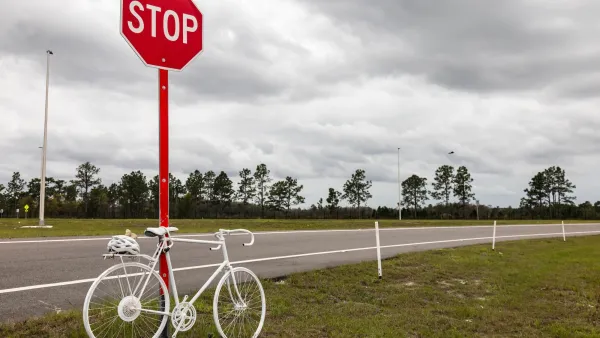
Landscapes of love and loss
As urban planners, every piece of infrastructure we build is a memorial — whether we know it or not.
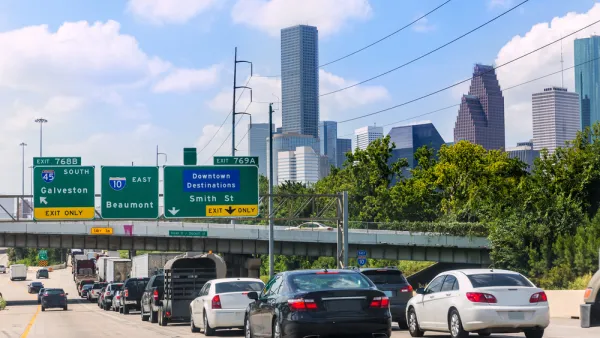
Houston Traffic Deaths Dipped in 2022
Fatal crashes killed slightly fewer people in 2022 than in 2021, but deaths are still significantly higher than in 2019.
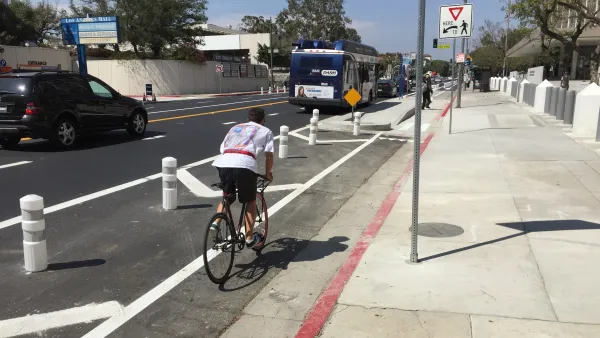
Less Paint, More Barriers, Make for Better Urban Cycling
New research from the University of Colorado Denver and the University of New Mexico sheds light on how to make cities safer for cyclists and other road users and refutes some assumptions about bike safety, such as "safety-in-numbers."

Planetizen Federal Action Tracker
A weekly monitor of how Trump’s orders and actions are impacting planners and planning in America.

The state-sanctioned urbicide of Austin
People don’t kill cities. Freeways do.

US to reduce Colorado River water deliveries to Mexico
A new Colorado Treaty amendment reduces Mexico’s Colorado River water allocation by 250,000 acre feet.

Brightline West’s future may rely on $6 billion federal loan
The company has until Nov. 2 to make a $400 million equity investment into its proposed high-speed rail line.

LA Metro’s ultimatum: no extra buses for LA28 if federal funding isn’t imminently secured
If Metro does not provide additional buses, LA28 organizers will have to find a new way to manage Olympic traffic. LA28’s budget does not include a line item for transit.

Colorado’s Largest Data Center Could Rise Next to Homes — Without a Public Hearing
The proposed campus would consume 11 times the power of Denver International Airport; as it has across the country, opposition mounts.

FREE Course: Walkable City 1: Why Walkability?
After describing his path towards focusing on walkability as the essence of good planning, Jeff Speck marches through his five principal reasons for making more walkable places.
Reinventing Malls: Planning Alchemy—Turning Gray Fields Into Gold
The course focuses on the opportunities and imperatives that shape reinvention of mall sites.

Eagle County Government
Harvard University Graduate School of Design
Nashville Planning Department
The Architects Foundation
University of Cincinnati Online
The Pocatello Development Authority
The Urban Renewal Agency of the City of Pocatello
Journal of the American Planning Association