Community groups are fighting a plan to build student housing in the historic People's Park.


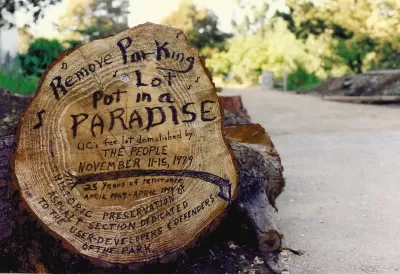
If a national historic designation becomes official, reports Keith Burbank, the University of California, Berkeley could lose the right to build new student housing on the site of People's Park, which the State Historical Resources Commission recommended for national designation in a unanimous vote.
The plan to build the 11-story building plus a separate building for supportive housing has been approved by the city's mayor and other officials, but faces opposition and lawsuits from community groups who claim the plan fails to account for all the potential environmental impacts of the new construction, such as obstruction of historic buildings and loss of habitat for local birds. While owned by the university, the park has a long tradition as a public space and a sanctuary for the city's unhoused population, as well as a gathering point for protests and mutual aid projects. Critics say the proposed development would erase the park's radical history and displace the people who depend on it.
The university says the new housing will reduce demand in other parts of the city, improve safety in the park, and place more student housing within walking distance of the campus. The proposed supportive housing would include 125 units for formerly unhoused and low-income people.
Despite its liberal reputation, Berkeley is also the birthplace of single-family zoning, also known in housing advocacy circles as exclusionary zoning. Earlier this year, facing a drastic housing shortage, the city voted to eliminate the designation, and plans to embed the change in its general plan in the next two years.
FULL STORY: People’s Park historic designation won’t stop student housing at Berkeley site


UC Berkeley Says Supportive Housing ‘Inseparable’ Part of People’s Park Project
The park remains closed to the public as a court weighs a decision on the university’s proposed housing development.
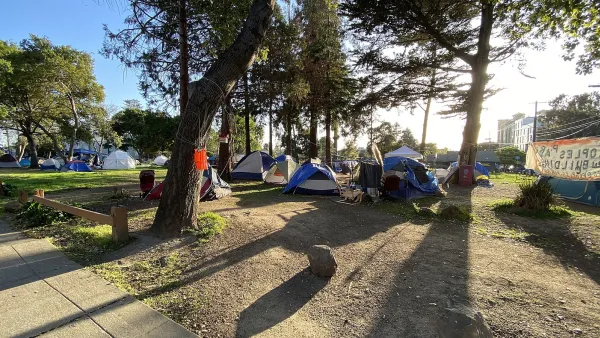
UC Berkeley Commits to Supportive Housing Project in People's Park
The university will work with the city and local nonprofits to provide 42 units of housing and supportive services to unhoused people living in Berkeley's iconic People's Park.
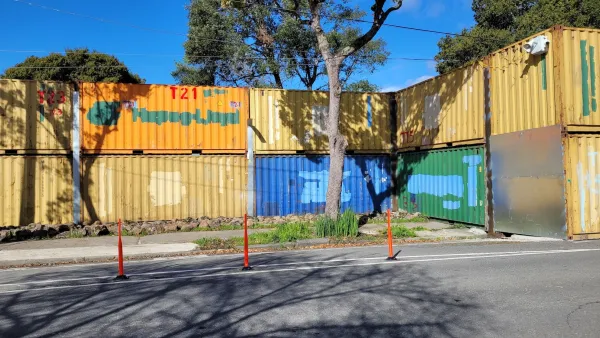
Berkeley promised to build supportive housing in People's Park. Where is it?
More than two years after People's Park was cordoned off, there is no word on a timeline for a promised affordable housing project.

The state-sanctioned urbicide of Austin
People don’t kill cities. Freeways do.

US to reduce Colorado River water deliveries to Mexico
A new Colorado Treaty amendment reduces Mexico’s Colorado River water allocation by 250,000 acre feet.

New Jersey’s second-largest city bans standalone data centers
Jersey City will continue to allow co-location facilities, such as those meant for research institutions that store their own data.

Amtrak not solely to blame for New Jersey commuter rail's unreliability, report finds
A new study from the Garden State Initiative found that NJ Transit’s budget grew 20% across a 4 year period, but reliability declined significantly over the same period.

EPA erases limits on planet-warming pollution from power plants
Under Monday’s plan, power plants would still have some limits on how much mercury, arsenic and other contaminants they can emit.

Phoenix announces new on-demand transit service, more frequent RAPID buses
Both new services will launch in October, and are part of Phoenix's Project Effective Access Solutions for Easing Congestion.

FREE Course: Walkable City 1: Why Walkability?
After describing his path towards focusing on walkability as the essence of good planning, Jeff Speck marches through his five principal reasons for making more walkable places.
Reinventing Malls: Planning Alchemy—Turning Gray Fields Into Gold
The course focuses on the opportunities and imperatives that shape reinvention of mall sites.


Eagle County Government
Harvard University Graduate School of Design
Nashville Planning Department
The Architects Foundation
University of Cincinnati Online
The Pocatello Development Authority
The Urban Renewal Agency of the City of Pocatello
Journal of the American Planning Association