The university will work with the city and local nonprofits to provide 42 units of housing and supportive services to unhoused people living in Berkeley's iconic People's Park.


Teresa Watanabe reports on a historic agreement between the University of California, Berkeley, the city, and nonprofit partners to provide temporary housing and social services to unhoused people in People's Park. The park has been the focus of controversy as the university struggles to provide housing for a growing student body (more on that legal fight here). As part of the plan to redevelop the park, "About 60% of the 2.8-acre park will remain open green space, and a memorial to its storied history will be erected."
Unlike previous Berkeley mayors who were hesitant to change the iconic park, Arreguín supported the campus’ desire to develop the land. And Christ, despite struggling with a major campus budget deficit, committed funds to hire a social worker for the park and housing and services for unsheltered people, even though addressing homelessness is not generally seen as a university responsibility.
According to Watanabe, "The city and campus have hammered out a deal to lease 42 rooms for 18 months at the Rodeway Inn for those living in the park." Residents will receive a private room, linens and toiletries, meals, healthcare and counseling, and other supportive services. "The city will cover the costs of the lease and nonprofit services for 12 months, using a $4.7-million state grant earmarked to help people living in encampments find safe and stable housing. UC Berkeley has committed $2.2 million to cover the last six months."
The article describes the park's tumultuous history as an iconic site for political protests and free speech actions. Today, opinion remains divided on the future of the park. "When the project was first announced in 2018, some of the unhoused people in the park welcomed it while others objected, saying it would obliterate the space’s rich history and destroy the community bonds forged over communal feedings, gardening and cultural events." City and university officials hope the project will help create a more livable city for all residents. "This partnership will put a roof over the heads of those living in People’s Park, instead of simply pushing them from one neighborhood to another," said Berkeley mayor Jesse Arreguín.
FULL STORY: UC Berkeley to offer housing to homeless in People's Park

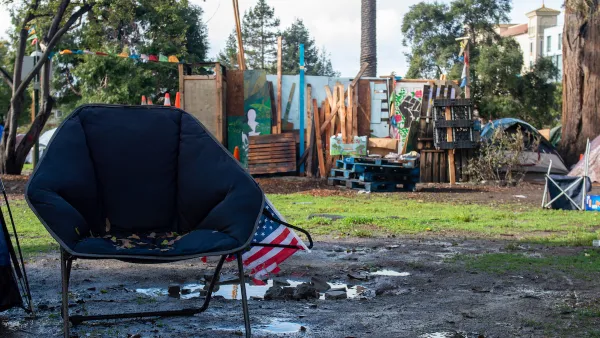
UC Berkeley Says Supportive Housing ‘Inseparable’ Part of People’s Park Project
The park remains closed to the public as a court weighs a decision on the university’s proposed housing development.
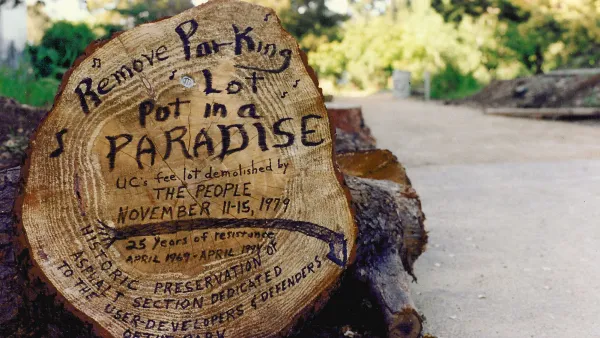
A Fight For the Future of People's Park
Community groups are fighting a plan to build student housing in the historic People's Park.
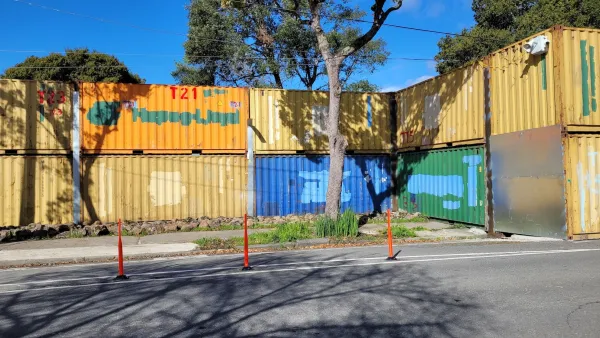
Berkeley promised to build supportive housing in People's Park. Where is it?
More than two years after People's Park was cordoned off, there is no word on a timeline for a promised affordable housing project.

The state-sanctioned urbicide of Austin
People don’t kill cities. Freeways do.

US to reduce Colorado River water deliveries to Mexico
A new Colorado Treaty amendment reduces Mexico’s Colorado River water allocation by 250,000 acre feet.

New Jersey’s second-largest city bans standalone data centers
Jersey City will continue to allow co-location facilities, such as those meant for research institutions that store their own data.

Amtrak not solely to blame for New Jersey commuter rail's unreliability, report finds
A new study from the Garden State Initiative found that NJ Transit’s budget grew 20% across a 4 year period, but reliability declined significantly over the same period.

EPA erases limits on planet-warming pollution from power plants
Under Monday’s plan, power plants would still have some limits on how much mercury, arsenic and other contaminants they can emit.

Phoenix announces new on-demand transit service, more frequent RAPID buses
Both new services will launch in October, and are part of Phoenix's Project Effective Access Solutions for Easing Congestion.

FREE Course: Walkable City 1: Why Walkability?
After describing his path towards focusing on walkability as the essence of good planning, Jeff Speck marches through his five principal reasons for making more walkable places.
Reinventing Malls: Planning Alchemy—Turning Gray Fields Into Gold
The course focuses on the opportunities and imperatives that shape reinvention of mall sites.


Eagle County Government
Harvard University Graduate School of Design
Nashville Planning Department
The Architects Foundation
University of Cincinnati Online
The Pocatello Development Authority
The Urban Renewal Agency of the City of Pocatello
Journal of the American Planning Association