Community activists across the city have fought to clean up, preserve, and enhance former industrial sites as parks, community gardens, and green spaces.


In a piece for High Country News, photographer Stella Kalinina documents Los Angeles communities that have taken action to create healthy green spaces out of degraded former industrial sites in their neighborhoods. Featured projects include:
- West Carson's Wishing Tree Park: "This site was created to serve as a buffer zone between the Del Amo Superfund Site toxic-waste pits and the community. Between the 1940s and 1970s, Montrose Chemical dumped hazardous levels of DDT in a ravine on which homes were later built. The DDT was removed in the 1990s, and 67 of the houses were torn down, but some heavy metals remain. As an extra precaution, another two feet of clean soil has been added."
- Los Angeles State Historic Park: "Los Angeles State Historic Park opened in 2017 at the former site of the Southern Pacific Transportation Company’s River Station. In one of LA’s landmark environmental justice victories, a large and diverse alliance of community and civic groups fought for years to turn this contaminated former rail yard into a park instead of a massive warehouse complex."
As Kalinina writes, "[t]his reuse of industrial space, often spearheaded by communities of color that have historically lacked easy access to parks and gardens, provides an inspiring blueprint for how to reclaim and replenish the land, both for ourselves and the generations to come."
FULL STORY: Reclaiming LA


A Microfarm Grows in an L.A. Front Yard
The founder of Asante Microfarm hopes his farm will serve as a model for bringing fresh produce to underserved communities.
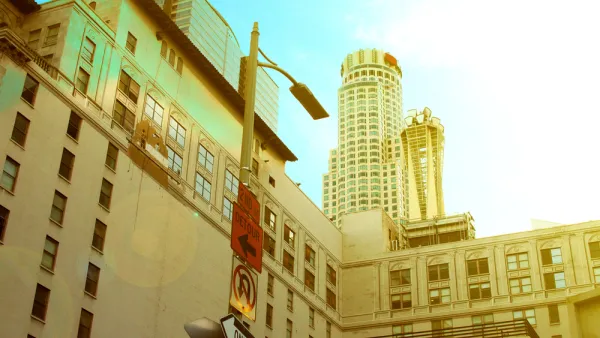
New Community Plan Poises Downtown L.A. for Transformation
In addition to a contemporary vision for Downtown, the plan debuts a new approach to zoning that could help transform the entire city.
How the Los Angeles Neighborhood Land Trust Gets the Job Done
In a city of increasingly scarce land, the Los Angeles Neighborhood land Trust has a track record of ushering community gardens and other public health resources in low-income communities.

Planetizen Federal Action Tracker
A weekly monitor of how Trump’s orders and actions are impacting planners and planning in America.

The state-sanctioned urbicide of Austin
People don’t kill cities. Freeways do.

US to reduce Colorado River water deliveries to Mexico
A new Colorado Treaty amendment reduces Mexico’s Colorado River water allocation by 250,000 acre feet.

5 New England states march closer to 800 megawatt wind energy project
Securing federal approval for the project may be complicated under the Trump administration, which has historically been hostile towards domestic wind power.

Baltimore to break ground on $50 million Transit Priority Project
The project will bring faster bus trips, safer streets and better bike connections to Baltimore.

Airbnb launches $250 million 'last-dollar financing' housing accelerator, makes first investment in Austin
The company will put $6.4 million towards affordable housing development in Texas’ capital.

FREE Course: Walkable City 1: Why Walkability?
After describing his path towards focusing on walkability as the essence of good planning, Jeff Speck marches through his five principal reasons for making more walkable places.
Reinventing Malls: Planning Alchemy—Turning Gray Fields Into Gold
The course focuses on the opportunities and imperatives that shape reinvention of mall sites.


Eagle County Government
Harvard University Graduate School of Design
Nashville Planning Department
The Architects Foundation
University of Cincinnati Online
The Pocatello Development Authority
The Urban Renewal Agency of the City of Pocatello
Journal of the American Planning Association