Los Angeles is mourning the death of billionaire philanthropist Eli Broad. For all of Broad's many civic contributions, he made his fortune in a decidedly anti-urban way.


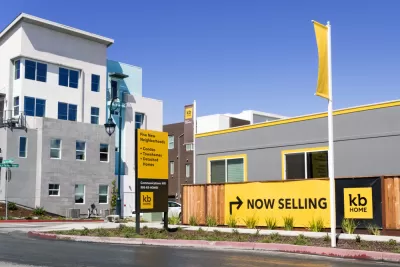
"Broad built tract homes. He built them on the urban fringe. Once he was done bulldozing one fringe, he went on to the next, pushing the rings of sprawl outward from whichever urban center they orbited. He focused primarily on the Los Angeles and Phoenix regions, with projects in the San Antonio, Tucson, and Las Vegas areas, among others. Various incarnations of KB Home have built, in total, over 600,000 homes since Broad and partner Donald Kaufman founded the company in 1957."
"It’s not hard to imagine that, arriving in Los Angeles at that moment, Broad got inspired to put up an institution or two with his own name on it. As he grew wealthy, and especially as he got into modern art, he donated ever more generous sums to many of the city’s cultural institutions, including the Los Angeles County Museum of Art, the Museum of Contemporary Art, Disney Hall, the Broad Stage in Santa Monica, and many others. Few major civic institutions in L.A. lack a plaque, room, or building with Broad’s name on it."
"But even Broad’s urban vision is more of a complement to sprawl. It treats downtown as a seat of power and a freeway-accessible central location, drawing in the occasional museumgoer from Hemet or Fontana or some other suburb that he built. But there’s little indication that Broad believed in a true urban fabric."
Read the full story: Eli Broad, Urbanist

California Land Conservation Agreement Will Create Sprawl
A recent agreement between developers and environmental groups puts the conservationists in the unfortunate position of not being able to oppose a plan that is the epitome of sprawl, according this editorial.
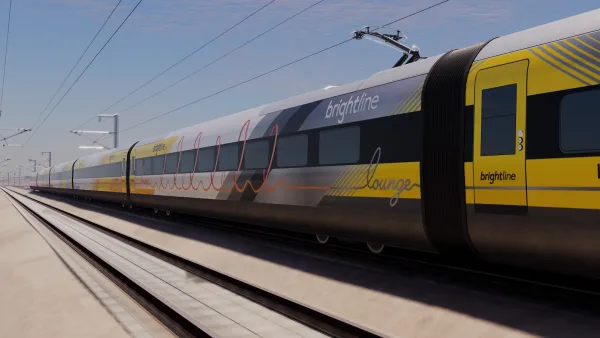
California’s Brightline West High-Speed Rail Announces 2029 Completion Date
The Las Vegas-to-Southern California rail line was originally slated to open for service in time for the 2028 Olympics.
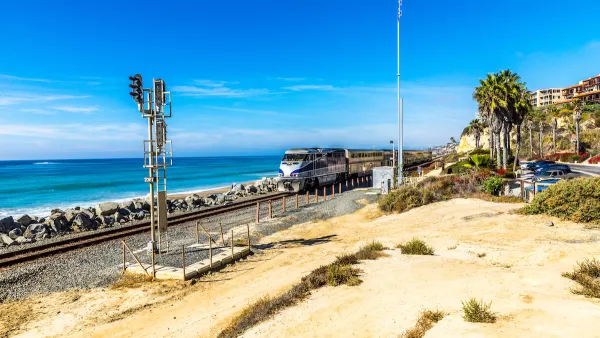
Storms Sever California Rail Line—Again
The coast-hugging rail corridor linking Los Angeles and San Diego faces an uncertain future as mudslides once again force part of the line to close.

Planetizen Federal Action Tracker
A weekly monitor of how Trump’s orders and actions are impacting planners and planning in America.

The state-sanctioned urbicide of Austin
People don’t kill cities. Freeways do.

US to reduce Colorado River water deliveries to Mexico
A new Colorado Treaty amendment reduces Mexico’s Colorado River water allocation by 250,000 acre feet.

Nation's most wind-powered state turns to coal as data centers increase energy demand
For the first time in decades, Iowa has increased its generation of coal power.

NYC cools commuters with city's first rain garden above a bus stop
New York City officials say the plants in the rain garden can absorb 16 gallons of rainwater during heavy storms.

Brightline West’s future may rely on $6 billion federal loan
The company has until Nov. 2 to make a $400 million equity investment into its proposed high-speed rail line.

FREE Course: Walkable City 1: Why Walkability?
After describing his path towards focusing on walkability as the essence of good planning, Jeff Speck marches through his five principal reasons for making more walkable places.
Reinventing Malls: Planning Alchemy—Turning Gray Fields Into Gold
The course focuses on the opportunities and imperatives that shape reinvention of mall sites.

Greater Baltimore Committee
Eagle County Government
Harvard University Graduate School of Design
The Architects Foundation
University of Cincinnati Online
The Pocatello Development Authority
The Urban Renewal Agency of the City of Pocatello
Journal of the American Planning Association