Transit planning is land use planning and land use planning is transit planning.


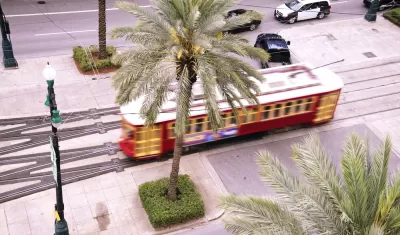
"Mayor LaToya Cantrell's administration is studying how to use a coming redesign of New Orleans' public-transportation system to create housing, retail and public amenities along new transit routes in the city," reports Jessica Williams.
"The 'transit-oriented communities' City Hall wants to create would see denser housing and a slew of businesses spring up near public transit lines, officials said at a public meeting this month. Green spaces and engaging architecture would make those neighborhoods more pedestrian-friendly, they said."
As explained by Williams, the Regional Transit Authority is expected to roll out a bus system redesign this summer. The New Links Transit Redesign Plan, approved by the City Council and mayor in March 2021, will consolidate bus routes to run buses more frequently on high-value routes. The push for planning tools to form transit-oriented communities would represent the land use integration with those transit plans.
"Ideally, the communities would entice more residents to use buses and streetcars, foster economic development, create safer streets and provide affordable housing opportunities that are closer to jobs, planners said."
Williams notes that the specific zoning tools that will implement a transit-oriented community vision will still have to be determined. Zoning changes designed to provide incentives for additional density have a spotty track record in New Orleans. A 2017 rework of the city's master plan "initially waived preservation rules to try and make it easier to develop denser, more affordable housing, particularly on popular public transit routes such as Magazine Street and St. Charles Avenue," but those proposed changes didn't make it into the final version of the plan.
The article is behind a paywall at Nola.com, but is available to read in full at Mass Transit.
FULL STORY: New Orleans city leaders want more 'transit-oriented' neighborhoods; Here's what that means


The Imagined Bay Area of 2070: Affordable, Equitable, Prosperous
An opinion published recently by the San Francisco Chronicle offers a provocative thought exercise: How did the Bay Area of 2070 achieve affordability, equity, sustainability and adaptation in the face of climate change, and new levels of prosperity?
Infrastructure and its Discontents
The significance of the Biden administration's expansive view of infrastructure is reflected in the flood of commentary published in the week since the public's first look at the American Jobs Plan.
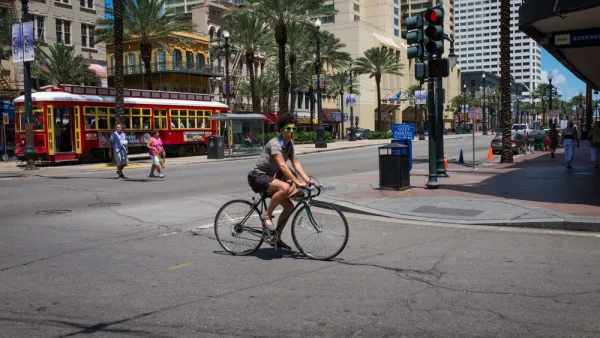
New Orleans Weighs Regional Transit Plan
A new proposal would improve wait times for area buses and bring more households within walking distance to transit stops.

Planetizen Federal Action Tracker
A weekly monitor of how Trump’s orders and actions are impacting planners and planning in America.

The state-sanctioned urbicide of Austin
People don’t kill cities. Freeways do.

US to reduce Colorado River water deliveries to Mexico
A new Colorado Treaty amendment reduces Mexico’s Colorado River water allocation by 250,000 acre feet.

Mamdani overhauls NYC's Vision Zero plan with 100 new policy goals
The overhaul aims to reduce traffic deaths and make streets safer for pedestrians, cyclists and drivers through lower speed limits, new safety infrastructure and more.

Amtrak not solely to blame for New Jersey commuter rail's unreliability, report finds
A new study from the Garden State Initiative found that NJ Transit’s budget grew 20% across a 4 year period, but reliability declined significantly over the same period.

EPA erases limits on planet-warming pollution from power plants
Under Monday’s plan, power plants would still have some limits on how much mercury, arsenic and other contaminants they can emit.

FREE Course: Walkable City 1: Why Walkability?
After describing his path towards focusing on walkability as the essence of good planning, Jeff Speck marches through his five principal reasons for making more walkable places.
Reinventing Malls: Planning Alchemy—Turning Gray Fields Into Gold
The course focuses on the opportunities and imperatives that shape reinvention of mall sites.

Eagle County Government
Harvard University Graduate School of Design
Nashville Planning Department
The Architects Foundation
University of Cincinnati Online
The Pocatello Development Authority
The Urban Renewal Agency of the City of Pocatello
Journal of the American Planning Association