A glut of new housing and development research has been published recently, shedding new light on some of the most fundamental questions of contemporary planning.



A new report by researchers at the University of California, Los Angeles compiles the relatively small body of recent research about the effects of market-rate development on rents in the surrounding neighborhood.
The report responds to the ongoing debate about the effects of market-rate development. "On one side are those who think new market-rate units — unsubsidized homes whose price often places them beyond the reach of lower- and middle-income households — make nearby housing more affordable by increasing availability and relieving pressure on the existing housing stock." And "An opposing view, however, is that new housing only attracts more wealthy households, brings new amenities to the neighborhood (including the housing itself), and sends a signal to existing landlords that they should raise their rents."
Hat/tip to Michael Lens for sharing the news of the new report on Twitter.
The report helpfully reviews and discusses recent research—six working papers published since 2019—to reveal how much more information is now available on the subject than in the relatively recent past.
The six working papers detailed in the report also have new company, with a trio of research papers published this week on the subject of upzoning. A tweet by Yonah Freemark is spreading news about the new research on social media.
3 papers on upzoning just released:
-Dong finds upzoning associated w/housing construction https://t.co/qpio45EK9n
-Kuhlmann finds upzoning associated w/ 3+%in property prices https://t.co/C4XdMik5yX
-Davis finds upzoning associated w/white residents https://t.co/Vs1h6LseAo— Yonah Freemark (@yfreemark) February 17, 2021
A second tweet by Freemark notes another study from New Zealand published in August 2020.
FULL STORY: Research Roundup: The Effect of Market-Rate Development on Neighborhood Rents

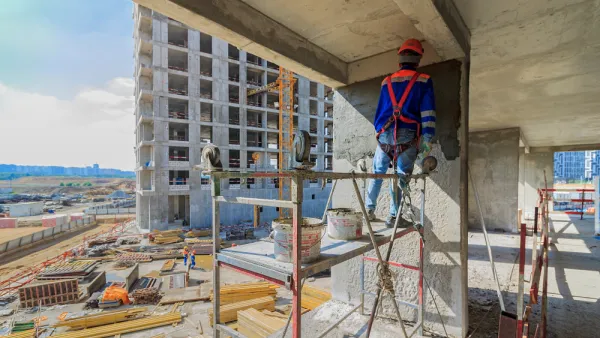
New Market-Rate Housing Lowers Rents for Everyone, According to New Research
A study published by a German researcher adds ammunition to the cause of improving housing affordability by legalizing and building new supply.

Lack of Multi-Family Zones Contributes to Nashville’s High Housing Costs, Study Says
Nashville and surrounding communities allow for a relatively small amount of multi-family housing, according to a new zoning atlas of Middle Tennessee. A regionally focused nonprofit is using the atlas to push for zoning reforms.
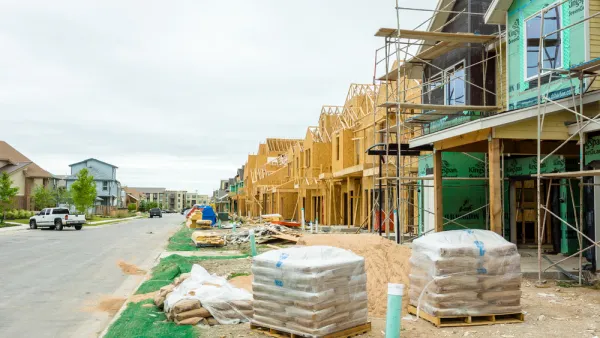
The Housing Affordability Recipe
Smart policies can ensure that low- and moderate-income households can find suitable housing in good neighborhoods where transportation costs are low. The research is clear: upzoning works.

Planetizen Federal Action Tracker
A weekly monitor of how Trump’s orders and actions are impacting planners and planning in America.

The state-sanctioned urbicide of Austin
People don’t kill cities. Freeways do.

US to reduce Colorado River water deliveries to Mexico
A new Colorado Treaty amendment reduces Mexico’s Colorado River water allocation by 250,000 acre feet.

Baltimore to break ground on $50 million Transit Priority Project
The project will bring faster bus trips, safer streets and better bike connections to Baltimore.

Airbnb launches $250 million 'last-dollar financing' housing accelerator, makes first investment in Austin
The company will put $6.4 million towards affordable housing development in Texas’ capital.

Guerilla urbanists are building DIY bus stop benches in Chicago
A before-and-after of one of the bus stops with a new bench. The new benches are not officially sanctioned or permitted, but the residents who placed them hope they will be the start of a network of DIY benches across the city.

FREE Course: Walkable City 1: Why Walkability?
After describing his path towards focusing on walkability as the essence of good planning, Jeff Speck marches through his five principal reasons for making more walkable places.
Reinventing Malls: Planning Alchemy—Turning Gray Fields Into Gold
The course focuses on the opportunities and imperatives that shape reinvention of mall sites.

Eagle County Government
Harvard University Graduate School of Design
Nashville Planning Department
The Architects Foundation
University of Cincinnati Online
The Pocatello Development Authority
The Urban Renewal Agency of the City of Pocatello
Journal of the American Planning Association