Christian Street, known at the beginning of the 20th century as the Black "Doctor's Row" should have been on the Historic Register years ago, according to this article.


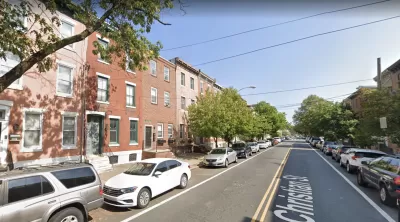
Pulitzer Prize-winning architecture critic Inga Saffron shares news of a development proposal on a block known as "Doctor's Row" in Philadelphia—a stretch of townhomes on Christian Street home to numerous Black professionals at the beginning of the 20th century.
Saffron describes the importance of the street and the surrounding neighborhood at the beginning of the 20th century:
…in 1916, the surrounding neighborhood, now known as Graduate Hospital, was the epicenter of Black cultural life in Philadelphia, and Christian Street was its main thoroughfare, according to Evergreens, a neighborhood history by Andrew Dalzell. Interspersed among the fine houses were some of the city’s most important Black churches and Black-run civic institutions. The great concert singer Marian Anderson, who had grown up nearby, bought a house in the neighborhood in 1924. It was her husband, Orpheus Hodge Fisher, another Black Philadelphia architect, who introduced Abele to the French pianist who would become his wife.
According to Saffron, the fact that the street block wasn't added to the Historic Register years ago shows that the city’s Historical Commission doesn't care much for the importance of Black identity in the city's history (it's a familiar story in cities all over the country). The lack of protections in the neighborhood are coming to head now that Graduate Hospital is the most gentrified neighborhood in the city—a distinction Saffron detailed in an article from 2018. Now Stamm Development Group is proposing a luxury condo development to be built at 1513 Christian Street, previously the site of a boarding house and one of the few places left in the neighborhood offering relatively cheap rents.
"Stamm was able to get a zoning permit for the taller, luxury building by paying into a fund intended to increase the city’s stock of affordable housing. Permission for the additional floor will cost the company all of $34,000, according to city planning officials." Saffron calls the development's use of the city's Height Bonus program the punchline of the story.
"[T]ogether with the 10-year property tax abatement (which was just extended to the end of 2021), such incentives are skewing the financial model for development in Philadelphia. With its huge inventory of sturdy 19th- and 20th-century townhouses, the city once excelled at renovations and adaptive reuses of older buildings. Now, zoning and tax incentives increasingly reward teardowns," writes Saffron.
A lot more detail on the history of Christian Street and Graduate Hospital, along with the proposed development and the land use regulations of the city are included in the source article.
FULL STORY: Developer’s condos would destroy South Philly’s famed Black ‘Doctors’ Row’

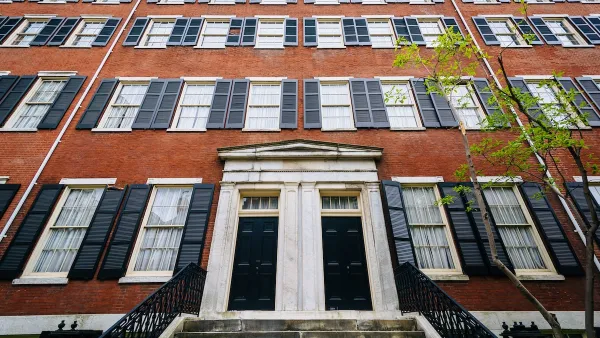
Philly Residents Push Back on New Historic Preservation District
Some residents of Philadelphia’s newly designated Washington Square West Historic District say the community was left out of the decision-making process that could impact housing costs and building requirements.
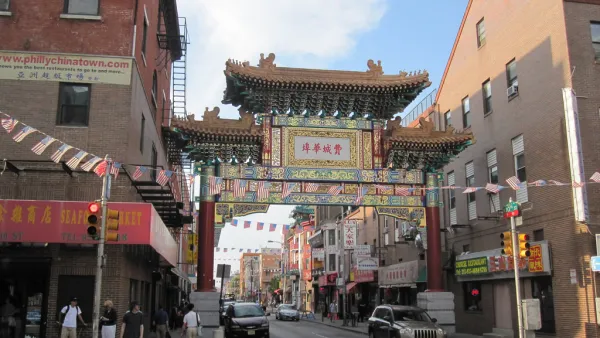
Equitable Development Plan Aims To Protect Philly's Chinatown
As the historic neighborhood experiences increased redevelopment around the new Rail Park, community activists are working to ensure older residents and businesses aren't displaced in the process.

Will Philly's New Mandatory Inclusionary Zoning Yield Results?
City leaders hope a new affordable housing law will increase the supply of affordable units in the city, but critics say the policy may lead to reduced construction and higher housing costs.

Planetizen Federal Action Tracker
A weekly monitor of how Trump’s orders and actions are impacting planners and planning in America.

The state-sanctioned urbicide of Austin
People don’t kill cities. Freeways do.

US to reduce Colorado River water deliveries to Mexico
A new Colorado Treaty amendment reduces Mexico’s Colorado River water allocation by 250,000 acre feet.

Colorado’s Largest Data Center Could Rise Next to Homes — Without a Public Hearing
The proposed campus would consume 11 times the power of Denver International Airport; as it has across the country, opposition mounts.

5 New England states march closer to 800 megawatt wind energy project
Securing federal approval for the project may be complicated under the Trump administration, which has historically been hostile towards domestic wind power.

Baltimore to break ground on $50 million Transit Priority Project
The project will bring faster bus trips, safer streets and better bike connections to Baltimore.

FREE Course: Walkable City 1: Why Walkability?
After describing his path towards focusing on walkability as the essence of good planning, Jeff Speck marches through his five principal reasons for making more walkable places.
Reinventing Malls: Planning Alchemy—Turning Gray Fields Into Gold
The course focuses on the opportunities and imperatives that shape reinvention of mall sites.

Eagle County Government
Harvard University Graduate School of Design
Nashville Planning Department
The Architects Foundation
University of Cincinnati Online
The Pocatello Development Authority
The Urban Renewal Agency of the City of Pocatello
Journal of the American Planning Association