Coronavirus-mitigating design interventions make their debut indoors as interior architects and designers ponder the possibilities for traditional office spaces.


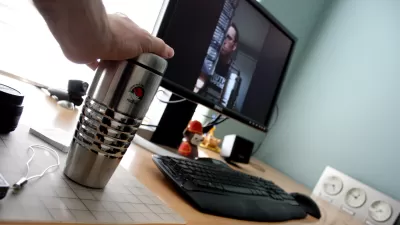
Interior architects are making big design decisions that will shape the future of the structure of the traditional office. A well designed-interior built environment is the handiwork of an effective interior architect, says Blair Kamin.
Despite higher rates of remote work, the labor of interior architects is in high demand to create solutions that allow workers to reenter office spaces in a safe manner. And landlords are hoping their solutions will prove to be enough to bring companies back into the traditional workplace.
"With millions of people working from home and many companies saying that remote work is here to stay, landlords are under intense pressure to retrofit, redesign and re-imagine their office properties. Otherwise, they’re going to lose tenants," writes Kamin.
So far, interior architects have imagined such creative implementations facing workers away from each other to reduce the potential spread of air-borne germs. Others have suggested using the office space more sparingly: "In the future, experts speculate, office workers may do individual 'focused' tasks at home while offices become flexible spaces mainly used for meetings," writes Kamin.
It's now the work of interior architects and designers to create spaces that prioritize the safety of workers by reinventing the spaces they inhabit.
Read the full story: Column: Meet the secret weapon for fighting the pandemic: Interior architects
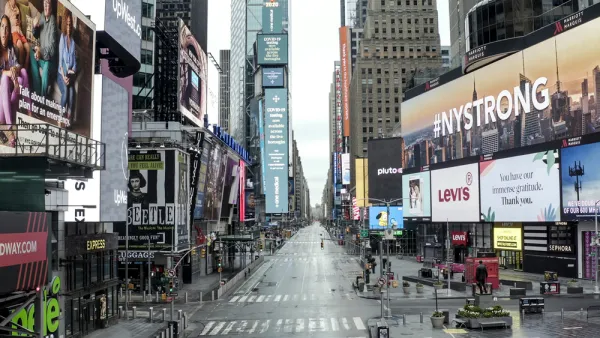
Biden Signs Legislation Ending Covid 19 National Emergency
The Covid 19 national emergency enacted by then-President Donald Trump in March 2020 was officially ended on Monday by President Joe Biden.
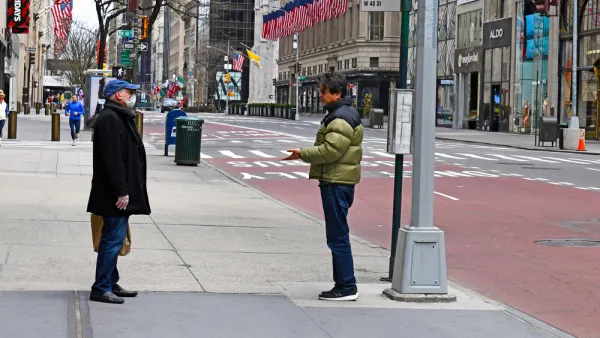
Friday Eye Candy: Covid-19, Then and Now
The New York Times compared images from readers portraying similar scenes in 2020 and 2022.
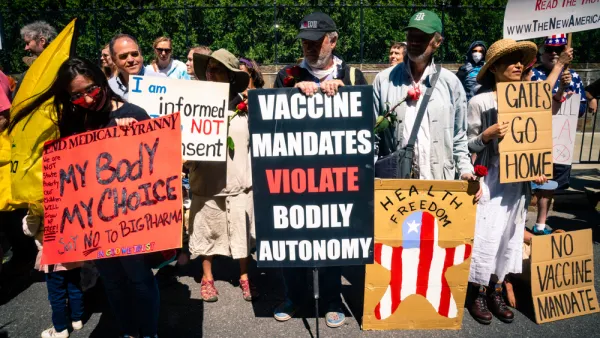
The Shifting Demographics of Covid-19
For most of the Covid-19 pandemic, Black Americans died at much higher rates than White Americans. That trend has reversed at times during the past year.

Planetizen Federal Action Tracker
A weekly monitor of how Trump’s orders and actions are impacting planners and planning in America.

California plans to bury El Niño’s downpour
If the state plays its cards right, it may be able to store a billion acre-feet of El Niño’s water in aquifers.

Desperate measures: Advocates weigh draining Lake Powell to fill Colorado River
Draining the reservoir could reduce evaporation losses by a couple hundred thousand acre-feet.

US buildings threatened, destroyed by fires set to triple by 2060
Researchers found a high fire risk for socioeconomically vulnerable neighborhoods in the American West.

LA residents may be allowed to paint their own crosswalks
Councilwoman Katy Yaroslavsky put out a motion instructing the Los Angeles Department of Public Transportation to study the feasibility of allowing volunteers to paint crosswalks.

Dallas moves to overhaul its zoning code
The city's zoning reform will allow more multi-family and mixed-use developments.

FREE Course: Walkable City 1: Why Walkability?
After describing his path towards focusing on walkability as the essence of good planning, Jeff Speck marches through his five principal reasons for making more walkable places.
Reinventing Malls: Planning Alchemy—Turning Gray Fields Into Gold
The course focuses on the opportunities and imperatives that shape reinvention of mall sites.

City of Rosemead
Rutgers University, Edward J. Bloustein School of Planning and Public Policy
One Hundred Miles
Hunter College, City University of New York (CUNY)
The Architects Foundation
University of Cincinnati Online
City of Cambridge
Montrose County
The Pocatello Development Authority