A recent article about Houston residents fleeing the city for College Station reads a lot like articles about New Yorkers decamping for less urban climes.


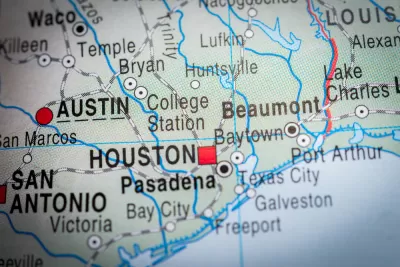
R.A. Schuetz reports that real estate interests in Brazos County are reporting an influx of new residents from Houston, located just short of 100 miles to the south.
"Since the pandemic, one out of three calls inquiring about homes in Mission Ranch, a master-planned community on [College Station's]’s southern edge, are from Houston, according to the subdivision’s developer, Caldwell Communities," according to Schuetz.
There are data from before the pandemic to suggest a larger trend was already at work, according to the article, in driving residents away from Houston. "Many have headed to Brazos County, home of College Station," writes Schuetz. "An estimated 3,800 people moved to Brazos County from Harris in 2017, the most recent year for which the Census data is available, making it the most popular destination for people moving out of Houston after Travis County, where Austin is located."
"The pandemic — which recently thrust Houston into the national spotlight for its surge in COVID-19 cases and strained hospital systems — is only the latest in a confluence of trends pulling people from Houston’s hustle and bustle to smaller towns an hour or two away. Terrible commutes, repeated flooding and a disconnect from nature are also driving people from the city," adds Schuetz by way of explaining a reason for the Houston exodus.
Jen Zweiacker, a real estate agent in College Station, "said she receives an influx of calls after every flood event in Houston," in more anecdotal evidence of the demand for non-Houston living.
Meanwhile, the College Station real estate market is booming: closed home sales grew 17 percent in June compared to the previous year, and the median home price grew 4.5 percent over the same period. Potential buyers could have even more reason to relocate to College Station after the Aggie Expressway tollway is completed in 2023.
An article by Jeff Andrews, written for Curbed in July 2020, argues that articles like this one about Houston, should be read with a healthy dose of skepticism.
Read the full story: People are ditching Houston for 'green pastures' because of city's COVID surge

Signs of Financial Distress Among Office Properties
The foreclosure risk facing a pair of high-profile office buildings highlight the debt difficulties facing the office sector as it deals with the fallout of the pandemic. The trend could be on the verge of picking up steam.
Two Stories From 2020: Which Is True?
Have all cities lost people due to COVID-19, or just a few high-cost ones?
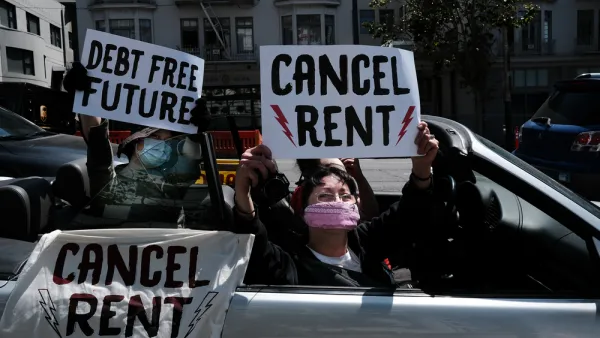
A Housing and Eviction Crisis Still Hangs Over the U.S., Just Like the Pandemic
Checking in with the numerous risks in the housing market as the economic fallout of the pandemic as approaches it approaches its second year.

Planetizen Federal Action Tracker
A weekly monitor of how Trump’s orders and actions are impacting planners and planning in America.

California plans to bury El Niño’s downpour
If the state plays its cards right, it may be able to store a billion acre-feet of El Niño’s water in aquifers.

Desperate measures: Advocates weigh draining Lake Powell to fill Colorado River
Draining the reservoir could reduce evaporation losses by a couple hundred thousand acre-feet.

Chicago Avenue bridge construction delays enrages city leaders
The bridge has been closed since 2025. The city originally aimed to re-open it in December, and now expects to finish construction in 2027.

NYC bus network redesign speeds up Queens buses
Rush routes have seen a 4.6% speed increase after the redesign.

California High-Speed Rail Authority picks trainset manufacturer
The California High-Speed Rail Authority aims to start servicing passengers by 2033.

FREE Course: Walkable City 1: Why Walkability?
After describing his path towards focusing on walkability as the essence of good planning, Jeff Speck marches through his five principal reasons for making more walkable places.
Reinventing Malls: Planning Alchemy—Turning Gray Fields Into Gold
The course focuses on the opportunities and imperatives that shape reinvention of mall sites.

City of Rosemead
Rutgers University, Edward J. Bloustein School of Planning and Public Policy
One Hundred Miles
Hunter College, City University of New York (CUNY)
The Architects Foundation
University of Cincinnati Online
City of Cambridge
Montrose County
The Pocatello Development Authority