The Roswell City Council discussed how limiting multi-family developments could increase housing costs, and then voted to limit multi-family development anyway.



The City Council of Roswell, Georgia approved changes this month to the city's unified development code (UDC) to limit the construction of new apartment buildings, in an attempt to spur the development of "higher-cost live, work, play destinations in that would resemble developments in the nearby city of Alpharetta," according to an article by Adrianne Murchison.
The changes to the UDC approved by the Roswell City Council, without feedback from the public, include limits on multi-family housing and excluding new apartment developments in certain commercially zoned areas, reports Murchison. "Other changes require mixed-used developments to have more than 50% of space dedicated to business and no multi-family units on the ground floor."
Murchison also reports that numerous city council members voiced concern that the proposed changes to Roswell's UDC would negatively affect lower income residents before the council voted to approve the changes.
FULL STORY: Roswell’s new limits on apartments could price some out of city, officials say


Pittsburgh Moves Ahead With Zoning Changes for University-Adjacent Neighborhood
The implementation of a new master plan for the neighborhood of Oakland, home to the University of Pittsburgh, is moving forward despite controversy and a contentious community engagement process.
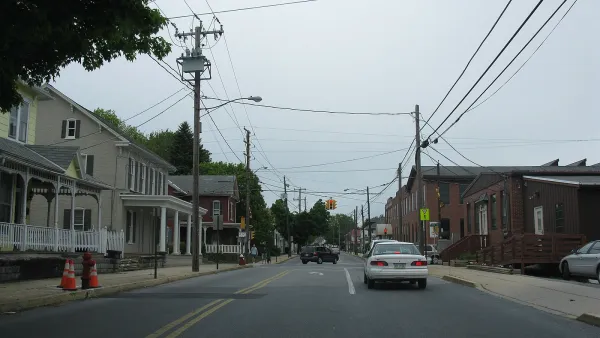
A Small Town Makes its First Zoning Update Since 1997
Mixed-use development and a floodplain overlay are the big-ticket items when the small community of Akron Borough in Pennsylvania recently updated its zoning code.

Sioux Falls Multi-Family Development Outpaces Transportation Improvements
Sioux Falls, South Dakota is undergoing a multi-family development boom. Residents are increasingly concerned about the traffic the development brings, according to local news reports.

Planetizen Federal Action Tracker
A weekly monitor of how Trump’s orders and actions are impacting planners and planning in America.

The state-sanctioned urbicide of Austin
People don’t kill cities. Freeways do.

US to reduce Colorado River water deliveries to Mexico
A new Colorado Treaty amendment reduces Mexico’s Colorado River water allocation by 250,000 acre feet.

5 New England states march closer to 800 megawatt wind energy project
Securing federal approval for the project may be complicated under the Trump administration, which has historically been hostile towards domestic wind power.

Baltimore to break ground on $50 million Transit Priority Project
The project will bring faster bus trips, safer streets and better bike connections to Baltimore.

Airbnb launches $250 million 'last-dollar financing' housing accelerator, makes first investment in Austin
The company will put $6.4 million towards affordable housing development in Texas’ capital.

FREE Course: Walkable City 1: Why Walkability?
After describing his path towards focusing on walkability as the essence of good planning, Jeff Speck marches through his five principal reasons for making more walkable places.
Reinventing Malls: Planning Alchemy—Turning Gray Fields Into Gold
The course focuses on the opportunities and imperatives that shape reinvention of mall sites.

Eagle County Government
Harvard University Graduate School of Design
Nashville Planning Department
The Architects Foundation
University of Cincinnati Online
The Pocatello Development Authority
The Urban Renewal Agency of the City of Pocatello
Journal of the American Planning Association