A study finds that a third of workers would prefer to work remotely every day of the workweek, potentially removing nearly 50 million cars from U.S. roadways.


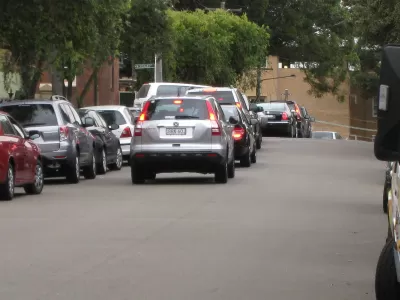
A massive pandemic-driven shift toward remote work environments has changed the attitude of U.S. workers. 75% of workers say they would prefer at least one workday from home per week moving forward, according to a study. Moreover, a third of workers reported a preference for daily remote work, reports Kea Wilson. Wilson describes the implications for the roadways: assuming each of a third of workers stopped commuting via car, allowing remote work for the group would remove "48.1 million cars from American roadways every single workday."
"And if employers give the workers what they want, they won’t just improve staff morale. They’ll be a part of ending not one, but three pandemics: the COVID-19 outbreak, the global climate change catastrophe, and the traffic violence crisis that has plagued our planet since the advent of the car," says Wilson.
Read the full story: A Third of U.S. Workers Want to Ditch Commutes and Work Remotely
Planning for Congestion Relief
The third and final installment of Planetizen's examination of the role of the planning profession in both perpetuating and solving traffic congestion.
Car Commutes and Congestion Are Back in D.C.
Low transit ridership and a more dispersed daytime workforce are creating new headaches for car commuters in the D.C. area—in a story likely to be repeated all over the country as work returns to the office.
San Diego Region Developing Long-Range Transportation Plan
The new plan, set to take effect in 2025, accounts for changes in mobility patterns brought on by remote work.

Planetizen Federal Action Tracker
A weekly monitor of how Trump’s orders and actions are impacting planners and planning in America.

Washington state to charge fee to drivers with fuel-efficient cars
Revenue from the fee will go towards supporting the state’s highways.

Trump to blast ‘hydrocarbon highway’ through ‘world’s longest art gallery’
Environmental and historic preservation groups are suing to stop the project.

MBTA Green Line project moved to next phrase of CIG program
The modernization effort will cost $4.08 billion.

22-mile pedestrian and bike path to encircle Atlanta by 2030
The project will also support affordable housing.

Army detonates nearly 5 tons of lead in Iowa
The detonation comes after days of delays and public outcry.

FREE Course: Walkable City 1: Why Walkability?
After describing his path towards focusing on walkability as the essence of good planning, Jeff Speck marches through his five principal reasons for making more walkable places.
Reinventing Malls: Planning Alchemy—Turning Gray Fields Into Gold
The course focuses on the opportunities and imperatives that shape reinvention of mall sites.

City of Charlotte
City of Rosemead
Rutgers University, Edward J. Bloustein School of Planning and Public Policy
University of Michigan School for Environment and Sustainability (SEAS)
Hunter College, City University of New York (CUNY)
The Architects Foundation
University District Partnership