Many Americans won't be able to pay the rent in July. Black people are more likely to rent and will bear the brunt of a wave of evictions.


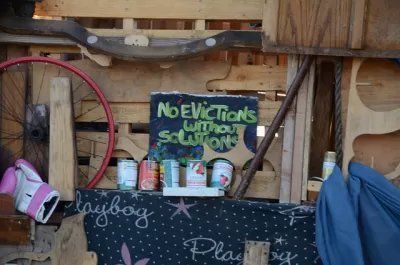
When local and state eviction moratoriums expire, many Americans are at risk of losing their homes during a period where over 20 million are unemployed. With Black and Latino Americans twice as white people to rent, the threat of eviction weighs disproportionally upon working-class people of color. According to recent Census Bureau data, 44% of black tenants believe they will not be able to come up with rent next month. "Housing advocates warn that landlords around the country are already preparing eviction proceedings to file the moment they’re allowed to proceed," reports Katy O'Donnell.
House Democrats passed a law placing a 12-month moratorium on eviction from federally funded properties and supplying $100 billion to tenants as rental assistance. For those not living in government-owned housing, the threat of impending eviction is heavy. "About 40 percent of homeless people in the U.S. and over half of homeless families with children are black, even though just 13 percent of the population is black," writes O'Donnell. Decades of racist housing policy have to be addressed to find a permanent solution.
Read the full story: Black community braces for next threat: Mass evictions

Fixing the Harms of the Eviction System
Emily Benfer talks about what needs to change in our housing and eviction systems—not just now, but once the pandemic is past, the connections between health and housing, and how she came to be a go-to voice on the eviction crisis.
Phoenix Eviction and Foreclosure Rates Doubled the National Average—Then the Pandemic Hit
A new report looks at pre-existing foreclosure and eviction rates to predict where the worst outcomes of the pandemic's economic downturn for homeowners and renters are likely to happen.
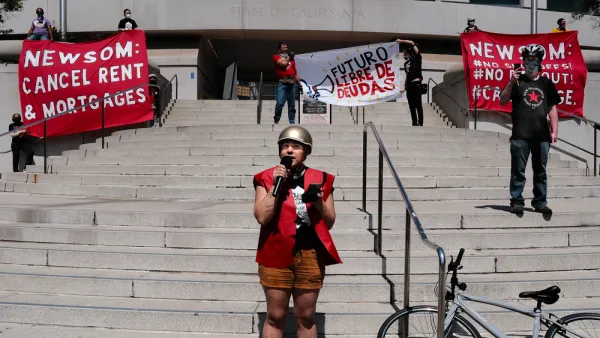
What Happens if 23 Million Renters Are Evicted?
Shelterforce spoke with researchers, advocates, lawyers, housing economists, and rental housing industry representatives to understand what that crisis would do to evicted families, public health, and the housing market.

Planetizen Federal Action Tracker
A weekly monitor of how Trump’s orders and actions are impacting planners and planning in America.

The state-sanctioned urbicide of Austin
People don’t kill cities. Freeways do.

US to reduce Colorado River water deliveries to Mexico
A new Colorado Treaty amendment reduces Mexico’s Colorado River water allocation by 250,000 acre feet.

Nation's most wind-powered state turns to coal as data centers increase energy demand
For the first time in decades, Iowa has increased its generation of coal power.

NYC cools commuters with city's first rain garden above a bus stop
New York City officials say the plants in the rain garden can absorb 16 gallons of rainwater during heavy storms.

Brightline West’s future may rely on $6 billion federal loan
The company has until Nov. 2 to make a $400 million equity investment into its proposed high-speed rail line.

FREE Course: Walkable City 1: Why Walkability?
After describing his path towards focusing on walkability as the essence of good planning, Jeff Speck marches through his five principal reasons for making more walkable places.
Reinventing Malls: Planning Alchemy—Turning Gray Fields Into Gold
The course focuses on the opportunities and imperatives that shape reinvention of mall sites.

Eagle County Government
Harvard University Graduate School of Design
Nashville Planning Department
The Architects Foundation
University of Cincinnati Online
The Pocatello Development Authority
The Urban Renewal Agency of the City of Pocatello
Journal of the American Planning Association