The National Cooperative Highway Research Program has released a report that looks at the effects of new transportation-related technologies on public agencies .



The National Cooperative Highway Research Program has released a report titled "Foreseeing the Impact of Transformational Technologies on Land Use and Transportation" that examines transformational technologies, including wireless telecommunications, shared vehicles, connected vehicles, fully autonomous vehicles, alternative-fuel vehicles, smart cities and communities, big data analytics, internet-of-things, unmanned aerial vehicle (UAVs, or drones), 3-D printing, and more.
"Public agencies face significant challenges continuing to perform their governmental functions in the face of the private sector’s prodigious output of these new technologies. Agencies need to rethink how they develop their policies and plans—and they need to obtain new expertise."
Read the full story: Foreseeing the Impact of Transformational Technologies on Land Use and Transportation
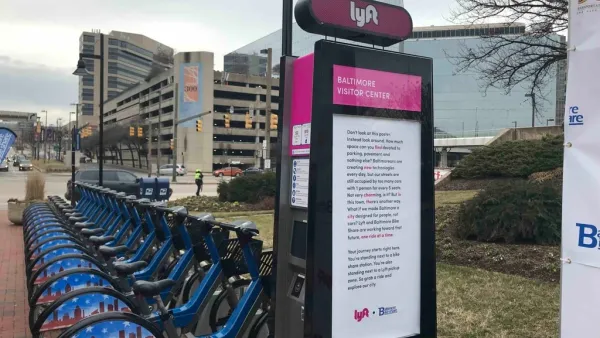
Uber and Lyft: A Tale of Two Companies
After years of resisting efforts by cities to regulate their business and constant—but unprofitable—growth, Uber and Lyft are homing in on their unique strengths.

Uber Bails on Autonomous Vehicles
One of the highest-profile, and most legally fraught, efforts to beat the competition into the autonomous vehicles market is now defunct.
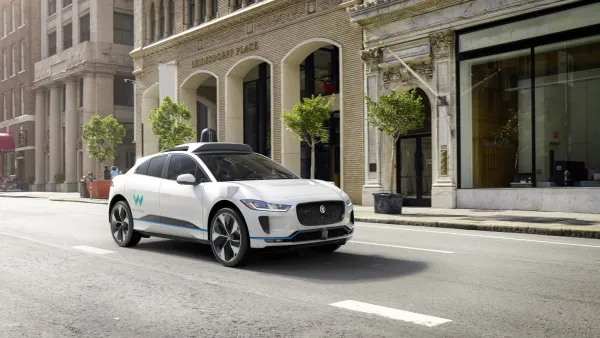
Year One of Waymo
Waymo, like Google a company of Alphabet Inc., has been offering self-driving ride-hailing service to the public for a year, providing 100,000 rides in the Phoenix area in the process.

Planetizen Federal Action Tracker
A weekly monitor of how Trump’s orders and actions are impacting planners and planning in America.

California plans to bury El Niño’s downpour
If the state plays its cards right, it may be able to store a billion acre-feet of El Niño’s water in aquifers.

Desperate measures: Advocates weigh draining Lake Powell to fill Colorado River
Draining the reservoir could reduce evaporation losses by a couple hundred thousand acre-feet.

Los Angeles just elected an urban planner as its mayor
Transportation analysts are optimistic that Raman will be more aggressive in addressing transit issues than Bass.

Mamdani’s pied-à-terre tax survives legal challenge
A panel of judges found that the plaintiffs failed to demonstrate injury as a result of New York City's implementation of the tax.

Eastern Nebraska is running out of electricity
Data centers and electrification are straining eastern Nebraska’s grid, throttling economic development.

FREE Course: Walkable City 1: Why Walkability?
After describing his path towards focusing on walkability as the essence of good planning, Jeff Speck marches through his five principal reasons for making more walkable places.
Reinventing Malls: Planning Alchemy—Turning Gray Fields Into Gold
The course focuses on the opportunities and imperatives that shape reinvention of mall sites.

City of Rosemead
Rutgers University, Edward J. Bloustein School of Planning and Public Policy
One Hundred Miles
University of Michigan School for Environment and Sustainability (SEAS)
Hunter College, City University of New York (CUNY)
The Architects Foundation
City of Cambridge
Montrose County
The Pocatello Development Authority