The Portland Planning and Sustainability Commission has proposed a truly radical development requirement for private developments in the city's downtown: spaces for the homeless.


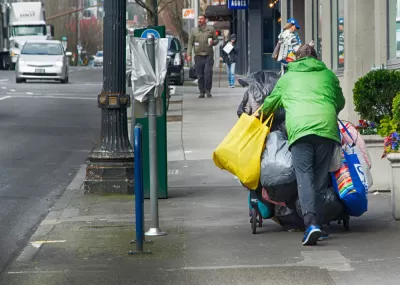
Updated on December 6, 2019: The Portland Bureau of Planning and Sustainability has released a statement clarifying information reported in the story shared below. According to the statement, the language proposed for the Design Overlay Zone Amendments (DOZA) project does not allow for camping or sleeping. The approved text of Guideline 6, the subject of the reporting share below, reads as follows: "Guideline 6: Provide opportunities to rest and be welcome." The headline and image of this story have been updated to clarify this information.
"If a majority of the Portland Planning and Sustainability Commission has its way, new private buildings downtown will be required to include spaces where houseless Portlanders can 'rest,' which could include sleeping and pitching tents," reports Nigel Jaquiss.
The idea, championed by Commissioner Oriana Magnera, is not a sure thing to reach the Portland City Council, after encountering vocal opposition from the minority that opposed the idea on the council.
FULL STORY: An Influential City Panel Wants New Private Buildings to Provide Space for Homeless Camping

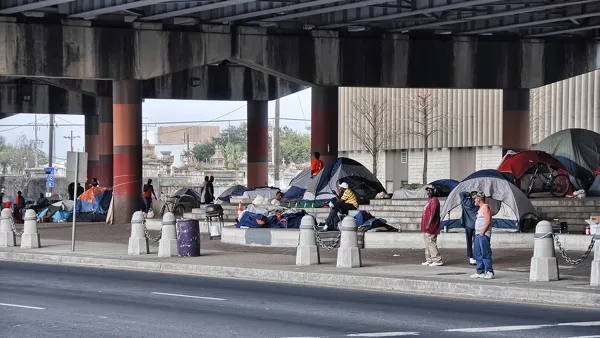
Problems With Portland Homeless Camp Clean-Up Program
An audit describes a number of issues with the city’s program to identify and remove illegal encampments.
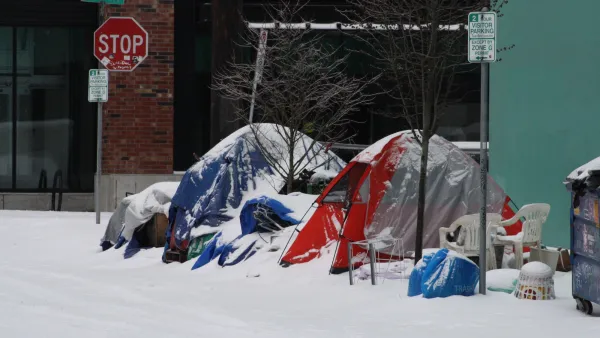
Portland Service Providers Say Mayor’s Methods for Ending Homelessness ‘Least Effective’
Experts say the mayor’s focus on overnight-only shelters fails to get people into long-term housing with the supportive services they need.
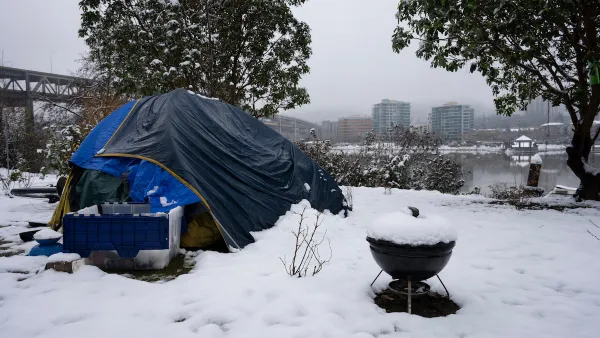
Portland Replaces Camping Ban With New Policy
Unhoused residents can sleep on public property when no shelter space is available, but still face penalties for violating new regulations or not moving into shelter if offered.

The state-sanctioned urbicide of Austin
People don’t kill cities. Freeways do.

US to reduce Colorado River water deliveries to Mexico
A new Colorado Treaty amendment reduces Mexico’s Colorado River water allocation by 250,000 acre feet.

New Jersey’s second-largest city bans standalone data centers
Jersey City will continue to allow co-location facilities, such as those meant for research institutions that store their own data.

Amtrak not solely to blame for New Jersey commuter rail's unreliability, report finds
A new study from the Garden State Initiative found that NJ Transit’s budget grew 20% across a 4 year period, but reliability declined significantly over the same period.

EPA erases limits on planet-warming pollution from power plants
Under Monday’s plan, power plants would still have some limits on how much mercury, arsenic and other contaminants they can emit.

Phoenix announces new on-demand transit service, more frequent RAPID buses
Both new services will launch in October, and are part of Phoenix's Project Effective Access Solutions for Easing Congestion.

FREE Course: Walkable City 1: Why Walkability?
After describing his path towards focusing on walkability as the essence of good planning, Jeff Speck marches through his five principal reasons for making more walkable places.
Reinventing Malls: Planning Alchemy—Turning Gray Fields Into Gold
The course focuses on the opportunities and imperatives that shape reinvention of mall sites.

Eagle County Government
Harvard University Graduate School of Design
Nashville Planning Department
The Architects Foundation
University of Cincinnati Online
The Pocatello Development Authority
The Urban Renewal Agency of the City of Pocatello
Journal of the American Planning Association