The Pacific Northwest is leading the way for bicycle safety at the state level, according to the latest report from the League of American Bicyclists.


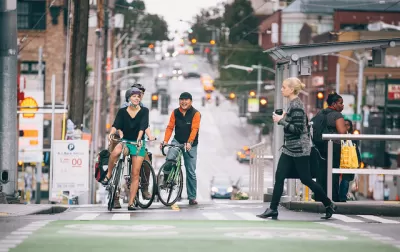
The League of American Bicyclists released its annual Bicycle Friendly State rankings at the end of November, commencing with a note on the tragedies that defined 2018: "In 2018, more people were killed while biking than in any year since 1990." That tragedy is followed by a note of hope: "After several years of increasing bicyclist deaths, there is still reason to believe we can be safer: every state is taking some action to make bicycling better. Some, but not enough."
According to the article by Ken McLeod that announces the new rankings, many state departments of transportation are making progress on bicycle safety. As listed in the article:
- Every state has now taken at least one of our five Bicycle Friendly Actions;
- State legislatures are increasingly providing funding for biking and walking improvements and helping state Departments of Transportation ensure that the safety of all users is a core part of their work;
- Eight statewide bike plans [pdf] have been adopted since 2017 and nine are currently in progress; and
- There is more data available than ever on biking and walking, often thanks to federal and state collaboration.
As for the rankings, West Coast states are clearly in the lead, with Washington and Oregon taking the top two spots, respectively. California came in at #4. Minnesota was at #3 and the fifth spot went to Massachusetts.
More insights and the full report can be found in the article. For local coverage of the rankings, see an article by Jonathan Maus on the progress made in Oregon to achieve that state's highest ranking ever.
FULL STORY: NEW BICYCLE FRIENDLY STATE RANKING SHOWS PROGRESS BUT PERILS PERSIST

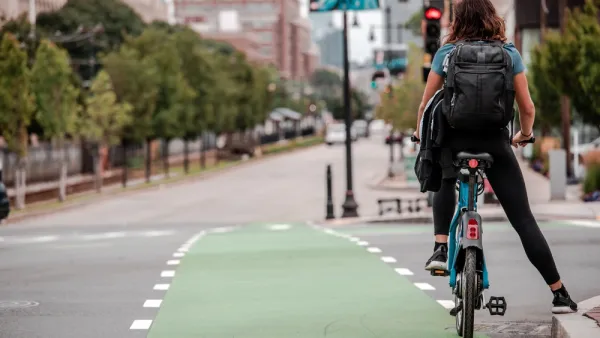
Bicycle Friendly States: Massachusetts Tops the List
For the first time since the League of American Bicyclists started ranking states for bicycle friendly practices and policies in 2008, Washington State does not appear at the top of the list.
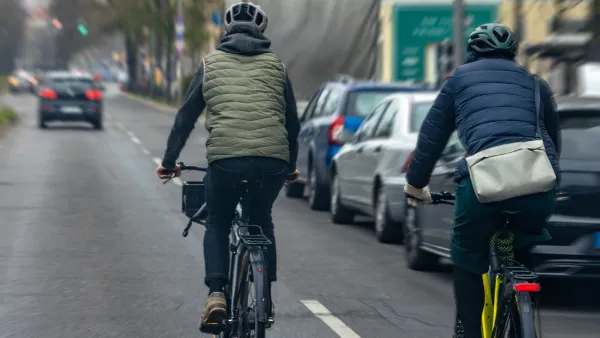
Op-ed: True bike safety requires more than the 'Dutch reach'
Making roads safe for all users takes policy and cultural changes that go beyond small behavioral interventions.
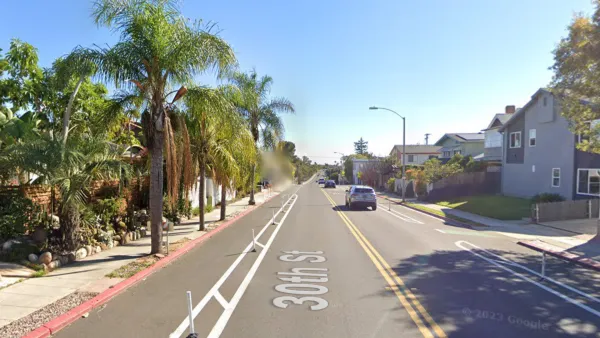
After San Diego Installed a Protected Bike Lane, Ridership More Than Doubled — and Hasn’t Stopped Growing.
“When people feel safe, they ride.”

Planetizen Federal Action Tracker
A weekly monitor of how Trump’s orders and actions are impacting planners and planning in America.

The state-sanctioned urbicide of Austin
People don’t kill cities. Freeways do.

US to reduce Colorado River water deliveries to Mexico
A new Colorado Treaty amendment reduces Mexico’s Colorado River water allocation by 250,000 acre feet.

Amtrak not solely to blame for New Jersey commuter rail's unreliability, report finds
A new study from the Garden State Initiative found that NJ Transit’s budget grew 20% across a 4 year period, but reliability declined significantly over the same period.

EPA erases limits on planet-warming pollution from power plants
Under Monday’s plan, power plants would still have some limits on how much mercury, arsenic and other contaminants they can emit.

Phoenix announces new on-demand transit service, more frequent RAPID buses
Both new services will launch in October, and are part of Phoenix's Project Effective Access Solutions for Easing Congestion.

FREE Course: Walkable City 1: Why Walkability?
After describing his path towards focusing on walkability as the essence of good planning, Jeff Speck marches through his five principal reasons for making more walkable places.
Reinventing Malls: Planning Alchemy—Turning Gray Fields Into Gold
The course focuses on the opportunities and imperatives that shape reinvention of mall sites.

Eagle County Government
Harvard University Graduate School of Design
Nashville Planning Department
The Architects Foundation
University of Cincinnati Online
The Pocatello Development Authority
The Urban Renewal Agency of the City of Pocatello
Journal of the American Planning Association