California is being forced to reckon with numerous negative public health outcomes caused by wildfires.


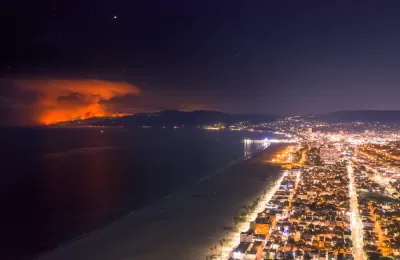
"Deadly fires across California over the past several years have shown how wildfire has become a serious public health and safety issue," write Faith Kerns and Matt Moritz. "Health effects from fires close to or in populated areas range from smoke exposure to drinking water contaminated by chemicals like benzene to limited options for the medically vulnerable. These kinds of threats are becoming major, statewide concerns."
The two writers are experts on water and fire, respectively, in the state, and they use this article to raise awareness about the need to treat wildfires as a public health threat. "This means taking a more robust approach to a host of issues, including focusing on where and how we build, taking the needs of vulnerable populations seriously, and ensuring that solutions are equitable."
The authors of the story also call out the state's urban planning practices and policies (a popular move these days).
Read the full story: Why we need to treat wildfire as a public health issue in California
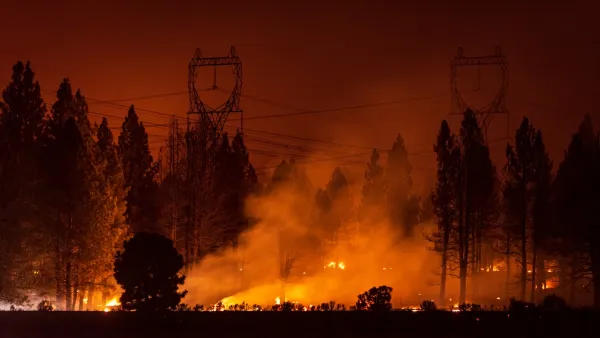
Intense October Heat Wave Raises Fire Risk in California
Unusually high temperatures across the state are prompting power shutoffs and could fuel more destructive wildfires.
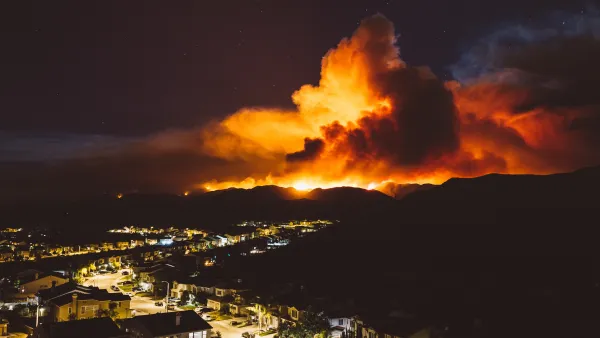
Wildfire Exposure More Than Doubled Since 2000
More intense and widespread fires caused by climate change and changing air temperature are threatening more existing communities.

Report: The West Is the Worst for Air Quality
Thanks to longer fire seasons and increasingly intense blazes, Western states are experiencing the nation’s worst air quality.

Planetizen Federal Action Tracker
A weekly monitor of how Trump’s orders and actions are impacting planners and planning in America.

California plans to bury El Niño’s downpour
If the state plays its cards right, it may be able to store a billion acre-feet of El Niño’s water in aquifers.

Desperate measures: Advocates weigh draining Lake Powell to fill Colorado River
Draining the reservoir could reduce evaporation losses by a couple hundred thousand acre-feet.

In Texas, data centers are swallowing promised parkland
Residents who moved to Taylor, Texas for a rural community now have to contend with three data centers in their backyard.

How a Chicago-sized wind farm beat the odds and powered on
The project spanned five presidential administrations and a standoff with a U.S. military base.

MTA gives itself 30 days to transform pit into basketball court
The site has been under construction since 2022; the city originally estimated it would finish the court in 2024.

FREE Course: Walkable City 1: Why Walkability?
After describing his path towards focusing on walkability as the essence of good planning, Jeff Speck marches through his five principal reasons for making more walkable places.
Reinventing Malls: Planning Alchemy—Turning Gray Fields Into Gold
The course focuses on the opportunities and imperatives that shape reinvention of mall sites.

City of Rosemead
Rutgers University, Edward J. Bloustein School of Planning and Public Policy
One Hundred Miles
Hunter College, City University of New York (CUNY)
The Architects Foundation
University of Cincinnati Online
City of Cambridge
Montrose County
The Pocatello Development Authority