Autonomous micromobility could solve some of dockless bike and scooter share companies' largest remaining challenges, like the local availability of scooters and conformity to local and federal regulations.


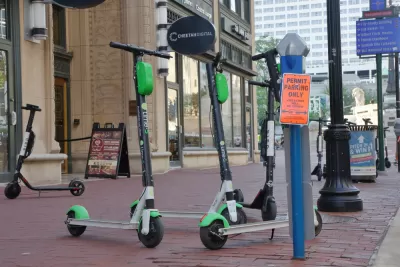
"A new startup called Tortoise, co-founded by Uber veteran Dmitry Shevelenko, aims to outfit scooters and bikes with technology that will allow them to move autonomously or through remote control," reports Jason Plautz.
The company's technology is attached to existing scooters, making it possible to move scooters to bike lanes, sidewalks, or parking areas remotely. "Tortoise claims the innovation will 'solve some of the biggest challenges' associated with micromobility, including clutter and on-demand availability," according to Plautz.
News of an autonomous scooter and bike technology first made in news in January 2019, when Uber started hiring its New Mobilities team and started discussing autonomous micromobility.
Tortoise has already reached partnerships with operators and manufacturers Wind, Gotcha, CityBee, Go X, and Shared, reports Plautz.
FULL STORY: Uber alum launches autonomous scooter startup

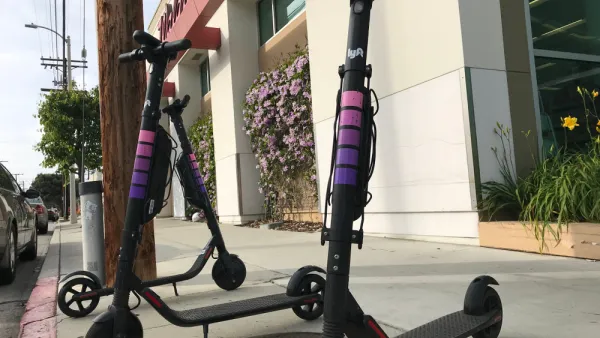
Lyft Pulls Micromobility From Los Angeles Area
The company will no longer provide shared bikes and scooters in the L.A. region, citing a ‘lack of longterm commitment’ from cities.
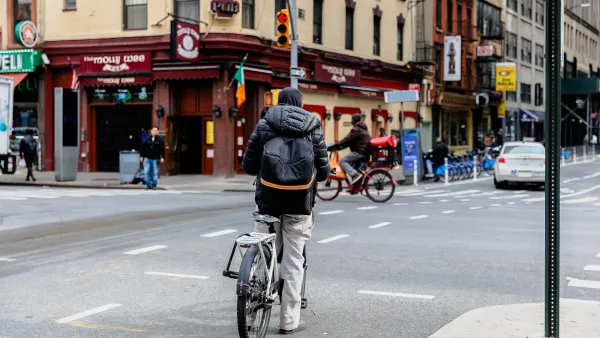
NYC e-bike injury study highlights 'critical infrastructure deficiencies'
The sharp rise in e-mobility injuries points to a need for safer roads, not more punitive laws.
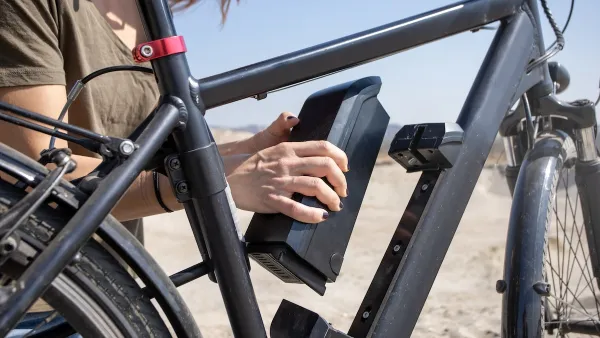
Jersey City Program Offers Battery Swaps for Electric Bikes and Scooters
Residents can swap depleted batteries for fully charged ones as well as charge and park their devices at two pilot sites.

Planetizen Federal Action Tracker
A weekly monitor of how Trump’s orders and actions are impacting planners and planning in America.

The state-sanctioned urbicide of Austin
People don’t kill cities. Freeways do.

US to reduce Colorado River water deliveries to Mexico
A new Colorado Treaty amendment reduces Mexico’s Colorado River water allocation by 250,000 acre feet.

5 New England states march closer to 800 megawatt wind energy project
Securing federal approval for the project may be complicated under the Trump administration, which has historically been hostile towards domestic wind power.

Baltimore to break ground on $50 million Transit Priority Project
The project will bring faster bus trips, safer streets and better bike connections to Baltimore.

Airbnb launches $250 million 'last-dollar financing' housing accelerator, makes first investment in Austin
The company will put $6.4 million towards affordable housing development in Texas’ capital.

FREE Course: Walkable City 1: Why Walkability?
After describing his path towards focusing on walkability as the essence of good planning, Jeff Speck marches through his five principal reasons for making more walkable places.
Reinventing Malls: Planning Alchemy—Turning Gray Fields Into Gold
The course focuses on the opportunities and imperatives that shape reinvention of mall sites.

Eagle County Government
Harvard University Graduate School of Design
Nashville Planning Department
The Architects Foundation
University of Cincinnati Online
The Pocatello Development Authority
The Urban Renewal Agency of the City of Pocatello
Journal of the American Planning Association