A plan to build a cap over Interstate 5 in Downtown Seattle has taken a small but significant step forward.


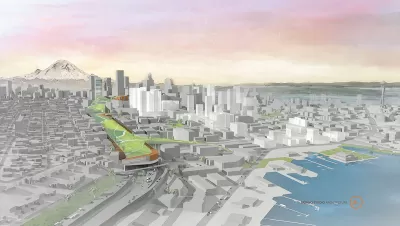
"Data collected by engineering firm WSP indicates that it is structurally possible construct a freeway lid over Interstate 5 (I-5) in Downtown Seattle within all four of the sub-areas studied, which extend from Madison Street to Denny Way," reports Natalie Bicknell.
The feasibility study also provides key findings on the engineering capabilities of the lid in terms of development that could be added in and around the I-5 lid: "The study also found that integrating midrise and highrise buildings with the lid structure would be compatible and in some cases preferable from an engineering standpoint to deal with grade changes." For more on the development potential for the I-5 lid project, see coverage by Doug Trumm published in December 2015.
Bicknell provides detailed coverage of the feasibility study's assessment of each of the four sub areas included in the project at this early stage in planning. Sub-area one, for instance, includes the Seattle Freeway Park. Sub-area two would integrate with the Seattle Convention Center.
Read the full story: Lidding I-5 Declared “Technically Feasible” by Consultant Team

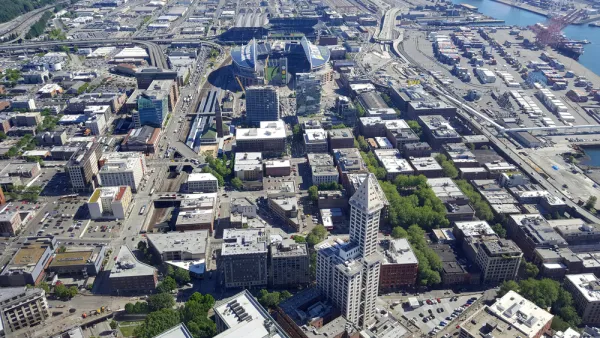
Seattle Releases RFP for Lid I-5 Study
The plan to top I-5 in Seattle with a cap park—what writer Natalie Bicknell calls "the most ambitious effort in our region"—is moving ahead with a $1.5 million feasibility study.
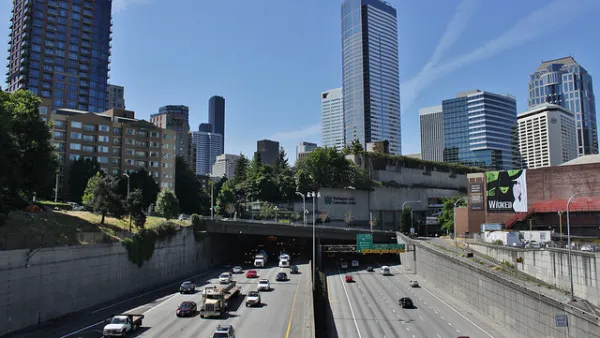
Visions for Lidding I-5 in Downtown Seattle
The notion of fully capping I-5 as it runs through central Seattle has been gaining steam. The city could stand to gain hundreds of acres of urban land.
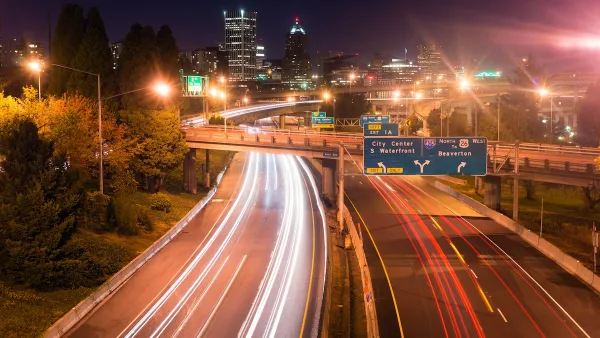
USDOT Denies Portland Freeway Expansion Grant
The agency declined the Oregon Department of Transportation’s request for $750 million to fund the I-5 Rose Quarter Improvement Project.

Planetizen Federal Action Tracker
A weekly monitor of how Trump’s orders and actions are impacting planners and planning in America.

California plans to bury El Niño’s downpour
If the state plays its cards right, it may be able to store a billion acre-feet of El Niño’s water in aquifers.

Chicago breaks ground on $3 billion megadevelopment
The new neighborhood, titled Foundry Park, will one day host 3,700 residences.

Satanic Place Names
From streams and lakes to valleys and canyons, I mapped more than 1,000 places named after the Devil.

California High-Speed Rail Authority CEO resigns after $600,000 scandal
Under Ian Choudri, the authority used taxpayer dollars to fund first class flights and trips to nightclubs.

Want to study the Missouri River? Soon, you may need unanimous approval from 10 states
Legislation would require 10 governors’ permission to study or build projects moving water outside the basin.

FREE Course: Walkable City 1: Why Walkability?
After describing his path towards focusing on walkability as the essence of good planning, Jeff Speck marches through his five principal reasons for making more walkable places.
Reinventing Malls: Planning Alchemy—Turning Gray Fields Into Gold
The course focuses on the opportunities and imperatives that shape reinvention of mall sites.

City of Rosemead
Rutgers University, Edward J. Bloustein School of Planning and Public Policy
One Hundred Miles
Hunter College, City University of New York (CUNY)
The Architects Foundation
University of Cincinnati Online
City of Cambridge
Montrose County
The Pocatello Development Authority