A growing number of cities around the world, and around the United States, have banned horse-drawn carriages out of concern for the health and welfare of the horses.


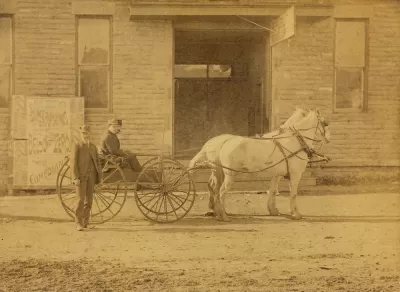
Jake Blumgart reports on an idea that could change the way tourists and romantics get around cities in the United States.
Janet White, an animal rights activist and leader of the group Carriage Horse Freedom, "has an idea she thinks could help the tourism industry shift away from horse-powered buggy rides, a popular draw in the visitor-packed streets of Philadelphia’s oldest neighborhoods."
"White envisions elaborate carriages, looking as though they just appeared from the set of Beauty and the Beast, but powered purely by electricity," explains Blumgart.
By using batteries to power carriages, instead of horses, White hopes to get the best of both worlds: the appeal of a old-time romantic carriage ride, but without any animal suffering.
White is spreading the idea around the halls of power in Philadelphia, but cities around the world have already banned horse-drawn carriages altogether, including Montreal, Salt Lake City, Rome, Barcelona, and Guadalajara. New York City almost banned horse-drawn carriages during the de Blasio administration, but stopped short.
Read the full story: Hold your horses: Can old-timey ‘e-carriages’ replace Old City buggies?


Learning loss and urban schools, part 2
Did test scores in progressive cities drop more post-COVID than test scores in moderate ones?

Philadelphia lawmakers fight to save 'Chinatown Stitch' from Trump cuts
The freeway cap project, approved and funded under the Biden administration, is now in jeopardy after the federal government rescinded all but $8 million in funding.
SEPTA's bus-mounted lane enforcement cameras cut travel times by up to 6%
The AI-assisted cameras have issued nearly 200,000 citations to drivers blocking bus lanes.

Planetizen Federal Action Tracker
A weekly monitor of how Trump’s orders and actions are impacting planners and planning in America.

California plans to bury El Niño’s downpour
If the state plays its cards right, it may be able to store a billion acre-feet of El Niño’s water in aquifers.

Desperate measures: Advocates weigh draining Lake Powell to fill Colorado River
Draining the reservoir could reduce evaporation losses by a couple hundred thousand acre-feet.

In Texas, data centers are swallowing promised parkland
Residents who moved to Taylor, Texas for a rural community now have to contend with three data centers in their backyard.

How a Chicago-sized wind farm beat the odds and powered on
The project spanned five presidential administrations and a standoff with a U.S. military base.

MTA gives itself 30 days to transform pit into basketball court
The site has been under construction since 2022; the city originally estimated it would finish the court in 2024.

FREE Course: Walkable City 1: Why Walkability?
After describing his path towards focusing on walkability as the essence of good planning, Jeff Speck marches through his five principal reasons for making more walkable places.
Reinventing Malls: Planning Alchemy—Turning Gray Fields Into Gold
The course focuses on the opportunities and imperatives that shape reinvention of mall sites.

City of Rosemead
Rutgers University, Edward J. Bloustein School of Planning and Public Policy
One Hundred Miles
Hunter College, City University of New York (CUNY)
The Architects Foundation
University of Cincinnati Online
City of Cambridge
Montrose County
The Pocatello Development Authority