The Port of San Francisco is wrapping up a three-year planning process to chart the ongoing transformation of the city's waterfront.


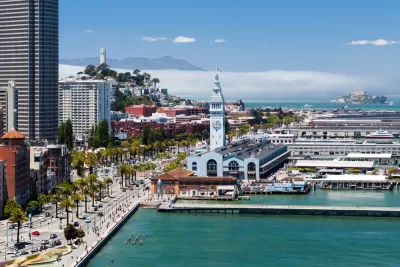
John King shares news of a plan released earlier this month that sets a path for the future of 7.5 miles of waterfront property owned by the port of San Francisco, stretching from Fisherman’s Wharf to Heron’s Head Park in the Bayview. "Along the way are such popular destinations as the Ferry Building and the Giants’ ballpark along the Embarcadero, but also the dormant ship repair dry dock at Pier 70 and a large recycling plant at Pier 96," explains King of the significance of this part of town.
The new plan follows on previous plan, written over two decades ago, that set in motion the revival of large portions of the waterfront. "But stubborn challenges remain," according to King, like a steady stream of development controversies and the need to prepare for sea-level rise. In response to the controversies, the plan sets goals of "Partnering for Success" and involving the community in decisions and whatever new amenities emerge from the plan.
Among the other specific recommendations of the report, citied by King in the article:
- Converting the paved area behind the Ferry Building into a "true piazza."
- Offering piers 3-32 to private development.
- Reopening the ship repair facilities at Pier 70 to attract high-paying jobs to the area.
King, who provides a lot more detail on the new plan in the source article, reported extensively on the outcomes of the previous plan in 2014 when the Port of San Francisco was ramping up to begin the process that produced the new plan.
FULL STORY: Plan unveiled for San Francisco’s waterfront — includes Ferry Building ‘piazza’


San Francisco Plans for 82,000 New Housing Units
California housing regulators have granted preliminary approval for the city of San Francisco’s housing element as mandated by the state’s Regional Housing Needs Allocation process.
San Francisco Returns $15 Million Federal Grant for Market Street Improvements
San Francisco was awarded a federal grant in 2018 that it was forced to return in 2022 because it couldn't start construction by 2025.
Port of San Francisco, Army Corps of Engineers Planning for Rising Bay Waters
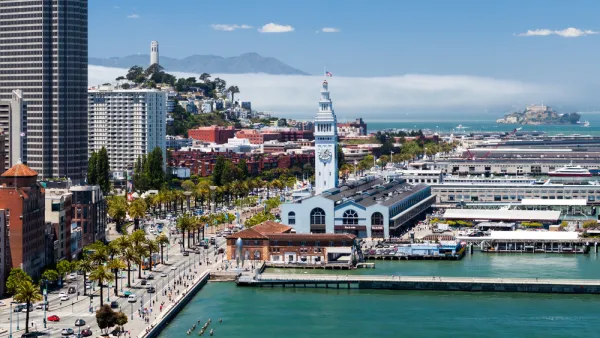
A massive climate adaptation planning effort is underway for the docks (and seawalls and landfill) of the San Francisco Bay.

The state-sanctioned urbicide of Austin
People don’t kill cities. Freeways do.

US to reduce Colorado River water deliveries to Mexico
A new Colorado Treaty amendment reduces Mexico’s Colorado River water allocation by 250,000 acre feet.

New Jersey’s second-largest city bans standalone data centers
Jersey City will continue to allow co-location facilities, such as those meant for research institutions that store their own data.

Amtrak not solely to blame for New Jersey commuter rail's unreliability, report finds
A new study from the Garden State Initiative found that NJ Transit’s budget grew 20% across a 4 year period, but reliability declined significantly over the same period.

EPA erases limits on planet-warming pollution from power plants
Under Monday’s plan, power plants would still have some limits on how much mercury, arsenic and other contaminants they can emit.

Phoenix announces new on-demand transit service, more frequent RAPID buses
Both new services will launch in October, and are part of Phoenix's Project Effective Access Solutions for Easing Congestion.

FREE Course: Walkable City 1: Why Walkability?
After describing his path towards focusing on walkability as the essence of good planning, Jeff Speck marches through his five principal reasons for making more walkable places.
Reinventing Malls: Planning Alchemy—Turning Gray Fields Into Gold
The course focuses on the opportunities and imperatives that shape reinvention of mall sites.

Eagle County Government
Harvard University Graduate School of Design
Nashville Planning Department
The Architects Foundation
University of Cincinnati Online
The Pocatello Development Authority
The Urban Renewal Agency of the City of Pocatello
Journal of the American Planning Association