In an effort to generate a new approach to economic development and infrastructure investment, the Brookings Institution has developed a new "Economic Value Atlas."



Adie Tomer shares news of the "Economic Value Atlas" (EVA), writing that "metropolitan governments and their civic partners need a suite of land use and infrastructure policies and practices that work in service of broader economic objectives."
To meet that need, Brookings Institution’s Metropolitan Policy Program worked with Metro, the metropolitan planning organization for the Portland region, to create the EVA. Here's how Tomer describes the function and scope of the EVA:
The EVA offers a suite of tools and processes to bring this multidisciplinary approach to reality. Through the guise of a new mapping application, the EVA compels metropolitan stakeholders to sit around a common table, develop shared values, dissect where regional economic outcomes fall short, and then actively consider policy reforms to address those shortcomings head-on. The EVA also demonstrates a platform that does not shy away from complexity, giving stakeholders a single place to consider trade, innovation, skills development, and quality placemaking.
The beta version of the EVA is available on the Metro website.
FULL STORY: Announcing the Economic Value Atlas: A new approach to regional transportation and land use planning

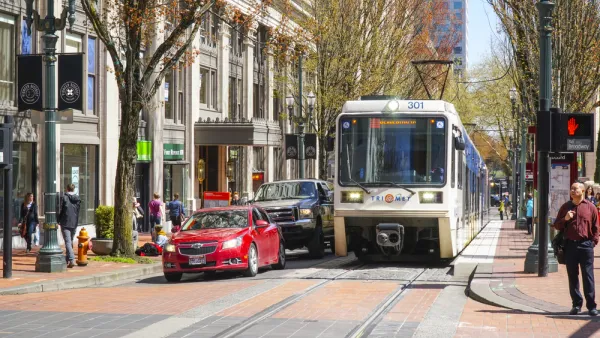
Transit Planners Studying a Tunnel Under Portland
Oregon Metro and TriMet are studying the feasibility of a subway tunnel under Portland that would cross under the Willamette River to speed up MAX trains through the city.
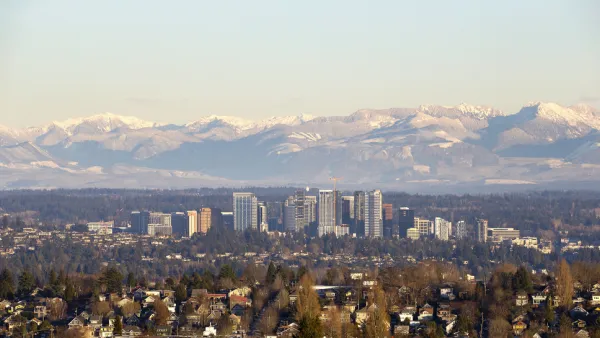
Mapping the Pacific Northwest's Changing Population
The Oregonian has published a new interactive mapping feature that allows users to map demographic changes to the Census tract level through Oregon and Washington.
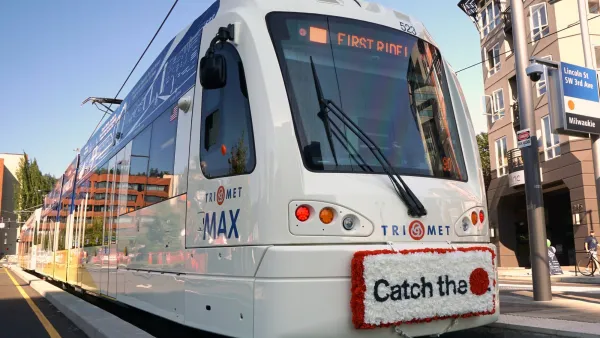
Light Rail Extension Plan Approved in Portland
The Portland City Council has approved Oregon Metro's Southwest Corridor plan.

Planetizen Federal Action Tracker
A weekly monitor of how Trump’s orders and actions are impacting planners and planning in America.

The state-sanctioned urbicide of Austin
People don’t kill cities. Freeways do.

US to reduce Colorado River water deliveries to Mexico
A new Colorado Treaty amendment reduces Mexico’s Colorado River water allocation by 250,000 acre feet.

Baltimore to break ground on $50 million Transit Priority Project
The project will bring faster bus trips, safer streets and better bike connections to Baltimore.

Airbnb launches $250 million 'last-dollar financing' housing accelerator, makes first investment in Austin
The company will put $6.4 million towards affordable housing development in Texas’ capital.

Guerilla urbanists are building DIY bus stop benches in Chicago
A before-and-after of one of the bus stops with a new bench. The new benches are not officially sanctioned or permitted, but the residents who placed them hope they will be the start of a network of DIY benches across the city.

FREE Course: Walkable City 1: Why Walkability?
After describing his path towards focusing on walkability as the essence of good planning, Jeff Speck marches through his five principal reasons for making more walkable places.
Reinventing Malls: Planning Alchemy—Turning Gray Fields Into Gold
The course focuses on the opportunities and imperatives that shape reinvention of mall sites.

Eagle County Government
Harvard University Graduate School of Design
Nashville Planning Department
The Architects Foundation
University of Cincinnati Online
The Pocatello Development Authority
The Urban Renewal Agency of the City of Pocatello
Journal of the American Planning Association