Diners are part of social and cultural landscape of New York City, but many are closing as owners contend with increasing development pressures.


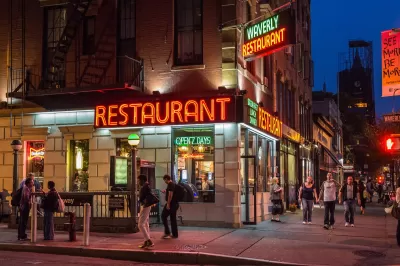
Stefanos Chen reports on the future of the iconic New York City diner, with one estimate suggesting about 13 are closing shop each year. "While their disappearance has been lamented for years, diners along the margins of Manhattan and in parts of other boroughs previously thought impervious to redevelopment are closing because of increasing rents and enticing offers that are hard to pass up."
In one case, owners of the Frontier Diner in Manhattan struck a deal with a developer to lease the land instead of selling it, reports Chen. Some owners are trying new strategies to survive and adapt to the times, such as diversifying menus and offering food delivery.
Others say they will hold out as long as possible. Louis Gritsipis says he will not sell his diner, 42nd Street Pizza, located near the new Hudson Yards development. "He pays almost $70,000 in annual property taxes, while many of his new high-rise neighbors receive tax abatements. He has no desire to stop working, he said, and the cost of starting a new business would be too high, even if he were to sell the building," writes Chen.
FULL STORY: New York’s Vanishing Diners

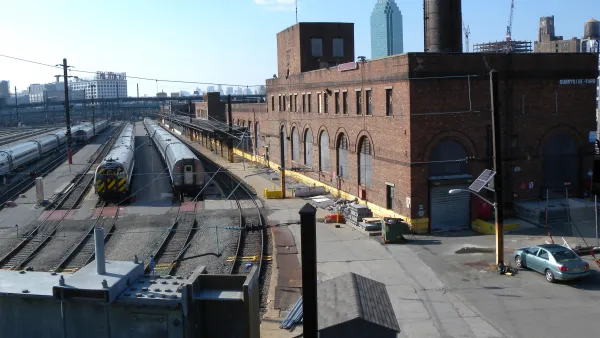
Mamdani Proposes Reviving Sunnyside Yard Project in Meeting With Trump
A proposed redevelopment in Trump’s native Queens could create as many as 12,000 new housing units.
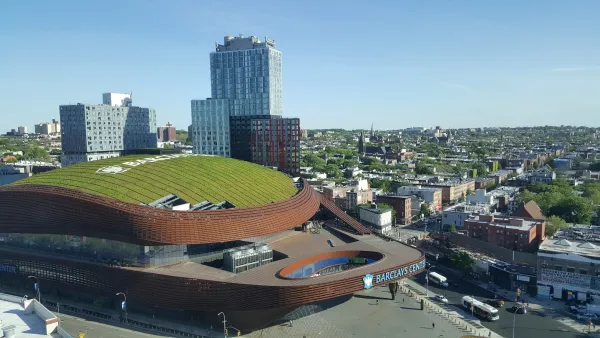
NYC's New Atlantic Yards Plan Would Bring Taller Towers and Raise Income Limits
The area around Barclays Center could get 10,000 new housing units, with those deemed affordable available to households making as much as $200,000.

A Bronx Community Fights to Have its Voice Heard
After organizing and giving input for decades, the community around the Kingsbridge Armory might actually see it redeveloped — and they want to continue to have a say in how it goes.

Planetizen Federal Action Tracker
A weekly monitor of how Trump’s orders and actions are impacting planners and planning in America.

The state-sanctioned urbicide of Austin
People don’t kill cities. Freeways do.

US to reduce Colorado River water deliveries to Mexico
A new Colorado Treaty amendment reduces Mexico’s Colorado River water allocation by 250,000 acre feet.

5 New England states march closer to 800 megawatt wind energy project
Securing federal approval for the project may be complicated under the Trump administration, which has historically been hostile towards domestic wind power.

Baltimore to break ground on $50 million Transit Priority Project
The project will bring faster bus trips, safer streets and better bike connections to Baltimore.

Airbnb launches $250 million 'last-dollar financing' housing accelerator, makes first investment in Austin
The company will put $6.4 million towards affordable housing development in Texas’ capital.

FREE Course: Walkable City 1: Why Walkability?
After describing his path towards focusing on walkability as the essence of good planning, Jeff Speck marches through his five principal reasons for making more walkable places.
Reinventing Malls: Planning Alchemy—Turning Gray Fields Into Gold
The course focuses on the opportunities and imperatives that shape reinvention of mall sites.

Eagle County Government
Harvard University Graduate School of Design
Nashville Planning Department
The Architects Foundation
University of Cincinnati Online
The Pocatello Development Authority
The Urban Renewal Agency of the City of Pocatello
Journal of the American Planning Association