The Sewerage & Water Board of New Orleans has launched its first public dashboards to track its operations and initiatives.


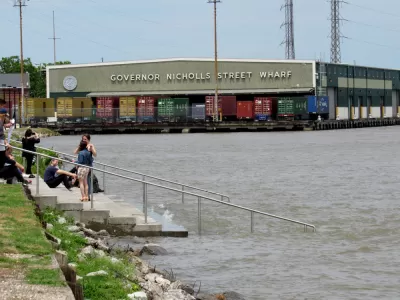
The Sewerage & Water Board of New Orleans recently announced the launch of new public dashboards to track operations and initiatives:
These initial dashboards will track the total number of active residential, commercial and industrial customer accounts, and the progress to reduce the number of bills under investigation for irregularities. Future dashboards are being developed to track a host of data, including Customer Service metrics, progress in hiring new employees, repairing water system leaks and operational status of the drainage system. Other aspects of the S&WB's mission will be added in time to promote transparency and responsiveness to customers and the public.
For fans of maps (or New Orleans, or both), the dashboard illustrates one of the unseen characteristics of the city, with an interactive map showing the age of water mains. The other dashboards indicate how many residents and business are relying on the city's water infrastructure.
Read the full story: Data and Statistics

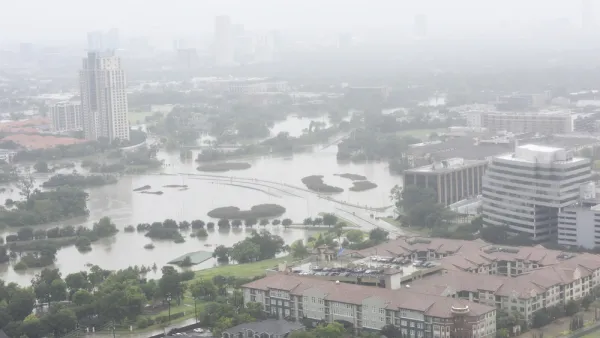
Texans to Vote on Flood Control Funding, Property Tax Breaks in Disaster Areas
The fingerprint of Hurricane Harvey and recurring flooding events around the state are evident in the statewide election in Texas on November 5, 2019.
Can New Leadership Deliver New Stormwater and Sewer Systems in New Orleans?
The new head of the Sewage & Water Board of New Orleans comes to the job from Milwaukee, and he already has big ideas about what the city must do to prevent flooding like it experienced last summer.

A 1920s Poughkeepsie cistern sees new life as art venue
For decades, it secured the city's water supply. Now, it could become its hottest new performance venue.

Planetizen Federal Action Tracker
A weekly monitor of how Trump’s orders and actions are impacting planners and planning in America.

The state-sanctioned urbicide of Austin
People don’t kill cities. Freeways do.

Colorado’s Largest Data Center Could Rise Next to Homes — Without a Public Hearing
The proposed campus would consume 11 times the power of Denver International Airport; as it has across the country, opposition mounts.
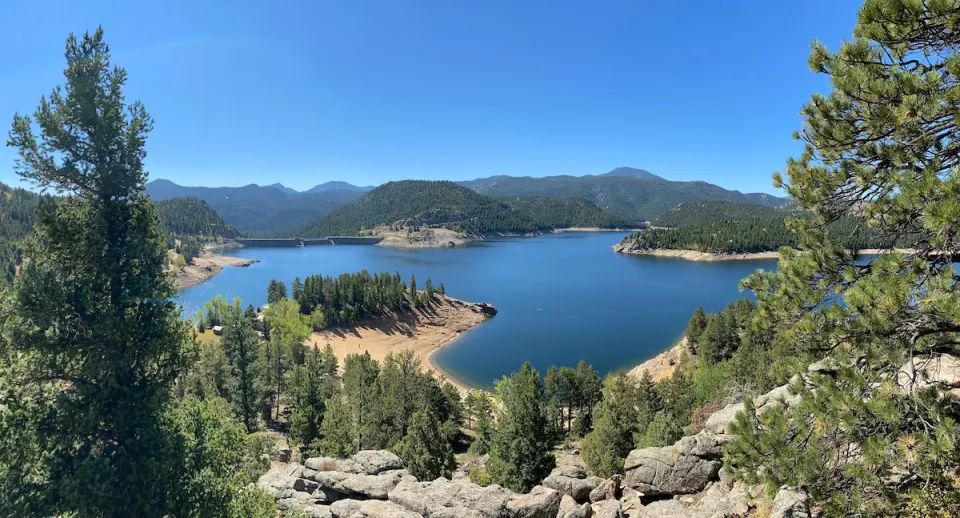
Judges permit Denver to divert 77,000 acre feet from the Colorado River for reservoir expansion
Overuse and climate change have caused the Colorado River’s water levels to plummet.

Amtrak, CN end decades-long dispute with eight-year agreement
The new operating agreement establishes an updated framework for the companies to work together, including processes to resolve disputes.

Raised interest rates may kill financially vulnerable construction projects
The chief economist at ConstructConnect warns that if construction project owners are negatively impacted by the raised rates, it could result in delayed payments to contractors.

FREE Course: Walkable City 1: Why Walkability?
After describing his path towards focusing on walkability as the essence of good planning, Jeff Speck marches through his five principal reasons for making more walkable places.
Reinventing Malls: Planning Alchemy—Turning Gray Fields Into Gold
The course focuses on the opportunities and imperatives that shape reinvention of mall sites.

Greater Baltimore Committee
Eagle County Government
Harvard University Graduate School of Design
The Architects Foundation
University of Cincinnati Online
The Pocatello Development Authority
The Urban Renewal Agency of the City of Pocatello
Journal of the American Planning Association