A highly anticipated analysis of public health outcomes caused by the proliferation of electric scooters has been released. Most of the reported are considered preventable.



Sarah Holder reports that the Centers for Disease Control and Prevention (CDC) recently released a report on the public health threats posed by electric scooters, focusing on the preventability of many of the injuries suffered by scooter riders since they began hitting streets within the last year-plus.
Holder explains the circumstances that led to the study:
The CDC began studying the public health impacts of dockless electric scooters soon after the tiny contraptions arrived on the streets of Austin, Texas, in April of 2018. The city’s transportation and public health agencies quickly noticed that a lot of people seemed to be falling off the vehicles, so they requested support to study the problem. The CDC sent four researchers to help launch the first epidemiological investigation into the safety of the micromobility revolution. In the 87-day study period, the CDC and Austin’s Public Health agency identified 271 riders with potential e-scooter-accident-related injuries, and interviewed more than half of them.
According to the study's findings from Austin, 45 percent of the injuries suffered by scooter users were head injuries, and 15 percent of those were "traumatic head injuries."
"For every 100,000 trips taken, 20 individuals were injured," adds Holden to the findings shared and expounded upon in the article. Inexperience played a role in many of the injuries, as did road conditions. Interestingly, only 16 percent of the incidents counted in this study were involved cars or trucks.
FULL STORY: Scooters Wouldn’t Be So Dangerous If You Just Wore a Helmet

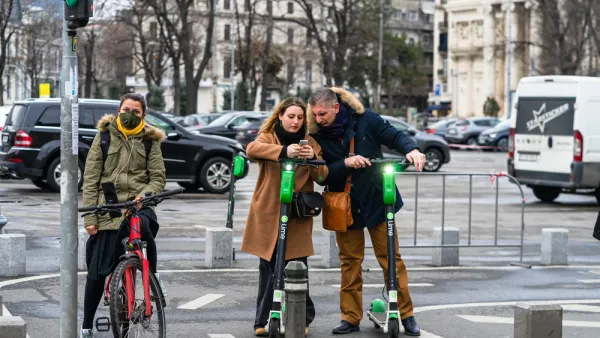
Can the Scooter Business Outlast the Coronavirus?
It's the end of the scooter as we know it.

Transportation Access Is a Public Health Issue
An expert discusses the public health implications of the CDC’s new finding that 5.7 percent of Americans face unreliable transportation.

The Messy Politics of Saving Lives from Drug Overdoses
Philadelphia was on the verge of approving a key harm reduction strategy to prevent fatal drug overdoses until the city council all but banned supervised injection sites, overriding a mayoral veto. A New York Times report explores the controversy.

Planetizen Federal Action Tracker
A weekly monitor of how Trump’s orders and actions are impacting planners and planning in America.

The state-sanctioned urbicide of Austin
People don’t kill cities. Freeways do.

US to reduce Colorado River water deliveries to Mexico
A new Colorado Treaty amendment reduces Mexico’s Colorado River water allocation by 250,000 acre feet.

5 New England states march closer to 800 megawatt wind energy project
Securing federal approval for the project may be complicated under the Trump administration, which has historically been hostile towards domestic wind power.

Baltimore to break ground on $50 million Transit Priority Project
The project will bring faster bus trips, safer streets and better bike connections to Baltimore.

Airbnb launches $250 million 'last-dollar financing' housing accelerator, makes first investment in Austin
The company will put $6.4 million towards affordable housing development in Texas’ capital.

FREE Course: Walkable City 1: Why Walkability?
After describing his path towards focusing on walkability as the essence of good planning, Jeff Speck marches through his five principal reasons for making more walkable places.
Reinventing Malls: Planning Alchemy—Turning Gray Fields Into Gold
The course focuses on the opportunities and imperatives that shape reinvention of mall sites.

Eagle County Government
Harvard University Graduate School of Design
Nashville Planning Department
The Architects Foundation
University of Cincinnati Online
The Pocatello Development Authority
The Urban Renewal Agency of the City of Pocatello
Journal of the American Planning Association