New York City has the slowest buses of any big American city, and Mayor Bill de Blasio aims to speed them up with better bus lane enforcement.


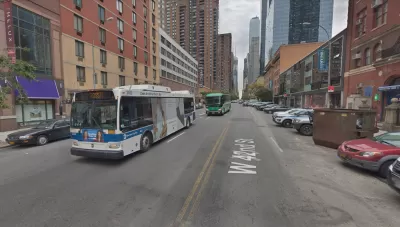
New York Mayor Bill de Blasio said his administration will increase bus speed by 25% by 2020. "Faced with the slowest bus service among the nation’s big cities in addition to sharply declining ridership in recent years, the administration will vow to expand bus priority on streets; ramp up police enforcement of bus lanes and push Albany for state-controlled measures, such as camera enforcement," Vincent Barone reports for AM New York.
Bus speeds and ridership have moved the wrong direction in recent years. "The state-run Metropolitan Transportation Authority saw a drop of almost 60 million bus trips from 2010 to 2016 — down from 697 million annual trips to 638 million — as average speeds trended down, with the mayor bearing much of the blame for not doing enough to accommodate buses on city streets," Barone reports. Even with more than 100 miles of dedicated bus lanes, the city has had trouble speeding up its vehicles. "To help keep that network of lanes clear, the mayor will establish for the first time dedicated tow truck teams within the Police Department," Barone writes.
FULL STORY: Bus speeds to increase 25 percent by 2020, Mayor de Blasio vows

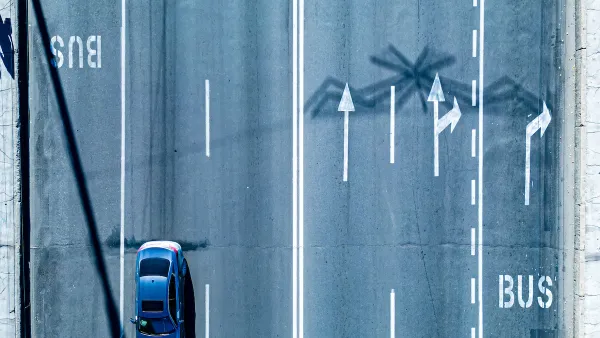
Cities Are Building More Bus and Bike Lanes. The Challenge: Keeping Cars Out
Bus-mounted and stationary cameras are becoming a popular tool for enforcing bus and bike lane regulations and keeping dedicated lanes clear.
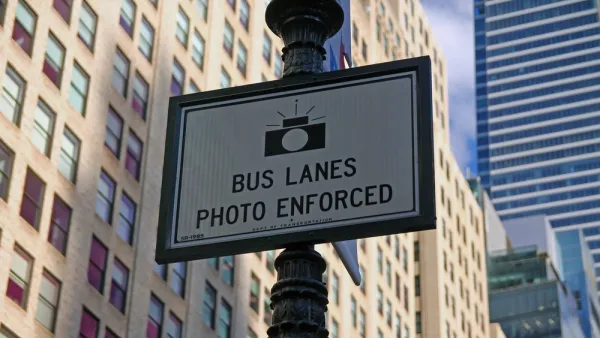
New York To Crack Down on Bus Lane Blocking Violations
The city hopes to improve the speed of its notoriously slow buses by using traffic cameras to ticket drivers who drive or park in dedicated bus lanes.
More Housing, Less Homelessness
Downzoning and building height restrictions have kept supply well behind demand in New York City, according to this article.

Planetizen Federal Action Tracker
A weekly monitor of how Trump’s orders and actions are impacting planners and planning in America.

The state-sanctioned urbicide of Austin
People don’t kill cities. Freeways do.

US to reduce Colorado River water deliveries to Mexico
A new Colorado Treaty amendment reduces Mexico’s Colorado River water allocation by 250,000 acre feet.

5 New England states march closer to 800 megawatt wind energy project
Securing federal approval for the project may be complicated under the Trump administration, which has historically been hostile towards domestic wind power.

Baltimore to break ground on $50 million Transit Priority Project
The project will bring faster bus trips, safer streets and better bike connections to Baltimore.

Airbnb launches $250 million 'last-dollar financing' housing accelerator, makes first investment in Austin
The company will put $6.4 million towards affordable housing development in Texas’ capital.

FREE Course: Walkable City 1: Why Walkability?
After describing his path towards focusing on walkability as the essence of good planning, Jeff Speck marches through his five principal reasons for making more walkable places.
Reinventing Malls: Planning Alchemy—Turning Gray Fields Into Gold
The course focuses on the opportunities and imperatives that shape reinvention of mall sites.

Eagle County Government
Harvard University Graduate School of Design
Nashville Planning Department
The Architects Foundation
University of Cincinnati Online
The Pocatello Development Authority
The Urban Renewal Agency of the City of Pocatello
Journal of the American Planning Association