Dallas's resiliency plan analyzed the best ways to combat heat in every neighborhood.


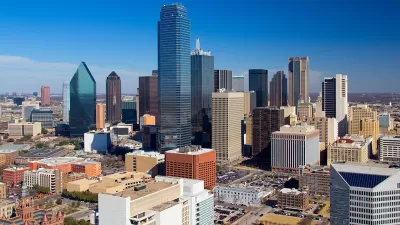
Governing features Smart Growth for Dallas, a city resiliency initiative created in partnership with the Trust for Public Land, the Texas Tree Foundation, and other non-profits.
The plan's core recommendation is a well-founded one: increase tree canopy. Tree coverage is more than three times as effective in combating extreme heat as using "cool" building materials, TTF has found. But the plan also calls for building green infrastructure, expanding carbon-free transportation, and integrated water management strategies that handle rainfall, flooding, and drinking supply at once.
To determine where to deploy these interventions first, the city and its partners undertook a neighborhood-by-neighborhood analysis of a variety of factors—including income levels, temperatures, flood risk, prevalence of certain diseases, street safety, and vulnerable populations. Harvard researchers Stephen Goldsmith and Matt Leger elaborate on the extensive process in Governing.
Read the full story: A Data-Driven Approach to Cooling a City

Global Report Shows Urban Forests Failing to Meet Vital Standards
The study reveals significant gaps in urban forestry, emphasizing the urgent need for reforms, innovative planting solutions, and expanded tree canopy to combat climate change and improve urban health.
The Economic Value of Street Trees
Far from just providing shade and improving air quality, trees can also contribute to more resilient roads, lower energy costs, and reduced flood risk.

Planting for the Future: The Urban Trees of Tomorrow
How urban forest managers are preparing urban tree canopies for tomorrow’s climates.

Planetizen Federal Action Tracker
A weekly monitor of how Trump’s orders and actions are impacting planners and planning in America.

California plans to bury El Niño’s downpour
If the state plays its cards right, it may be able to store a billion acre-feet of El Niño’s water in aquifers.

Desperate measures: Advocates weigh draining Lake Powell to fill Colorado River
Draining the reservoir could reduce evaporation losses by a couple hundred thousand acre-feet.

California city breaks ground on transit connector
The project includes three mobility hubs and a pedestrian bridge.

After public outcry, Massachusetts city releases housing development tracker
Cambridge’s tracker currently shows 250 housing projects in various stages of development.

40 years after approval, Chicago breaks ground on new park
The park honors Jean Baptiste Point du Sable, the city’s first permanent non-native settler.

FREE Course: Walkable City 1: Why Walkability?
After describing his path towards focusing on walkability as the essence of good planning, Jeff Speck marches through his five principal reasons for making more walkable places.
Reinventing Malls: Planning Alchemy—Turning Gray Fields Into Gold
The course focuses on the opportunities and imperatives that shape reinvention of mall sites.

City of Rosemead
Rutgers University, Edward J. Bloustein School of Planning and Public Policy
One Hundred Miles
Hunter College, City University of New York (CUNY)
The Architects Foundation
University of Cincinnati Online
City of Cambridge
Montrose County
The Pocatello Development Authority