The Bus Transformation Project recently released its findings on the state of bus transit in the Washington, D.C. region.


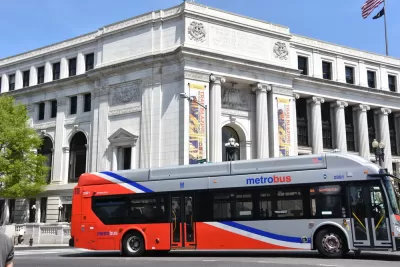
"Earlier this year, participants in the Bus Transformation Project, a regional consensus-building exercise led by [Washington Metropolitan Area Transit Authority], came together to study the region's bus network," according to an article by Travis Maiers.
Now, Maiers reports, a report on the region's bus system has been released in connection with the Bus Transformation Project. "This analysis looked at four main points: customer expectations and demands; regional coordination and current funding formulas; the role technology plays; and financial stability moving forward." The report stops short of making specific policy recommendations, but provides the information for future decision making processes.
Among the key findings of the report: bus users tend to be racially diverse and transit dependent, three-quarters of the region's low-income households have access to good bus service, and access to jobs on bus transit less complete in the suburbs.
Read the full story: Five things we learned from this regional bus transformation report

Report Lays Out a New Path for Bus Service in the D.C. Region
Ridership on the WMATA bus system, down an estimated 13 percent between 2012 and 2017, will need drastic innovations to reverse, according to a new report by the Bus Transformation project.
Overhaul of D.C. Region Bus Systems Coming Soon
The complicated process of redesigning the numerous bus systems operating in and around Washington, D.C. is expected to yield a draft plan in March of this year.
Gas Too Expensive? Cincinnati Metro Has You Covered With Free Rides
Cincinnati residents and visitors will have access to free transit for a week as the agency aims to boost ridership.

Planetizen Federal Action Tracker
A weekly monitor of how Trump’s orders and actions are impacting planners and planning in America.

Amtrak, CN end decades-long dispute with eight-year agreement
The new operating agreement establishes an updated framework for the companies to work together, including processes to resolve disputes.

Northwest rail fans eager for Sept. 30 debut of Amtrak’s Airo fleet
Get ready for that new train smell and more seats. But they won’t go faster or run more frequently on the Cascades route in Washington and Oregon.

LAX SkyLink opening delayed again, contractor won’t commit to new deadline
The project was supposed to open its doors to the public in 2023.

Caltrain may slash over one-third of its stations
If Bay Area voters reject two transit tax measures, Caltrain, BART and AC Transit will see steep service cuts.

A 'dangerous' precedent: North Carolina successfully pressures communities into voting for toll roads
Two mayors resigned from the Charlotte Regional Transportation Planning Organization after it voted in favor of the toll roads.

FREE Course: Walkable City 1: Why Walkability?
After describing his path towards focusing on walkability as the essence of good planning, Jeff Speck marches through his five principal reasons for making more walkable places.
Reinventing Malls: Planning Alchemy—Turning Gray Fields Into Gold
The course focuses on the opportunities and imperatives that shape reinvention of mall sites.

City of Thousand Oaks
City of Wisconsin Rapids
Harvard University Graduate School of Design
The Architects Foundation
University of Cincinnati Online
The Pocatello Development Authority
The Urban Renewal Agency of the City of Pocatello