The bill, which the council is likely to pass later this month, includes more ambitious renewable energy and clean vehicle mandates.


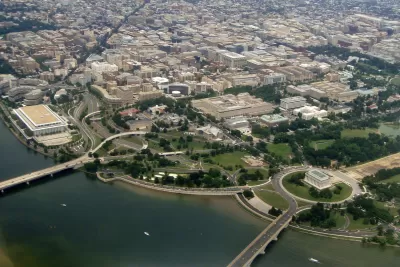
Gavin Bade reports that the Council of the District of Columbia last week gave unanimous preliminary support to a bill that sets a mandate of 100 percent renewable energy in Washington, D.C., by 2032 and requires that all public transportation and private fleet vehicles be zero emission by 2045.
“The CleanEnergy DC Omnibus Amendment Act of 2018 would also establish a task force to set new building efficiency standards and allow utility Pepco to recover revenue lost to efficiency improvements by its customers,” reports Bade.
Bade also notes that the district currently does not generate its own energy and has reached existing renewable energy goals through purchase of renewable energy credits, mainly wind power.
The council will vote on the bill again this month, when it is expected to pass and move on to the mayor.
FULL STORY: DC City Council unanimously advances 100% renewable energy bill


Controversial Decision Limits Solar Panels on Historic Homes in D.C.
"I realize that we are in crisis politically as well as sustainably. But…"
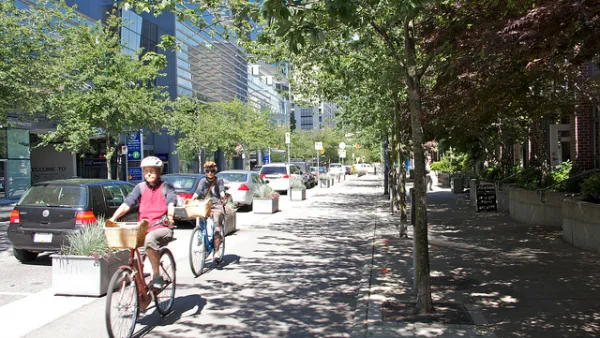
British Columbia's Climate Plan Bans Sales of Gas and Diesel Passenger Vehicles by 2040
Ten years ago, British Columbia launched North America's first carbon tax. This month, Premier John Horgan unveiled the long awaited climate plan, CleanBC, that aims to reduce greenhouse gas emissions 40 percent below 2007 levels by 2030.

Electric Vehicle Sales Would Take a Hit With GOP's Tax Cut
The House GOP tax plan, which Trump wanted to name the "Cut, Cut, Cut" bill, was intended to cut taxes, but it's also cutting credits, like the federal $7,500 electric vehicle tax credit. How much would its elimination affect EV sales?

The state-sanctioned urbicide of Austin
People don’t kill cities. Freeways do.

US to reduce Colorado River water deliveries to Mexico
A new Colorado Treaty amendment reduces Mexico’s Colorado River water allocation by 250,000 acre feet.

New Jersey’s second-largest city bans standalone data centers
Jersey City will continue to allow co-location facilities, such as those meant for research institutions that store their own data.

Amtrak not solely to blame for New Jersey commuter rail's unreliability, report finds
A new study from the Garden State Initiative found that NJ Transit’s budget grew 20% across a 4 year period, but reliability declined significantly over the same period.

EPA erases limits on planet-warming pollution from power plants
Under Monday’s plan, power plants would still have some limits on how much mercury, arsenic and other contaminants they can emit.

Phoenix announces new on-demand transit service, more frequent RAPID buses
Both new services will launch in October, and are part of Phoenix's Project Effective Access Solutions for Easing Congestion.

FREE Course: Walkable City 1: Why Walkability?
After describing his path towards focusing on walkability as the essence of good planning, Jeff Speck marches through his five principal reasons for making more walkable places.
Reinventing Malls: Planning Alchemy—Turning Gray Fields Into Gold
The course focuses on the opportunities and imperatives that shape reinvention of mall sites.

Eagle County Government
Harvard University Graduate School of Design
Nashville Planning Department
The Architects Foundation
University of Cincinnati Online
The Pocatello Development Authority
The Urban Renewal Agency of the City of Pocatello
Journal of the American Planning Association