As it exists today, Chicago's real estate transfer tax is a flat tax that charges the same percentage for modest homes and mansions.


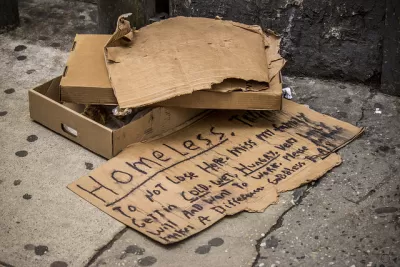
The Metropolitan Planning Council in Chicago released "Our Equitable Future," a report proposing a graduated real estate transfer tax. Mayor Rahm Emanuel didn’t go for it, arguing that it puts an undue burden on homeowners to pay for affordable housing. But in an opinion piece for the Chicago Sun Times, Metropolitan Planning Council Vice President Marisa Novara and author Daniel Kay Hertz counter that a graduated transfer tax would actually lower the cost of the tax for most home sellers and buyers.
A graduated real estate transfer tax would place less of a burden on home buyers in more modest segments of the market, and have the additional benefit of providing new funds for much needed housing. “Chicago suffers from a shortfall of 120,000 affordable housing units. That alone is reason enough to consider a progressive real estate transfer tax, just as there is in San Francisco, Baltimore and New York City,” according to Hertz and Novara.
They contend that the city cannot continue to depend on federal and state money, which can vary dramatically from year to year, to fund housing. “In 2017, Chicago spent 36 times more of its own money on policing than on affordable housing, and three times more on legal settlements,” Hertz and Novara point out.
FULL STORY: If you’re selling a mansion, you should be taxed more to pay for affordable housing

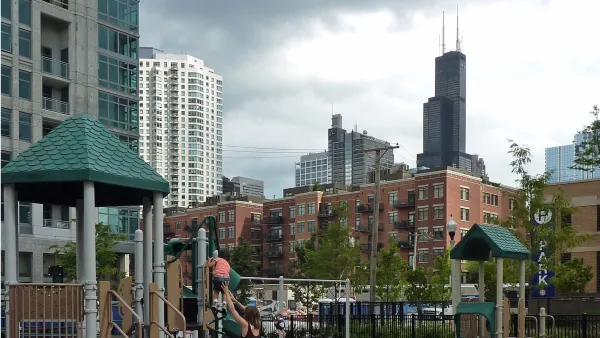
Addressing 'Reverse White Flight' in Chicago
A new report from the Urban Institute and the Metropolitan Planning Council looks at ways to fight perpetual segregation as Chicago's affluent white population booms.
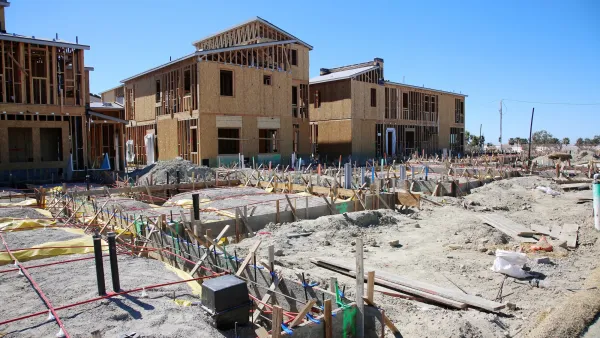
Less than 6% of California cities are building enough housing for very low-income households
Only five jurisdictions are on track to meet their housing goals for all income brackets.
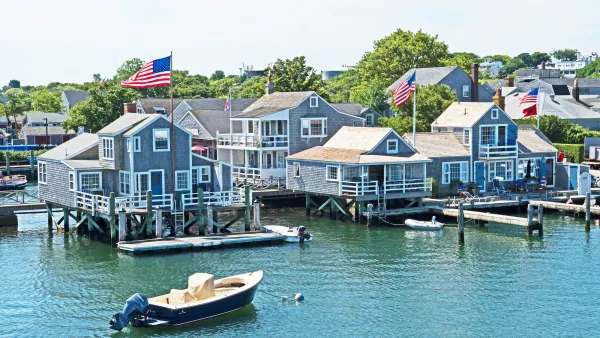
In Nantucket, where over half of homes are for seasonal use, workers struggle to find affordable housing
The island is short roughly 892 to 1,081 rental units.

The state-sanctioned urbicide of Austin
People don’t kill cities. Freeways do.

US to reduce Colorado River water deliveries to Mexico
A new Colorado Treaty amendment reduces Mexico’s Colorado River water allocation by 250,000 acre feet.

New Jersey’s second-largest city bans standalone data centers
Jersey City will continue to allow co-location facilities, such as those meant for research institutions that store their own data.

Amtrak not solely to blame for New Jersey commuter rail's unreliability, report finds
A new study from the Garden State Initiative found that NJ Transit’s budget grew 20% across a 4 year period, but reliability declined significantly over the same period.

EPA erases limits on planet-warming pollution from power plants
Under Monday’s plan, power plants would still have some limits on how much mercury, arsenic and other contaminants they can emit.

Phoenix announces new on-demand transit service, more frequent RAPID buses
Both new services will launch in October, and are part of Phoenix's Project Effective Access Solutions for Easing Congestion.

FREE Course: Walkable City 1: Why Walkability?
After describing his path towards focusing on walkability as the essence of good planning, Jeff Speck marches through his five principal reasons for making more walkable places.
Reinventing Malls: Planning Alchemy—Turning Gray Fields Into Gold
The course focuses on the opportunities and imperatives that shape reinvention of mall sites.

Eagle County Government
Harvard University Graduate School of Design
Nashville Planning Department
The Architects Foundation
University of Cincinnati Online
The Pocatello Development Authority
The Urban Renewal Agency of the City of Pocatello
Journal of the American Planning Association