Cities want more control over the deployment of 5G technology. The federal government has been working to limit local regulatory powers over new wireless technology.


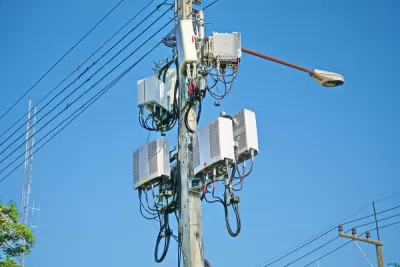
Alexis Kramer reports: "Los Angeles, Seattle, and 22 other cities and counties are suing the Federal Communications Commission over its move to limit local government fees on 5G network equipment applications."
In all, local governments filed "three separate lawsuits asking the U.S. Court of Appeals for the Ninth Circuit to overturn a commission order that would restrict how much cities can charge AT&T Inc., Verizon Communications Inc., and other carriers to process applications for the build-out of next generation wireless infrastructure," according to Kramer. The lawsuits are supported by the U.S. Conference of Mayors, adds Kramer.
The order in question was signed in September, though the federal government already displayed a willingness to let wireless providers call the shots in the rollout of 5G technology.
FULL STORY: Cities, Counties Challenge FCC on 5G Network Deployment (2)

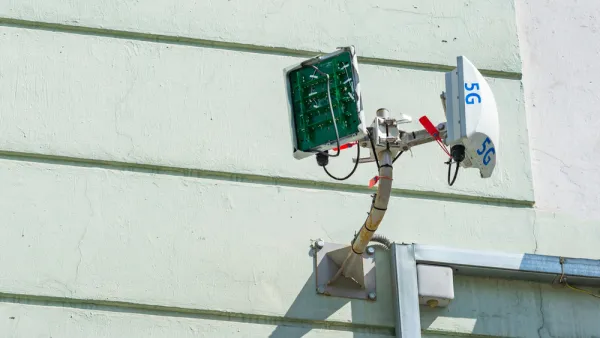
5G Forces a Local Control Struggle
Local governments are fighting control after federal regulators removed some of the regulatory protections that could slow private companies from grabbing land in an effort
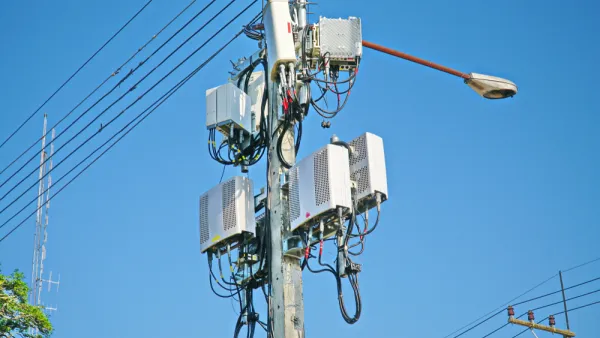
Feds Streamline Approvals for 5G Infrastructure
Most deployment of 5G "small cells" won't get any resistance from federal regulations.
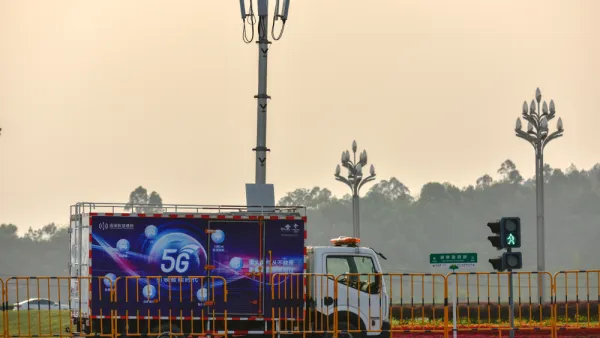
4 Regulatory Complications of 5G Infrastructure Development
The implementation of 5G Internet infrastructure raises fundamental questions about how private companies operate in the public realm. Don't expect easy answers.

The state-sanctioned urbicide of Austin
People don’t kill cities. Freeways do.

US to reduce Colorado River water deliveries to Mexico
A new Colorado Treaty amendment reduces Mexico’s Colorado River water allocation by 250,000 acre feet.

New Jersey’s second-largest city bans standalone data centers
Jersey City will continue to allow co-location facilities, such as those meant for research institutions that store their own data.

Amtrak not solely to blame for New Jersey commuter rail's unreliability, report finds
A new study from the Garden State Initiative found that NJ Transit’s budget grew 20% across a 4 year period, but reliability declined significantly over the same period.

EPA erases limits on planet-warming pollution from power plants
Under Monday’s plan, power plants would still have some limits on how much mercury, arsenic and other contaminants they can emit.

Phoenix announces new on-demand transit service, more frequent RAPID buses
Both new services will launch in October, and are part of Phoenix's Project Effective Access Solutions for Easing Congestion.

FREE Course: Walkable City 1: Why Walkability?
After describing his path towards focusing on walkability as the essence of good planning, Jeff Speck marches through his five principal reasons for making more walkable places.
Reinventing Malls: Planning Alchemy—Turning Gray Fields Into Gold
The course focuses on the opportunities and imperatives that shape reinvention of mall sites.

Eagle County Government
Harvard University Graduate School of Design
Nashville Planning Department
The Architects Foundation
University of Cincinnati Online
The Pocatello Development Authority
The Urban Renewal Agency of the City of Pocatello
Journal of the American Planning Association