There's a point to be made about the decline of New York City's affordable housing stock. Instead we'll talk about a badly mistaken report that severely over reported the problem.


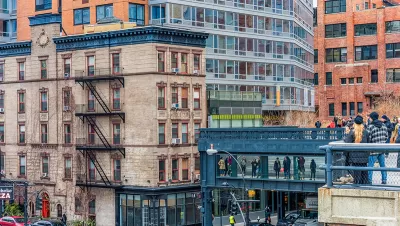
"New York City’s top fiscal officer issued a mea culpa on Wednesday for a major calculation mistake in a report on the rapid decrease of affordable housing," reports Katie Honan.
Earlier this week, Honan was reporting the findings of a report that claimed the city had lost 1 million apartments that rent for $900 or less since 2005 [paywall]. The report was the work of New York City Comptroller Scott Springer's office. The report also said the number of apartments renting for more than $2,700 a month had increased by 238,000.
A day later, the comptroller was issuing a correction. The actual number of $900 apartments missing from the market is less than half of the original report's finding, or 425,492 houses. "Although the comptroller’s office originally said that the number of apartments renting for $2,700 a month increased by 238,000 between 2005 and 2017, the actual increase was just 111,000 units, the updated report said," adds Honan.
Read the full story: New York City Comptroller Admits Error on Housing Report
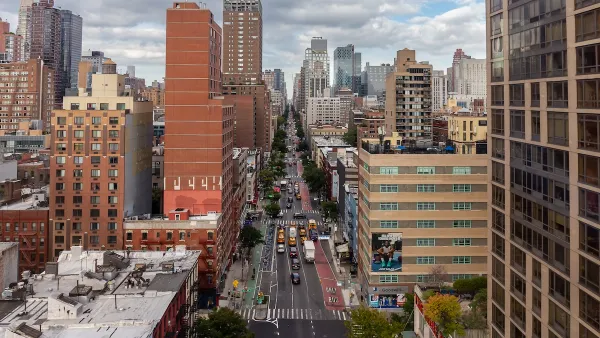
See the 12 communities on New York City’s affordable housing naughty list
The Upper East and West Sides, Elmhurst, and Bayside are among the communities that have built little affordable housing over the past five years, and now will see certain projects fast-tracked under new city rules.
Mayor Mamdani unveils map of 100 public lots that could become housing
The city identified properties that could be available for new housing development.

NYC landlords sue Mamdani administration over rent freeze
The suit charges the administration with unfairly promoting the rent freeze and accuses the city's Rent Guidelines Board of yielding to pressure from the mayor.

Planetizen Federal Action Tracker
A weekly monitor of how Trump’s orders and actions are impacting planners and planning in America.

California plans to bury El Niño’s downpour
If the state plays its cards right, it may be able to store a billion acre-feet of El Niño’s water in aquifers.

Desperate measures: Advocates weigh draining Lake Powell to fill Colorado River
Draining the reservoir could reduce evaporation losses by a couple hundred thousand acre-feet.

Mamdani’s pied-à-terre tax survives legal challenge
A panel of judges found that the plaintiffs failed to demonstrate injury as a result of New York City's implementation of the tax.

Eastern Nebraska is running out of electricity
Data centers and electrification are straining eastern Nebraska’s grid, throttling economic development.

Seattle passes record-breaking transit services expansion
Proposition 1 will double the city’s transit tax to add 95,000 more bus trips and preserve 180,000 bus trips annually.

FREE Course: Walkable City 1: Why Walkability?
After describing his path towards focusing on walkability as the essence of good planning, Jeff Speck marches through his five principal reasons for making more walkable places.
Reinventing Malls: Planning Alchemy—Turning Gray Fields Into Gold
The course focuses on the opportunities and imperatives that shape reinvention of mall sites.

City of Rosemead
Rutgers University, Edward J. Bloustein School of Planning and Public Policy
One Hundred Miles
University of Michigan School for Environment and Sustainability (SEAS)
Hunter College, City University of New York (CUNY)
The Architects Foundation
City of Cambridge
Montrose County
The Pocatello Development Authority