The final version of the More MARTA plan—a plan to spend $2.7 billion on the Atlanta region's public transit system—will be up for consideration in October.


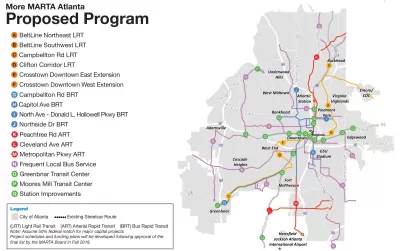
"MARTA would spend more than half a billion dollars to build light rail along the Atlanta Beltline under a final transit expansion plan unveiled Thursday," reports David Wickert.
"The agency also would build light rail along the Clifton Corridor to Emory University and along Campbellton Road in southwest Atlanta. And it would extend the city’s streetcar line west to the Atlanta University Center area and east to the Beltline."
Changes to the plan since an earlier version was released in May include shifts money from the Clifton Corridor to the Beltline, as predicted in reports earlier this month.
Planetizen also picked up the news of the public survey gathering input on the proposed plan.
The agency's Board of Directors will consider the More MARTA plan on October 4.
For more background, here are two opinion pieces written to advocate for all or part of the plan:
Read the full story: MARTA plan boosts Atlanta Beltline, cuts funding for Emory line
MARTA Scales Back Expansion Plans
Atlanta’s transit agency is slowing its plans to extend its bus and rail lines, prompting criticism from city officials.

As Projected Beltline Costs Rise, Atlanta Considers Other Options
MARTA's light rail project could cost more than twice original estimates, prompting the agency to weigh different routes and the potential for bus rapid transit as an alternative to rail.
$300 Million in Train Station Improvements Coming to Atlanta
Work on MARTA's Rail Station Rehabilitation Program will continue over several years, with some big changes for Downtown Atlanta included in the plan.

Planetizen Federal Action Tracker
A weekly monitor of how Trump’s orders and actions are impacting planners and planning in America.

California plans to bury El Niño’s downpour
If the state plays its cards right, it may be able to store a billion acre-feet of El Niño’s water in aquifers.

Desperate measures: Advocates weigh draining Lake Powell to fill Colorado River
Draining the reservoir could reduce evaporation losses by a couple hundred thousand acre-feet.

Chicago voters approve permanent festival grounds, penalty for vacant property owners
Currently, major summer and fall festivals take over public parks for weeks at a time, drawing criticism from nearby residents

NYC votes to cut outdoor dining red tape, speed up permitting
New York City also voted to allow the Department of Transportation to begin work on urgent projects before notifying elected officials.

California appears to reject Prop. 45
The proposition would have expanded the projects that qualify for a streamlined environmental review, effectively paring down the California Environmental Quality Act.

FREE Course: Walkable City 1: Why Walkability?
After describing his path towards focusing on walkability as the essence of good planning, Jeff Speck marches through his five principal reasons for making more walkable places.
Reinventing Malls: Planning Alchemy—Turning Gray Fields Into Gold
The course focuses on the opportunities and imperatives that shape reinvention of mall sites.

City of Rosemead
Rutgers University, Edward J. Bloustein School of Planning and Public Policy
One Hundred Miles
Hunter College, City University of New York (CUNY)
The Architects Foundation
University of Cincinnati Online
City of Cambridge
Montrose County
The Pocatello Development Authority