Raising the height of the Shasta Dam in Northern California has been on the table since the 1980s. Now it looks like the Department of the Interior's Bureau of Reclamation is going through with it.


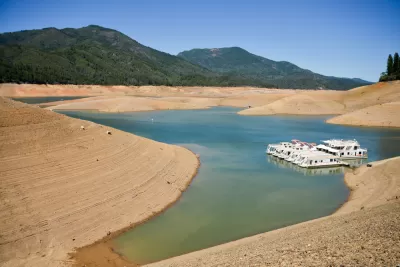
Maven's Notebook shares news from the U.S. Bureau of Reclamation about progress on a controversial project that would raise the dam at California's largest reservoir by 18.5 feet.
According to the Bureau of Reclamation announcement, "geologists are extracting core samples from on, around and deep within Shasta Dam. Gathered data will be used to characterize concrete and geology conditions related to a proposed 18 ½ feet Shasta Dam raise."
Raising the dam will allow an additional 630,000 acre-feet of storage in the reservoir. The Bureau of Reclamation is touting the project for its benefit to agricultural, commercial, and environmental interests, but the politics of the project aren't neat and clean, as detailed in a post by Katharine Jose from March 2018. For more on the Shasta Dam and Reservoir Enlargement Project, see a Bureau of Reclamation website set up for the project.
Congress approved $20 million in funding for the project in March, through the Water Infrastructure Improvements for the Nation (WIIN) Act.
Meanwhile, the state has also been pouring money into water storage projects, with $2.7 billion in Proposition 1 awarded to projects in July 2018.
FULL STORY: Exploratory work begins at Shasta Dam; Delta Islands and Levees study releases final EIS for review...

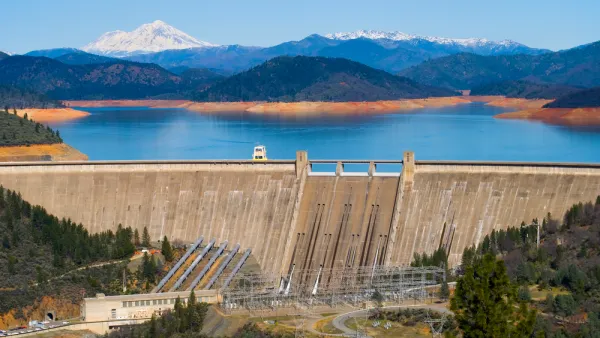
The Interior Secretary's Past Lobbying Work Scrutinized
A project to raise the height of the Shasta Dam, dead in the water before the Trump administration, is moving forward now that a former lobbyist for the project is the secretary of the U.S. Department of the Interior.
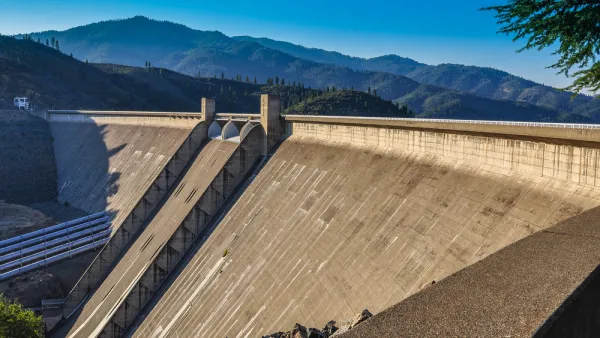
Why Are the Feds Suddenly in Favor of Raising the Shasta Dam?
Despite state opposition and potential violations of California law, the Trump Administration has revived a project that was deemed impracticable only a few years ago.
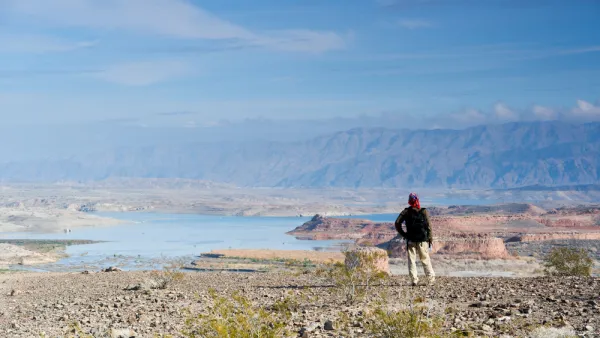
More Need Than Ever for Drought Resilience on the Colorado River
The effects of climate change are already cutting deeply into the lifeblood of the U.S. West—the Colorado River.

Planetizen Federal Action Tracker
A weekly monitor of how Trump’s orders and actions are impacting planners and planning in America.

The state-sanctioned urbicide of Austin
People don’t kill cities. Freeways do.

US to reduce Colorado River water deliveries to Mexico
A new Colorado Treaty amendment reduces Mexico’s Colorado River water allocation by 250,000 acre feet.

5 New England states march closer to 800 megawatt wind energy project
Securing federal approval for the project may be complicated under the Trump administration, which has historically been hostile towards domestic wind power.

Baltimore to break ground on $50 million Transit Priority Project
The project will bring faster bus trips, safer streets and better bike connections to Baltimore.

Airbnb launches $250 million 'last-dollar financing' housing accelerator, makes first investment in Austin
The company will put $6.4 million towards affordable housing development in Texas’ capital.

FREE Course: Walkable City 1: Why Walkability?
After describing his path towards focusing on walkability as the essence of good planning, Jeff Speck marches through his five principal reasons for making more walkable places.
Reinventing Malls: Planning Alchemy—Turning Gray Fields Into Gold
The course focuses on the opportunities and imperatives that shape reinvention of mall sites.

Eagle County Government
Harvard University Graduate School of Design
Nashville Planning Department
The Architects Foundation
University of Cincinnati Online
The Pocatello Development Authority
The Urban Renewal Agency of the City of Pocatello
Journal of the American Planning Association