In a new video game, the player is a no-good raccoon wreaking havoc on the world around him.


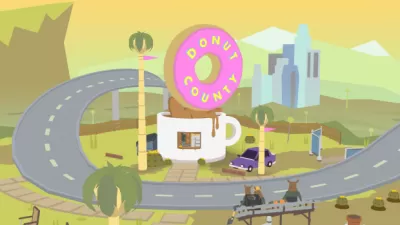
Ben Esposito’s new video game, Donut County, is an allegory about gentrification. A raccoon named BK lives to “meet the locals, steal their trash, and throw them in a hole.” But, as Liz Ohanesian explains, that is only until he finds himself on the other side:
When BK and his friend Mira are also swallowed by the hole, they end up at an underground campfire, confronted by those whose lives the raccoon has ruined. One by one, the displaced tell their tales as they try to make BK realize that he’s a douchebag with no regard for anything more than his own material gain.
Esposito developed the game after living in Brooklyn and then Los Angeles and realizing his own role in displacing people. He is BK, a representation of the high-income tech worker moving in and forever changing a neighborhood.
The goal of the game is to get BK to understand the consequences of taking over everything in sight along with his raccoon buddies, led by the Trash King. Ultimately, says Esposito, Donut County is about how technology and money perpetuate and magnify the gentrification of cities.
FULL STORY: This New Video Game Is an Allegory for Gentrification in L.A.

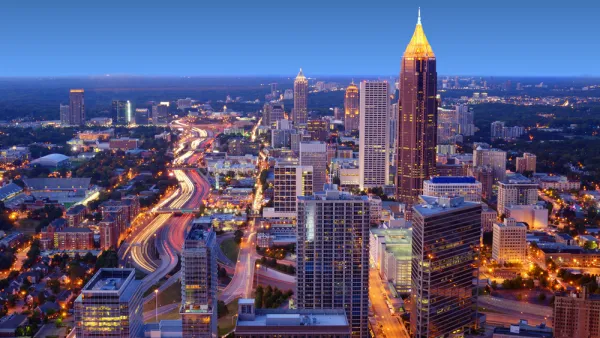
The Winners and Losers of Atlanta’s Transformation
The city has reinvented itself in many ways, but its residents are not reaping those benefits equally.
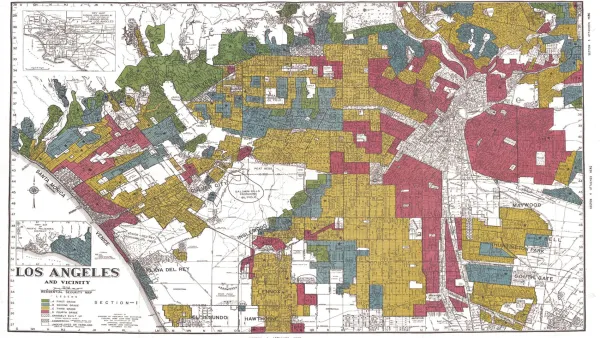
Revealed: Inequality And Urban Flight Were Products Of The Federal Government.
If you believe sprawl just magically happened, here's something that visually suggests otherwise.
Neighborhood Polarization in a Canadian City
In Canadian cities, rising income inequality has been reflected in neighborhood polarization. The experience of Hamilton, Ontario, has been typical. Here, inner-city decline is now giving way to gentrification, displacing poverty to the suburbs.

The state-sanctioned urbicide of Austin
People don’t kill cities. Freeways do.

US to reduce Colorado River water deliveries to Mexico
A new Colorado Treaty amendment reduces Mexico’s Colorado River water allocation by 250,000 acre feet.

New Jersey’s second-largest city bans standalone data centers
Jersey City will continue to allow co-location facilities, such as those meant for research institutions that store their own data.

Amtrak not solely to blame for New Jersey commuter rail's unreliability, report finds
A new study from the Garden State Initiative found that NJ Transit’s budget grew 20% across a 4 year period, but reliability declined significantly over the same period.

EPA erases limits on planet-warming pollution from power plants
Under Monday’s plan, power plants would still have some limits on how much mercury, arsenic and other contaminants they can emit.

Phoenix announces new on-demand transit service, more frequent RAPID buses
Both new services will launch in October, and are part of Phoenix's Project Effective Access Solutions for Easing Congestion.

FREE Course: Walkable City 1: Why Walkability?
After describing his path towards focusing on walkability as the essence of good planning, Jeff Speck marches through his five principal reasons for making more walkable places.
Reinventing Malls: Planning Alchemy—Turning Gray Fields Into Gold
The course focuses on the opportunities and imperatives that shape reinvention of mall sites.

Eagle County Government
Harvard University Graduate School of Design
Nashville Planning Department
The Architects Foundation
University of Cincinnati Online
The Pocatello Development Authority
The Urban Renewal Agency of the City of Pocatello
Journal of the American Planning Association