Sacramento Regional Traffic has seen a dip in its ridership, so they are making the uncommon move of cutting fares.


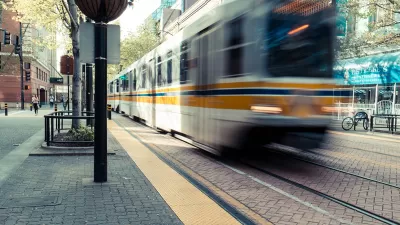
Sacramento Regional Transit (RT) is cutting fares. "The agency will drop the base fare from $2.75 per ride to $2.50 and reduce monthly passes from $110 to $100," Tony Bizjak writes for the Sacramento Bee. RT has faced declining ridership on its bus and light rail service (like many systems around the United States) and they hope a price decrease will help stem some of their lost ridership. "The agency will dip into its reserve account to compensate for about $600,000 in lost revenue, but believes the reduction could boost ridership by about 350,000 boardings annually," Bizjak reports.
RT saw its ridership peak in 2008 during the recession, but today its rides are down by 9 million per year, a steep drop in a city of a half million people (roughly 50,000 of whom moved to the city after 2008). Officials say that some of that lost ridership is due to the agency's efforts to suppress fare evasion and is actually a good thing. But there's no question that the agency has lost ridership among paying customers. The question now becomes, “Will paying less bring some back?”
FULL STORY: Fewer people are riding transit in Sacramento. Here’s what RT did to try to bring them back

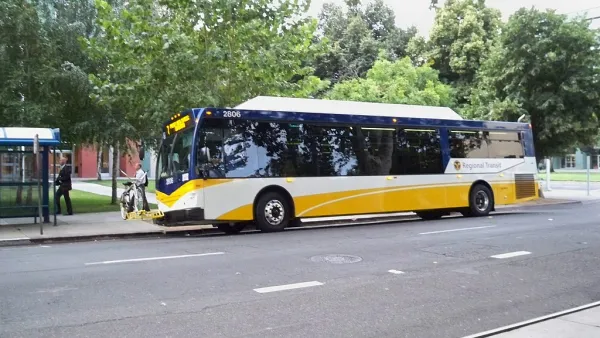
Obsolete Bus-Stop Sign or Treasured Memorabilia?
Sacramento Regional Transit is overhauling its bus system in September, so they old signs for stops will have to go. Instead of scrapping the old signs, the agency is giving them away for collectors' items.

Sacramento Debuts On-Demand Transit Service
Sacramento Regional Transit's SmaRT Ride service is an on-demand public option to compete with Uber and Lyft.
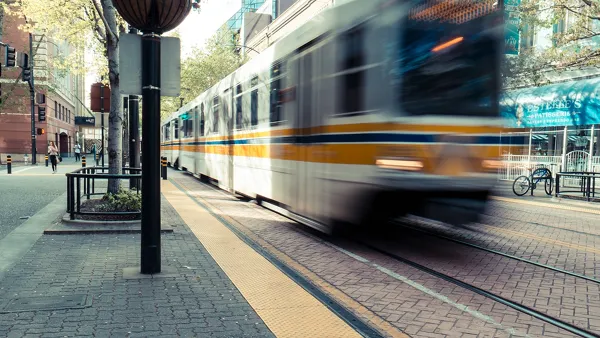
Sacramento Streetcar Faces Uncertain Future Due to Trump Budget
The president's Fiscal Year 2019 Budget cuts the critical Capital investment Grants program run by the Federal Transit Administration. Projects lacking a full-funding grant agreement, like the Sacramento Streetcar, may fall victim.

Planetizen Federal Action Tracker
A weekly monitor of how Trump’s orders and actions are impacting planners and planning in America.

The state-sanctioned urbicide of Austin
People don’t kill cities. Freeways do.

US to reduce Colorado River water deliveries to Mexico
A new Colorado Treaty amendment reduces Mexico’s Colorado River water allocation by 250,000 acre feet.

5 New England states march closer to 800 megawatt wind energy project
Securing federal approval for the project may be complicated under the Trump administration, which has historically been hostile towards domestic wind power.

Baltimore to break ground on $50 million Transit Priority Project
The project will bring faster bus trips, safer streets and better bike connections to Baltimore.

Airbnb launches $250 million 'last-dollar financing' housing accelerator, makes first investment in Austin
The company will put $6.4 million towards affordable housing development in Texas’ capital.

FREE Course: Walkable City 1: Why Walkability?
After describing his path towards focusing on walkability as the essence of good planning, Jeff Speck marches through his five principal reasons for making more walkable places.
Reinventing Malls: Planning Alchemy—Turning Gray Fields Into Gold
The course focuses on the opportunities and imperatives that shape reinvention of mall sites.

Eagle County Government
Harvard University Graduate School of Design
Nashville Planning Department
The Architects Foundation
University of Cincinnati Online
The Pocatello Development Authority
The Urban Renewal Agency of the City of Pocatello
Journal of the American Planning Association