As the city of Chicago continues to develop its river, some see an opportunity to expand river transit.


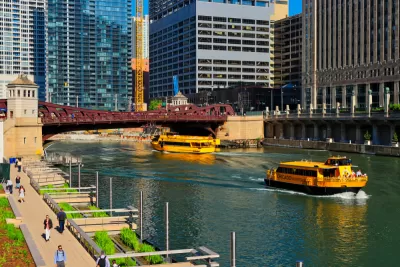
Chicago's riverfront is changing and some who transport Chicagoans on the river want their service to change with it. Water taxis have some advantages over other forms of public transit, "They are quicker than buses during rush hour and infinitely more pleasant — a way to get the wind in your hair and see riverside architecture for around $2 a ride," Mary Wisniewski argues in the Chicago Tribune.
These taxis do not operate in the winter when the river can be frozen and rides might be less pleasant. "Right now, Chicago Water Taxi has seven stops — Ogilvie/Union Station, Michigan Avenue, LaSalle Street, the Chicago Riverwalk at Clark Street, North Avenue, Chinatown and its recently added location at Chicago Avenue," Winiewski writes. Taxi operators would like to see that list expand to include stops around Goose Island. The next step is to get legislators on board.
FULL STORY: Water taxi service may expand for new riverfront developments

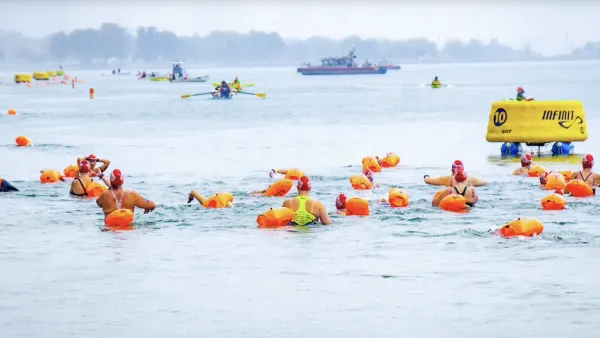
Chicago River Clean Enough for Swimming for the First Time in 98 Years
A historic two-mile river race through downtown highlighted the success of decades-long efforts to clean up the city’s river.
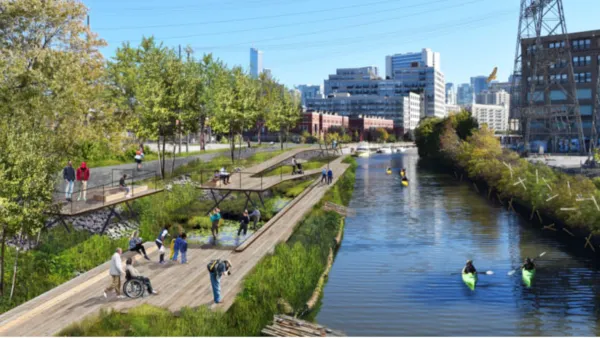
North Branch of the Chicago River Transforming Into a ‘Wild Mile’
A remarkable transformation is underway along the North Branch of the Chicago River, after being channelized and brutalized for well over a century.
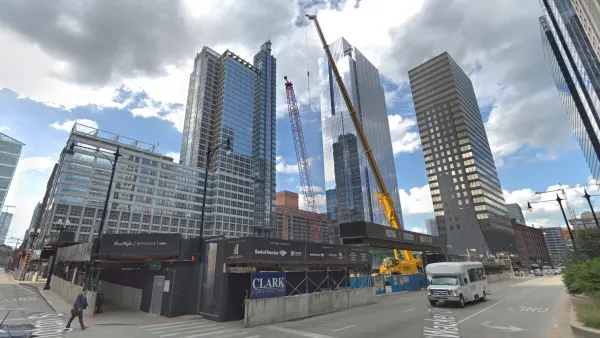
New Skyscraper Added to Chicago's Skyline in Uncertain Times for Downtown Commercial Uses
A riverfront revival was well underway in Chicago. Then the pandemic hit. How can a splashy new downtown commercial development expect to fare in Covid's world?

Planetizen Federal Action Tracker
A weekly monitor of how Trump’s orders and actions are impacting planners and planning in America.

The state-sanctioned urbicide of Austin
People don’t kill cities. Freeways do.

US to reduce Colorado River water deliveries to Mexico
A new Colorado Treaty amendment reduces Mexico’s Colorado River water allocation by 250,000 acre feet.

Airbnb launches $250 million 'last-dollar financing' housing accelerator, makes first investment in Austin
The company will put $6.4 million towards affordable housing development in Texas’ capital.

Guerilla urbanists are building DIY bus stop benches in Chicago
A before-and-after of one of the bus stops with a new bench. The new benches are not officially sanctioned or permitted, but the residents who placed them hope they will be the start of a network of DIY benches across the city.

Mamdani overhauls NYC's Vision Zero plan with 100 new policy goals
The overhaul aims to reduce traffic deaths and make streets safer for pedestrians, cyclists and drivers through lower speed limits, new safety infrastructure and more.

FREE Course: Walkable City 1: Why Walkability?
After describing his path towards focusing on walkability as the essence of good planning, Jeff Speck marches through his five principal reasons for making more walkable places.
Reinventing Malls: Planning Alchemy—Turning Gray Fields Into Gold
The course focuses on the opportunities and imperatives that shape reinvention of mall sites.

Eagle County Government
Harvard University Graduate School of Design
Nashville Planning Department
The Architects Foundation
University of Cincinnati Online
The Pocatello Development Authority
The Urban Renewal Agency of the City of Pocatello
Journal of the American Planning Association