Eschewing glamor, Drive.ai's self-driving vehicles use bright coloring, insignia, and LED messages to facilitate better interactions with humans on the road.


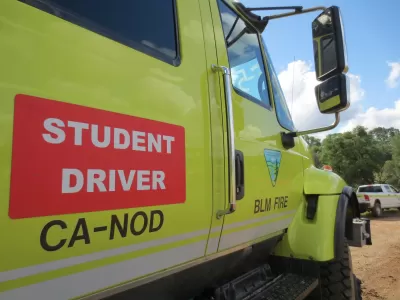
Like student drivers operating vehicles advertising that fact, autonomous cars are still learning the fine art of urban navigation. The company Drive.ai recognizes that in its design choices for a ride-hailing pilot currently ongoing in Frisco, Texas.
"The vehicles, modified Nissan NV200s, are certainly the loudest, brightest, and unabashedly dorkiest self-driving cars on the road today," writes Andrew J. Hawkins. Far from sleek, they're designed to alert other road users in no uncertain terms that they're sharing space with a self-driver.
LED screens on the vehicle's exterior provide information on the vehicle's status. Hawkins writes, "when the cars are on ride-hailing trips or on their way to a pickup, the screens will display messages that convey the vehicle's intent to pedestrians and other vehicles on the road. [...] It's intended to replace the gestures or verbal communication often used by human drivers to communicate their intentions." The hope is to "rebuild trust" in autonomous cars after recent incidents.
FULL STORY: The self-driving cars hitting the road in Texas today are unlike any we’ve seen before

Driverless Vehicles Set to Pick Up Passengers in Texas
The biggest state in the union is making room for self-driving cars, starting with four self-driving vans.
Seattle's Plan for Adopting Driverless Cars
Equity, safety, accessibility and affordability are front of mind as the city prepares for robotaxis and other autonomous vehicles.
Waymo Expansion Makes Phoenix ‘World’s Largest Self-Driving Car Zone’
The company’s autonomous taxis will soon be available in most parts of the metro area including Tempe, Mesa, and a new airport pick-up location.

Planetizen Federal Action Tracker
A weekly monitor of how Trump’s orders and actions are impacting planners and planning in America.

The state-sanctioned urbicide of Austin
People don’t kill cities. Freeways do.

US to reduce Colorado River water deliveries to Mexico
A new Colorado Treaty amendment reduces Mexico’s Colorado River water allocation by 250,000 acre feet.

Airbnb launches $250 million 'last-dollar financing' housing accelerator, makes first investment in Austin
The company will put $6.4 million towards affordable housing development in Texas’ capital.

Guerilla urbanists are building DIY bus stop benches in Chicago
A before-and-after of one of the bus stops with a new bench. The new benches are not officially sanctioned or permitted, but the residents who placed them hope they will be the start of a network of DIY benches across the city.

Mamdani overhauls NYC's Vision Zero plan with 100 new policy goals
The overhaul aims to reduce traffic deaths and make streets safer for pedestrians, cyclists and drivers through lower speed limits, new safety infrastructure and more.

FREE Course: Walkable City 1: Why Walkability?
After describing his path towards focusing on walkability as the essence of good planning, Jeff Speck marches through his five principal reasons for making more walkable places.
Reinventing Malls: Planning Alchemy—Turning Gray Fields Into Gold
The course focuses on the opportunities and imperatives that shape reinvention of mall sites.

Eagle County Government
Harvard University Graduate School of Design
Nashville Planning Department
The Architects Foundation
University of Cincinnati Online
The Pocatello Development Authority
The Urban Renewal Agency of the City of Pocatello
Journal of the American Planning Association