A diverse collection of people sleep in McDonald's restaurants in Hong Kong, either because they live too far from their work or because they are more comfortable in the air-conditioned restaurants than at home.


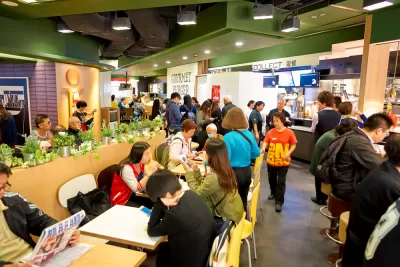
Some in Hong Kong would rather sleep in McDonald's restaurants than in substandard housing or among family they do not get along with. Five years ago, Junior Chamber International’s Tai Ping Shan branch conducted a similar study and has found the number of people sleeping in McDonald's had tripled. "A branch in Tsuen Wan hosted more than 30 sleepers, the highest among all branches, according to the latest study," Shirley Zhao reports for South China Morning Post.
Because of housing prices, many in the city do not have the living situation they want, either because they live farther from their work than they like or because the conditions in their homes are uncomfortable. Hong Kong's public housing waiting list includes more than a quarter million people.
"Researchers were able to interview 53 McRefugees aged between 19 and 79 in depth, and found 57 per cent of them had a job and 71 per cent of them had flats that they rented or owned, contrary to the common belief that these people tended to be jobless and homeless," Zhao reports.


Home Prices, Demand on Downward Trajectory
The once-overheated housing market continues to cool as rising interest rates reduce demand.

Austin Metro Home Sales Slow Dramatically
After a whirlwind of rising costs and sharply spiking demand for housing in smaller cities, the housing market is cooling down to pre-pandemic levels.

U.S. Housing Prices Continue Record-Breaking Pace
July marked four straight months of record-breaking increases for housing prices nationwide, according to the latest housing market data.

The state-sanctioned urbicide of Austin
People don’t kill cities. Freeways do.

US to reduce Colorado River water deliveries to Mexico
A new Colorado Treaty amendment reduces Mexico’s Colorado River water allocation by 250,000 acre feet.

New Jersey’s second-largest city bans standalone data centers
Jersey City will continue to allow co-location facilities, such as those meant for research institutions that store their own data.

Amtrak not solely to blame for New Jersey commuter rail's unreliability, report finds
A new study from the Garden State Initiative found that NJ Transit’s budget grew 20% across a 4 year period, but reliability declined significantly over the same period.

EPA erases limits on planet-warming pollution from power plants
Under Monday’s plan, power plants would still have some limits on how much mercury, arsenic and other contaminants they can emit.

Phoenix announces new on-demand transit service, more frequent RAPID buses
Both new services will launch in October, and are part of Phoenix's Project Effective Access Solutions for Easing Congestion.

FREE Course: Walkable City 1: Why Walkability?
After describing his path towards focusing on walkability as the essence of good planning, Jeff Speck marches through his five principal reasons for making more walkable places.
Reinventing Malls: Planning Alchemy—Turning Gray Fields Into Gold
The course focuses on the opportunities and imperatives that shape reinvention of mall sites.

Eagle County Government
Harvard University Graduate School of Design
Nashville Planning Department
The Architects Foundation
University of Cincinnati Online
The Pocatello Development Authority
The Urban Renewal Agency of the City of Pocatello
Journal of the American Planning Association