The city is implementing a pilot program that prioritizes shared cars.


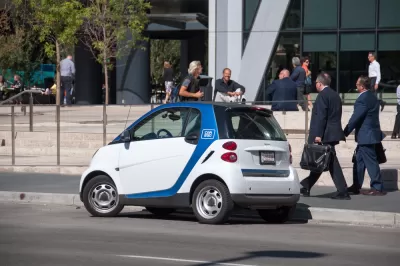
Sarah Maslin Nir reports from New York City: "Starting Monday, as part of its campaign to expand transportation options, the city is taking away about 300 parking spots in more than a dozen neighborhoods, mostly outside of Manhattan, and reserving them exclusively for vehicles from car-share companies, like Zipcar."
"It is the first time the companies, which currently keep their inventory in parking garages, will be allowed to store cars on city streets," adds Nir.
The decision has sparked a predictable outcry, but the city's Department of Transportation is making the deliberate choice to encourage car sharing over private automobile use. New York Transportation Commissioner Polly Trottenberg is quoted in the article saying it's her job to provide the best options available to all travelers in the city.
More details on the program and the political fallout are found in the source article. Planetizen first picked up the news about the parking space changes in February 2018. New York City joins a growing list of cities deciding to apportion more curbside parking spaces to shared rides—although that priority is going to ride hailing companies in other cities, rather than shared cars.
Read the full story: ar-Share Companies Get Coveted Parking in New York City

New York Parking Pilot Favors Car Share
New York is the latest city that will prioritize shared uses when it divvies up public parking spaces.

Parking Battles Heat Up in New York City
With car ownership rates soaring, the fight for the city's free street parking spots is intensifying.
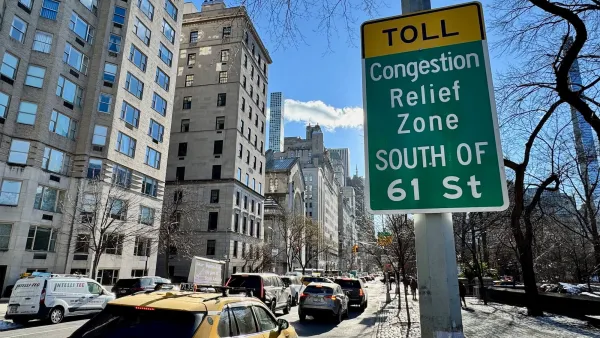
Study: NYC congestion pricing didn't impact parking demand
A city report shows that free parking, not congestion pricing, is the main driver of limited parking demand in the city.

Planetizen Federal Action Tracker
A weekly monitor of how Trump’s orders and actions are impacting planners and planning in America.

California plans to bury El Niño’s downpour
If the state plays its cards right, it may be able to store a billion acre-feet of El Niño’s water in aquifers.

Desperate measures: Advocates weigh draining Lake Powell to fill Colorado River
Draining the reservoir could reduce evaporation losses by a couple hundred thousand acre-feet.

Los Angeles just elected an urban planner as its mayor
Transportation analysts are optimistic that Raman will be more aggressive in addressing transit issues than Bass.

Mamdani’s pied-à-terre tax survives legal challenge
A panel of judges found that the plaintiffs failed to demonstrate injury as a result of New York City's implementation of the tax.

Eastern Nebraska is running out of electricity
Data centers and electrification are straining eastern Nebraska’s grid, throttling economic development.

FREE Course: Walkable City 1: Why Walkability?
After describing his path towards focusing on walkability as the essence of good planning, Jeff Speck marches through his five principal reasons for making more walkable places.
Reinventing Malls: Planning Alchemy—Turning Gray Fields Into Gold
The course focuses on the opportunities and imperatives that shape reinvention of mall sites.

City of Rosemead
Rutgers University, Edward J. Bloustein School of Planning and Public Policy
One Hundred Miles
University of Michigan School for Environment and Sustainability (SEAS)
Hunter College, City University of New York (CUNY)
The Architects Foundation
City of Cambridge
Montrose County
The Pocatello Development Authority