Trees improve cities by controlling temperature, absorbing water and carbon dioxide, and adding beauty.


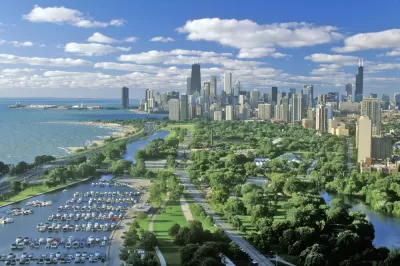
State University of New York Professor Theodore Endreny and his team sought to calculate the value of trees to their cities in terms of dollars and cents. Cities are serviced by their trees, Endreny argues in The Conversation. "These services can include food, clean air and water, climate and flood control, pollination, recreation and noise damping. We currently don’t simulate many services, so our calculations actually underestimate the value of urban trees."
Besides saving cities close to a million dollars per kilometer of tree cover in air pollution mitigation, "the median annual value of carbon dioxide sequestered by megacity tree cover was $7.9 million. That comes out to about $17,000 per square kilometer," Endreny writes. The study found a great variety in the density of the canopy of the 10 megacities, but "[a]ll of the cities we studied had the potential to add additional trees, with about 18 percent of the metropolitan area on average available."
FULL STORY: We calculated how much money trees save for your city

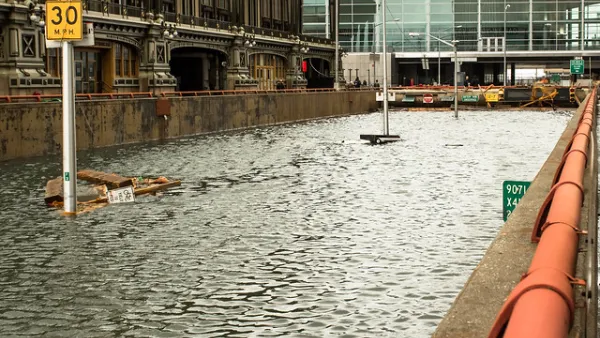
How New York City Can Prepare for the Next Catastrophic Floods–Now
The city must take urgent action to mitigate the effects of increasingly damaging rainstorms.
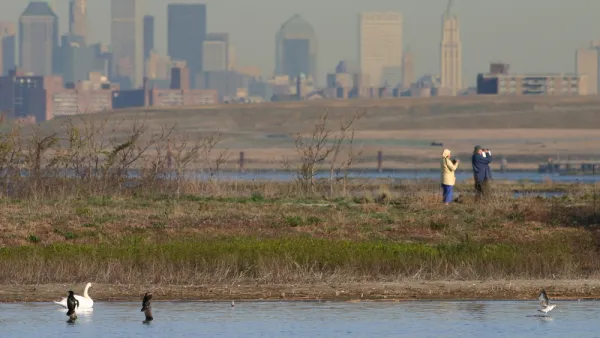
Life With Climate Change: A 100-Year Storm Every Year
The extreme weather events and sea-level rise of the relatively near future will overwhelm storm and flood infrastructure with startling regularity, according to new research.
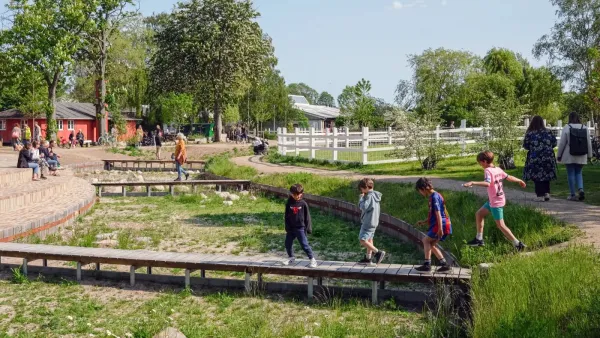
Copenhagen is losing its cool
In a city long designed to maximize light during dark Scandinavian winters, climate change is forcing the Danish capital to rethink its relationship with the sun.

The state-sanctioned urbicide of Austin
People don’t kill cities. Freeways do.

US to reduce Colorado River water deliveries to Mexico
A new Colorado Treaty amendment reduces Mexico’s Colorado River water allocation by 250,000 acre feet.

New Jersey’s second-largest city bans standalone data centers
Jersey City will continue to allow co-location facilities, such as those meant for research institutions that store their own data.

Amtrak not solely to blame for New Jersey commuter rail's unreliability, report finds
A new study from the Garden State Initiative found that NJ Transit’s budget grew 20% across a 4 year period, but reliability declined significantly over the same period.

EPA erases limits on planet-warming pollution from power plants
Under Monday’s plan, power plants would still have some limits on how much mercury, arsenic and other contaminants they can emit.

Phoenix announces new on-demand transit service, more frequent RAPID buses
Both new services will launch in October, and are part of Phoenix's Project Effective Access Solutions for Easing Congestion.

FREE Course: Walkable City 1: Why Walkability?
After describing his path towards focusing on walkability as the essence of good planning, Jeff Speck marches through his five principal reasons for making more walkable places.
Reinventing Malls: Planning Alchemy—Turning Gray Fields Into Gold
The course focuses on the opportunities and imperatives that shape reinvention of mall sites.

Eagle County Government
Harvard University Graduate School of Design
Nashville Planning Department
The Architects Foundation
University of Cincinnati Online
The Pocatello Development Authority
The Urban Renewal Agency of the City of Pocatello
Journal of the American Planning Association